

The sinking feeling in the pit of your stomach when a driver is on a long-haul trip and you haven't heard from them is a feeling many transport managers know all too well. You trust your drivers, but the reality is that fatigue is an invisible threat that can have devastating consequences. This isn't about a driver just feeling a bit tired; it's about a dangerous level of exhaustion that impairs judgment and reaction times, putting them, your fleet, and the public at risk.
This guide will cut through the noise and give you the essential information you need. We'll cover the key warning signs of driver fatigue, look at the latest Australian statistics, and explore practical, technology-based solutions that can help you protect your drivers and your business.
What is Driver Fatigue? (And Why It’s More Than Just Being Tired)
Driver fatigue is a state of mental and physical exhaustion that reduces a person's ability to operate a vehicle safely. It's a dangerous condition that goes beyond simply feeling tired. While tiredness is a normal part of life, fatigue is a safety risk that can lead to catastrophic errors in judgment on the road.
The primary causes of driver fatigue are:
- Lack of quality sleep: Most adults need 7-9 hours of sleep per night to function optimally. Anything less can impair performance.
- Long hours behind the wheel: Extended periods of driving, especially without adequate breaks, is a major contributor to fatigue.
- Time-of-day driving: Our bodies are naturally programmed to sleep at night. Driving between 10 pm and dawn significantly increases the risk of a fatal crash.
Helpful Resource: For a detailed breakdown of fatigue risks, the Safe Work Australia guide offers a comprehensive overview for workplaces.
The Alarming Numbers: Driver Fatigue Statistics in Australia
Driver fatigue statistics in Australia highlight a serious challenge for the transport industry:
Fatigue is a factor in up to 30% of all deaths and severe injuries on the road in some Australian states.
- Being awake for 17 hours has a similar effect on driving ability as a Blood Alcohol Concentration (BAC) of 0.05.
- It's estimated that fatigue-related road incidents could be costing the Australian community up to $3 billion annually.
- Truck drivers are 13 times more likely to die at work than other workers in Australia.
Know the Signs: Key Warnings of Driver Fatigue
Recognising the warning signs of fatigue is the first step in preventing a tragedy. These signs can be observed by both the driver and the manager monitoring operations.
Warning Signs for Drivers:
- Excessive yawning
- Drifting across lanes
- Sore or heavy eyes
Warning signs for the manager:
- Unusually long or unscheduled stops
- Missed check-ins
- Inconsistent driving speeds
- A sudden increase in harsh braking events
Relying on phone calls and gut feelings is a risky way to manage driver safety. A sophisticated system that monitors driving behaviour is crucial to get ahead of fatigue before it's too late.
How Modern Tech Detects and Prevents Driver Fatigue
The good news is that technology has advanced to the point where we can now proactively manage and mitigate the risks of driver fatigue. This is where Saphyroo can take over and manage driver fatigue monitoring in an easy and effortless way for your business. Our aim is to reduce the risk factor and provide Real Time optimised support.
At Saphyroo, we support CEOs and fleet operators across the industry—helping them to improve safety, stay compliant, and protect their business.
We use smart, practical tech to help you stay ahead of driver fatigue before it becomes a problem.
Below are just a few innovative solutions Saphyroo have to offer
AI Behaviour Monitoring
In-cabin AI cameras can detect the physical signs of fatigue in real-time. This isn't about spying on your drivers; it's about providing an intelligent safety net. The AI monitors for:
- Head nods
- Eye-closing
- Yawning
When these signs are detected, the system can send an alert to both the driver and the manager. This allows for immediate intervention before an incident occurs.
Smart Fatigue Management Systems
Software solutions like Saphyroo's Drive360 automate many of the processes involved in fatigue management, making safety and compliance seamless:
- Prevents the assignment of shifts to fatigued drivers by flagging them in the system.
- Sends automated break reminders to drivers based on their recorded hours.
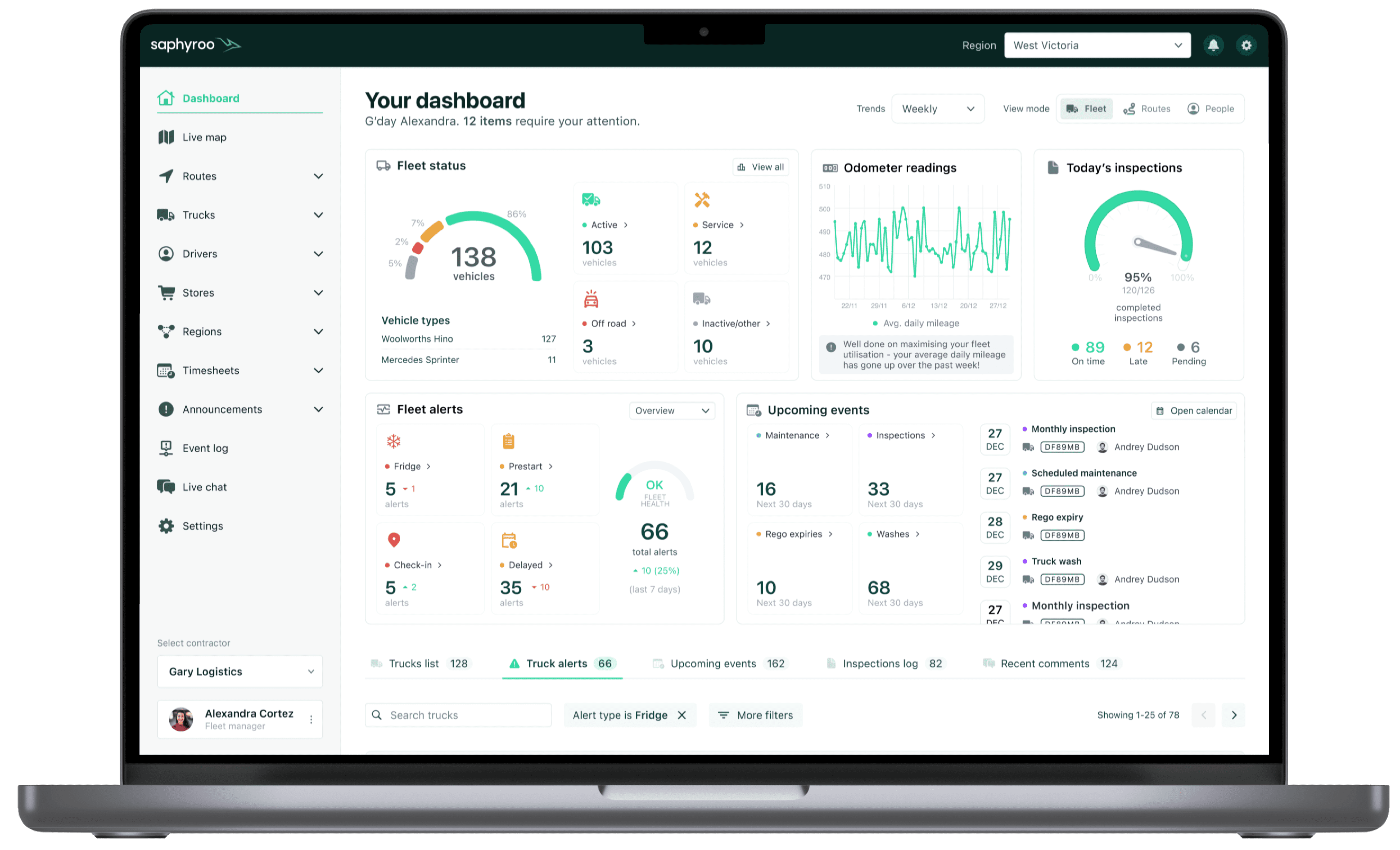
- Provides a centralised dashboard for managers to monitor the fatigue risk of the entire fleet at a glance.
Putting It All Together: A Proactive Approach to Fatigue
When you combine AI-driven behaviour tracking with a fatigue management system, you’re building more than just a safety protocol—you’re creating a real safety net. The goal isn't to micromanage your drivers. It's to empower them with tools that keep them safe and help you, the manager, meet your Chain of Responsibility obligations. This shared responsibility means that everyone in the supply chain is accountable for safety.
Move from Reactive to Proactive
Driver fatigue is a serious and well-documented risk in the Australian transport industry. Waiting for an incident to happen is no longer an acceptable strategy. Technology like Saphyroo's Drive360 offers a straightforward, effective solution.
Ready to take the guesswork out of fatigue management? See how Saphyroo can help you keep your drivers safe and your operations running smoothly.