

Under the Heavy Vehicle National Law, a reckless Chain of Responsibility breach can cost an individual up to $300,000 in fines and five years in prison. A corporation faces up to $3 million. The HVNL covers operations in all states and territories except Western Australia and the Northern Territory, which operate under separate legislation.
Most fleet managers know CoR applies to them. Far fewer know exactly who in their business needs training, which course level suits each role or what a course needs to cover to hold up under scrutiny if something goes wrong.
This guide explains the practical side of CoR training in Australia, including the different types of courses available, who each course is designed for, what to look for in quality training and how effective training supports stronger compliance systems and audit readiness.
Understanding CoR Training and Compliance
Chain of Responsibility (CoR) laws apply to people and businesses involved in transport activities, including operators, schedulers, loaders, consignors and packers. While employed drivers have separate HVNL driver duties, owner drivers are considered CoR parties because they operate the vehicle.
There are different levels of CoR training available across Australia, ranging from basic awareness courses through to nationally recognised training for frontline staff, managers and executives. Course pricing and delivery methods can vary between providers.
Completing a nationally recognised CoR unit provides a Statement of Attainment, which can help show a business has taken reasonable steps toward compliance. However, training alone is not enough. Businesses also need strong systems and processes in place.
Currently, the NHVR does not publish an official list of approved CoR courses. Nationally recognised training is delivered by Registered Training Organisations (RTOs) listed on training.gov.au.
While Safety Management Systems (SMS) are not yet mandatory under the HVNL, proposed reforms expected in 2026 may introduce new accreditation requirements for operators.
Effective compliance goes beyond training. Businesses also need clear systems for fatigue management, vehicle maintenance, mass management, scheduling and record keeping to support ongoing safety and compliance.
Who Needs CoR Training?
Since the 2018 HVNL safety law changes, anyone involved in making decisions that affect transport activities may have responsibilities under Chain of Responsibility (CoR) laws.
This includes people performing any of the 10 recognised CoR functions, such as employers, operators, schedulers, loaders and consignors.
Many businesses are surprised by how wide these responsibilities can extend. However, employed drivers are covered under separate HVNL driver duties, as driving itself is not considered a CoR function under the primary duty laws.
For a typical road transport or distribution business, training is relevant for:
Executive Responsibility Under CoR Laws
Under the HVNL, directors and senior managers can be held personally responsible for ensuring their business meets its Chain of Responsibility (CoR) obligations. This means executives must actively exercise due diligence and take reasonable steps to support safety and compliance across the business.
Responsibility cannot simply be passed down to other staff or departments. Even when tasks are delegated, senior leaders still have a legal obligation to ensure proper systems, processes and controls are in place.
CoR responsibilities also extend beyond transport operators. Consignors and consignees can be investigated separately if their decisions contribute to safety breaches. For example, unrealistic delivery schedules or unsafe loading practices may create direct liability risks.
Effective CoR training helps businesses identify these risks early, improve decision making and maintain proper documentation before vehicles leave site.
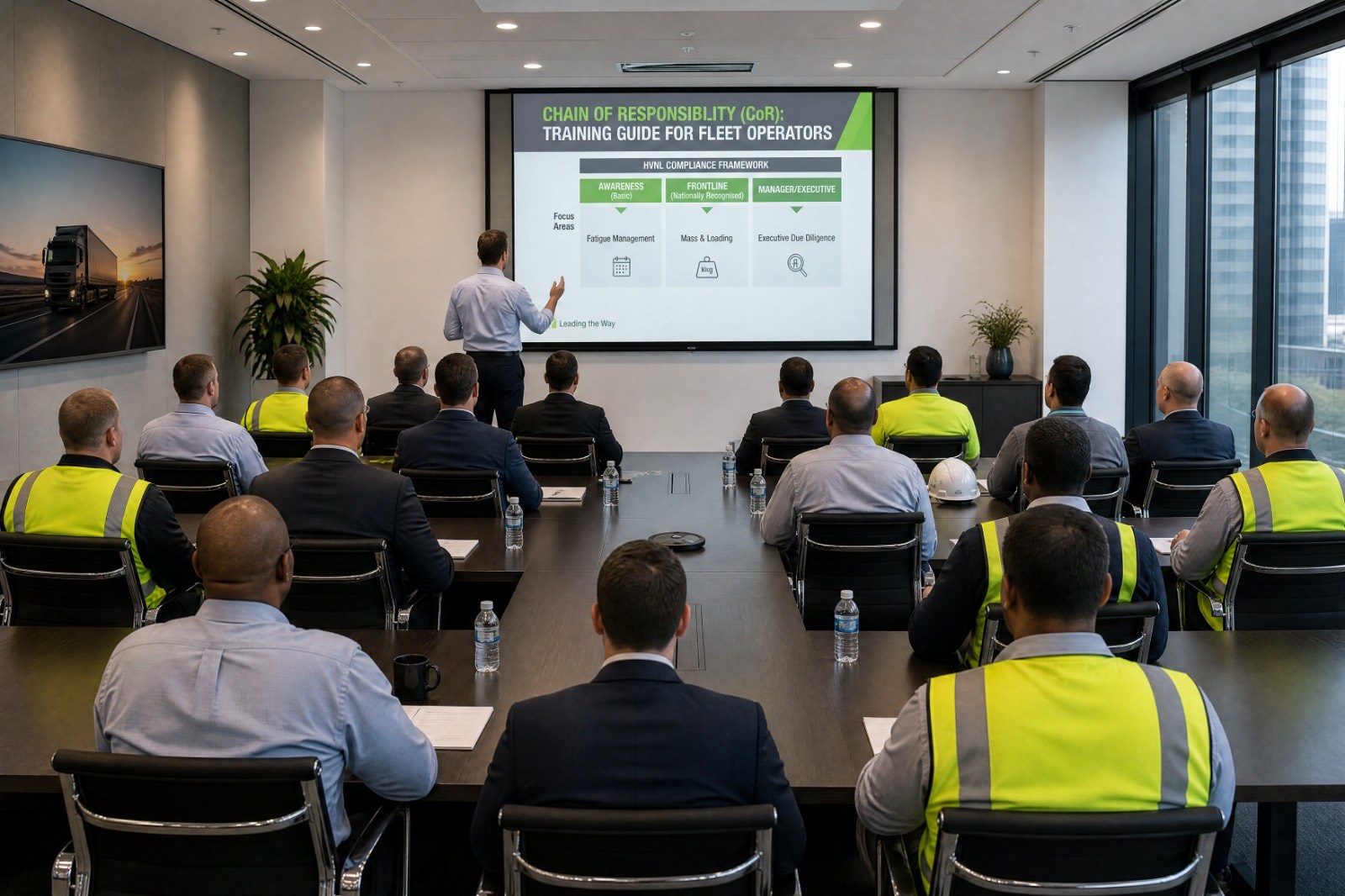
The Three Levels of CoR Training in Australia
Course providers structure CoR training into three tiers. The right level depends on the trainee’s role and what their obligations actually require.
Awareness CoR Training
Awareness courses provide a basic introduction to Chain of Responsibility (CoR) laws, including what CoR is, how it applies to different roles and how to recognise potential breaches.
Many awareness courses are free and can usually be completed in under an hour, making them a practical option for onboarding new staff or giving drivers a general understanding of their responsibilities.
However, awareness training alone is not enough for people responsible for scheduling, rostering, compliance or operational decision making. These roles often require more advanced training and a stronger understanding of HVNL obligations and risk management.
Frontline nationally recognised CoR courses are commonly based on the unit TLIF0009 – Ensure the Safety of Transport Activities. These courses are designed for workers who apply CoR responsibilities in their day to day roles, including schedulers, loaders and operational staff.
Training is delivered through Registered Training Organisations (RTOs) and successful participants receive a Statement of Attainment.
This certificate is important because it provides formal evidence that the individual has been trained and assessed on CoR obligations under the HVNL, not simply given general information or awareness material to read.
An awareness certificate does not provide the same level of evidence or formal assessment.
Manager level CoR training is usually based on units such as TLIF0003 – Develop and Implement CoR Policies and Procedures or TLIF0080 – Implement and Monitor CoR Safety Duties. These courses are designed for transport managers, supervisors and compliance staff responsible for developing workplace procedures and overseeing compliance systems.
For directors and senior executives, CoR training is often delivered as a non accredited executive briefing. These sessions typically focus on executive due diligence obligations, managing third party contractor risks and identifying systemic safety issues before they lead to incidents or breaches.
To find RTOs delivering TLIF0009, TLIF0003 or TLIF0080 in your state, search training.gov.au. Established providers in the space include:
Provider offerings and pricing may vary. It’s important to understand that these course categories are commercial training products offered by providers, not an official nationally defined CoR training framework.
Key Areas Every CoR Course Should Cover
The core CoR risk areas should be at the heart of any serious course:
For anyone whose decisions directly affect safety outcomes, a 30 minute awareness course isn’t enough. A scheduler building rosters, a transport manager approving run plans, a director setting commercial targets: all of these roles need to understand their duty at the level of a nationally recognised assessment.
A Statement of Attainment from a nationally recognised CoR course provides formal evidence that a person has been trained, assessed and demonstrated an understanding of their CoR obligations.
While it is not a standalone legal defence, it can help show a business has taken reasonably practicable steps as part of a broader compliance system. Without this type of documented training, businesses may leave significant gaps in their compliance processes.
Two things worth checking when assessing a provider: whether they are an RTO or operate through a commercial auspice arrangement with one (verify the RTO number on training.gov.au), and whether the course content reflects the current HVNL structure. Courses that predate the 2018 amendments don’t cover the primary duty framework. Some providers updated the title without updating the content. The assessment questions should require demonstrated understanding, not just multiple choice recall.
What’s Changing in 2026 and Why It Matters
The Heavy Vehicle National Law Amendment Bill 2025 was passed by the Queensland Parliament on 18 November 2025. Commencement is by proclamation, with NHVR and NTC guidance signalling it’s expected around mid 2026. It’s the most significant update to the CoR framework since the 2018 reforms, Requirements and implementation dates may vary, so businesses should confirm adoption timelines with their relevant state or territory regulator.
The biggest change for operators: Safety Management Systems get embedded in the new accreditation framework. Today, an SMS isn’t mandatory under the HVNL. Once the reforms commence, operators moving through accreditation will need a documented SMS covering risk identification, control measures, monitoring and review. Existing NHVAS participants get a transition period.
An effective SMS generally involves training, documented risk assessment, monitoring and review cycles. You can’t run a risk management process with staff who don’t understand the duty areas and call it a genuine system, which is why training sits underneath any credible SMS even though the final SMS standard is still being worked through.
The amendments also extend Chapter 6 of the HVNL beyond fatigue to cover being unfit to drive more broadly, including impairment from illness, injury or substance effects. Exactly how that plays out in documented processes will depend on the final regulations and NHVR guidance once the Act commences.
For a multi depot operation with contractors and subcontractors across the chain, building and embedding an SMS that holds up under scrutiny takes longer than most operators expect. Don’t wait for final state guidance before starting the gap analysis.
Building CoR Compliance Beyond Training
Training creates awareness. Systems create evidence.
For the five HVNL duty areas, demonstrating “reasonable steps” in an investigation requires consistent, retrievable documentation showing your operation actively manages each obligation, not just that staff have completed a course.
1
Fatigue records – Work and rest logs, hours visibility and scheduling documentation showing trips were planned within legal limits.
2
Mass and loading – Load manifests, weighbridge records and consignor documentation. A loaded vehicle that’s overweight with no documented checking process creates exposure across multiple parties in the chain.
3
Vehicle maintenance records – including pre start inspections, defect reports and audit trails. If a reported defect goes unresolved, it can expose the operator and other parties within the Chain of Responsibility to significant safety and compliance risks.
4
Scheduling documentation – Evidence that journey times were planned realistically, rest breaks were accounted for and commercial deadlines didn’t override safety decisions.
5
Incident and near miss records – Showing your operation responds to safety events systematically rather than reactively.
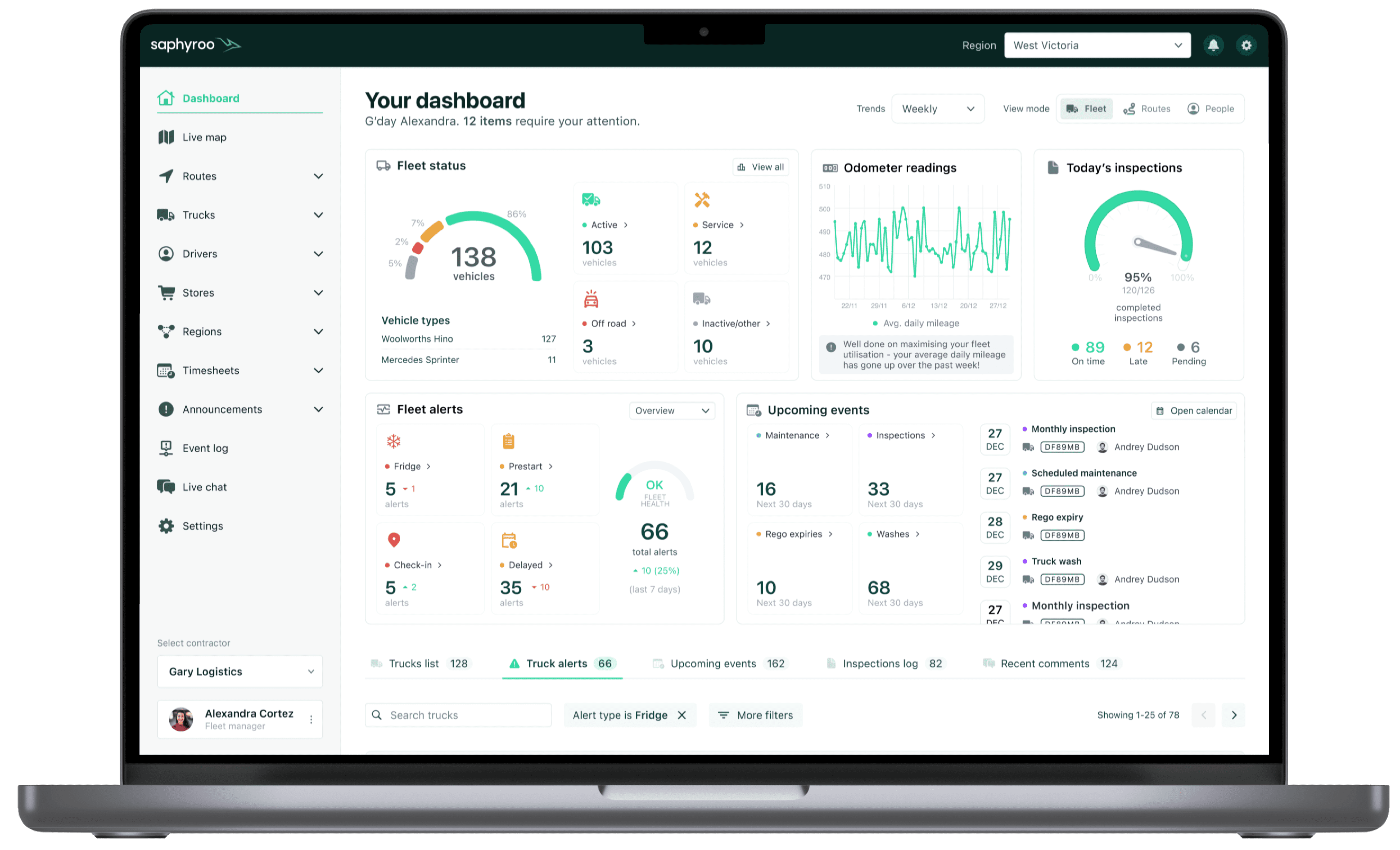
A compliance platform like Drive360 centralises inspections, defect workflows, fatigue records and compliance reporting into one searchable system. If NHVR issues a notice to produce, you can pull a driver’s complete work and rest history for a specific date range, the defect trail on a specific vehicle or the scheduling records for a specific run quickly, rather than scrambling across spreadsheets and paper logs.
For fatigue specific workflows, see how Drive360 handles driver fatigue records. For work diary record keeping, see electronic work diary workflows.
For more on how CoR obligations are structured across the supply chain, read our companion guide on how CoR duties flow across the supply chain.
CoR training is only the starting point. The fleets that perform well under audit are the ones that combine training with strong compliance systems and consistent record keeping.
Inspection reports, fatigue records, maintenance audit trails and operational documentation all help demonstrate that compliance is embedded into everyday operations, not just understood in theory.
Choose the appropriate level of CoR training for each role, maintain Statements of Attainment on file and regularly review whether your day to day compliance processes are producing the records, controls and evidence expected under the HVNL.