

While pay is certainly important, it’s only part of the equation. If you’re not offering a competitive rate, none of what follows will make much difference. However, once pay is fair and in line with the market, other factors become far more important in keeping your best drivers around.
Finding and keeping experienced drivers is becoming increasingly difficult. According to the International Road Transport Union’s 2024 driver shortage report:
NatRoad estimates that, with more than 50,000 drivers expected to retire, the shortfall will exceed 78,000 by 2029.
What many fleet owners underestimate is how difficult experienced drivers are to replace. A driver who can legally and safely operate a B double or road train has typically spent years building the skills, experience and qualifications required for the job.
One reason experienced drivers are so difficult to replace is the time it takes to progress through Australia’s heavy vehicle licence classes:
Experienced drivers are becoming harder to replace. Newly qualified drivers often cost more to insure on heavy vehicles, while fewer operators are investing in the training and licence upgrades needed to build the next generation of drivers.
Every driver who leaves creates more than a recruitment problem. The work still needs to be done and the extra pressure often falls on the drivers who stay. Over time, that pressure can trigger further resignations, turning one departure into a much bigger problem.
The best operators break that cycle early. Here are five ways they retain their best drivers.
Build the Roster Around the Driver, Not the Load
For many drivers, knowing when they’ll be home matters just as much as what they’re paid. Predictable home time often does more to retain good drivers than another pay rise. The difference is that drivers can plan their lives with confidence, knowing family commitments, appointments and personal time are less likely to be disrupted at the last minute.
Many fleets plan rosters only a week in advance and treat home time as flexible, meaning it changes whenever operational demands arise. The best operators take a different approach. They publish rosters three to four weeks ahead and follow a simple rule: a driver’s nominated home nights are not changed without first having a conversation with them.
What counts as ‘fair home time’ varies depending on the type of work. A Melbourne to Perth linehaul driver may be away for most of the week, while a Sydney to Brisbane driver can expect to be home more often. Metro drivers are typically home every evening. While expectations differ across operations, drivers value consistency and knowing what to expect.
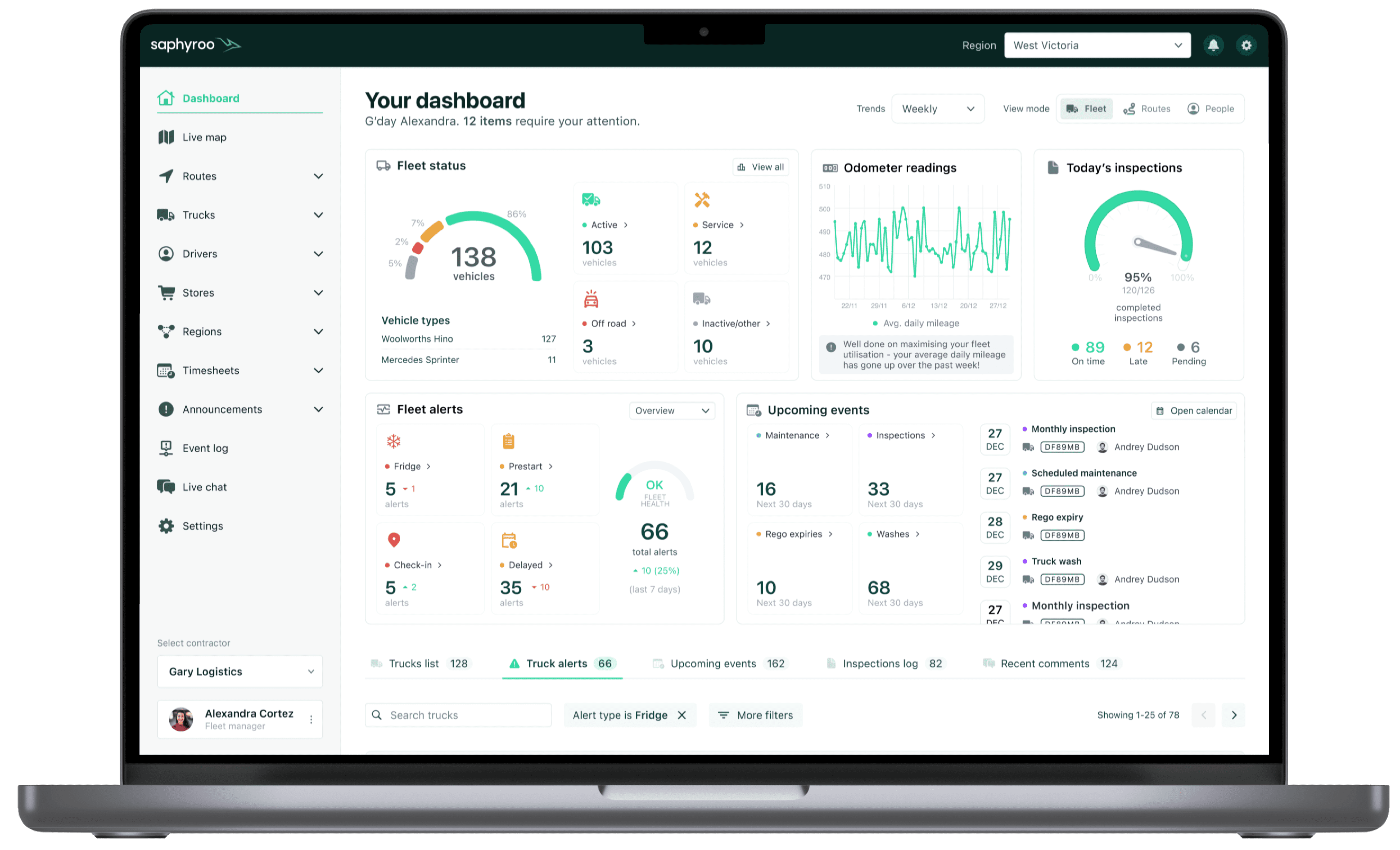
The key is setting realistic expectations and sticking to them. That means planning further ahead and identifying overtime trends before they become a problem. Saphyroo’s Drive360 gives schedulers a live view of every driver’s hours, overtime and home nights in one place. Before a run is assigned, a scheduler can see whether assigning it cuts into a nominated home night, pushes a driver toward their hours limit or creates a fatigue risk for the week ahead. That means roster decisions are made on complete information rather than assumptions about what a driver can absorb.
The visibility works both ways. When a driver asks why their Friday night was protected, there’s a clear answer backed by data they can see themselves. That transparency is what turns a scheduling platform into a retention tool.
In the long run, predictability often matters more than an extra pay rise. A driver who knows their Friday night is protected may turn down a higher paying offer elsewhere to keep that balance. A driver who never knows when they will be home is often already thinking about their next move.
Why Respect Retains Drivers
What keeps good drivers is rarely about the company itself. It comes down to their day to day experience.
Whether the allocator is decent to them at 2am when a tyre blows near Dubbo. Whether a problem they flagged actually gets fixed. Whether the person running allocation knows their name or just their truck number.
The three questions worth asking about your own operation:
Wellbeing initiatives can help, but they are no substitute for getting the basics right. Respect costs nothing. The damage from withholding it is significant.
Recognise Good Driving, Not Just Mistakes
In cab cameras can either help retain good drivers or push them away. The best operators use the footage to coach, improve safety and recognise good driving, not just to find faults.
Get the approach wrong and the drivers with the most options are often the first to leave. An experienced MC licensed driver with a strong safety record is unlikely to stay where they feel constantly monitored or unfairly judged.
Transparency is essential. Drivers should understand what is being recorded, who can access the footage and how it will be used. Just as importantly, they need confidence that the system is there to support safer operations, not to create unnecessary pressure.
Recognition is often overlooked, with many fleets reviewing footage only when something goes wrong. The best operators also use it to recognise good driving, whether that’s a driver maintaining a safe following distance during poor weather on the Hume Highway or someone whose harsh event score has improved steadily over several months.
Saphyroo’s Vision360 AI dashcam system helps fleets turn footage into meaningful coaching and recognition opportunities, all within a clear and transparent driver policy.
Spot the Warning Signs Before They Become a Resignation
Good drivers rarely resign without warning. In many cases, the signs appear weeks before they hand in their notice and the challenge is recognising those signs early enough to do something about them.
Many fleets miss the warning signals because the information is spread across multiple systems. Hours, overtime, incidents and attendance records all sit in different places. By the time a clear pattern emerges, the driver may have already decided to leave.
Some common warning signs include:
The best operators look for changes in work patterns, not just compliance issues. Hours worked, overtime, incident trends and other operational data can highlight when something has changed, creating an opportunity to check in with a driver before small frustrations become bigger problems.
The First Few Weeks Matter Most
The first few weeks often shape whether a new driver settles into the business or starts looking elsewhere, yet many fleets still get onboarding wrong. New drivers are often handed the spare truck, a stack of paperwork and little meaningful support. By week three, they may already be taking calls from recruiters.
The checklist is short, but every item matters:
Getting these right in the first three weeks is the difference between a driver who settles in and one who is already taking recruiter calls by week four.
Drive360 simplifies the administration side of day one with a structured driver task flow that guides new drivers through induction paperwork, licence checks and vehicle assignments before their first shift. Less time on paperwork means more time getting comfortable on the road, and fewer things falling through the cracks when the operations team is busy.
The fleets with the strongest driver retention don’t rely on pay alone. They pay a competitive rate, run rosters drivers can count on, treat people with respect, recognise good performance, act on warning signs early and invest in new drivers from day one.
In today’s market, the driver who leaves this month may not be replaced for months to come. That’s why investing in driver retention is one of the highest return decisions a fleet can make.
Software doesn’t retain drivers on its own. The way you run the business does. The right platform simply helps you identify issues earlier, have better conversations and keep good people for longer.