


The TGA Driver Card is one of the smallest compliance requirements in your operation and one of the costliest to miss. A single expired or missing card can prevent a driver from working, leave a vehicle off the road and disrupt daily operations. For fleets managing 50 or more drivers, that risk is present every working day.
The card is issued by Saudi Arabia’s Transport General Authority (TGA) and allows a driver to legally carry out regulated commercial transport. The requirement is straightforward, but compliance depends on getting the details right. That means submitting the correct document bundle, selecting the right card type and tracking renewal dates. If any of these are missed or incorrect, the driver may not be permitted to operate.
Who Needs a Professional Driver Card?
Professional Driver Cards are required for drivers operating commercial vehicles exceeding 3,500 kg GVW, as well as those working in:
Document bundle:
This includes a valid Rukhsa, Iqama or National ID as well as the employer’s active TGA operator licence. Education transport drivers also need a TGA medical report, first aid certificate and a clean criminal record certificate. Taxi drivers fall under separate TGA medical fitness requirements.
Deadline
The TGA has extended key road transport compliance deadlines to August 2026. Professional Driver Card compliance is included within these wider requirements and is not subject to a separate deadline.
Renewal rule:
Renewals should be managed across the fleet as a single process. If a driver’s card expires, they are taken off the road and the vehicle is also taken out of service.
What is a TGA driver card
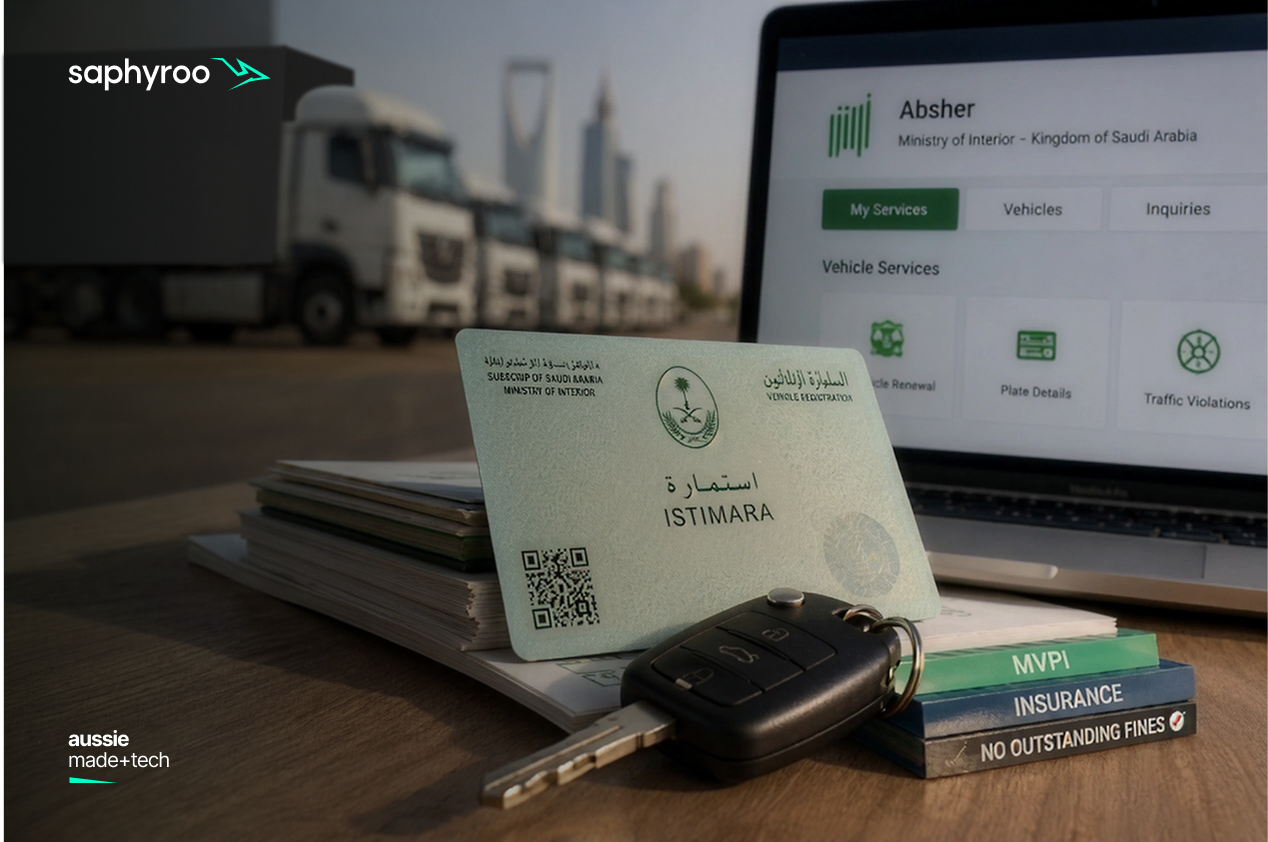
A TGA driver card is an activity licence issued by the Transport General Authority (TGA) that allows the holder to carry out regulated commercial transport. It sits alongside the Rukhsa (driving licence) and the Istimara (vehicle registration). Each one is separate and all three must be valid and up to date.
A driver may hold a valid Rukhsa but still be considered unlicensed for commercial work if the driver card has expired or was never issued.
Each document covers a different part of compliance:
If any one of these lapses, the driver cannot operate in a regulated role.
Wasl is TGA’s mandatory platform for commercial fleet operators and vehicle registration. Any driver assigned to a Wasl registered vehicle must hold the correct driver card for that activity. Fleet managers who want compliance records across all drivers typically ensure the card is in place before the driver is deployed.
Who needs a TGA driver card
The TGA driver card is not required for every driver, but it applies broadly across commercial fleet operations.
Any driver operating a commercial vehicle exceeding 3,500 kg gross vehicle weight (GVW) must hold a valid Professional Driver Card.
Enforcement of this requirement began on 8 December 2022, making it a long standing compliance obligation for heavy vehicle operators. Fleets that have not yet met the requirement may already be carrying a compliance risk that could surface during audits, inspections or licensing reviews.
The requirement extends beyond freight transport. It also applies to commercial passenger services, including taxis, buses and limousines, as well as school transport, towing operations and other regulated transport activities.
Some dangerous goods activities may require additional hazardous materials endorsements. Operators should always confirm the correct card category and licensing requirements before applying.
Educational transport comes with additional conditions. According to Saudi Press Agency (N2153260), drivers must be at least 25 years old, pass a TGA medical examination, hold an approved first aid certificate, pass a professional competency test and provide a clean criminal record.
For fleet HR teams, the practical approach is to map drivers into three groups: those who need a card, those who already have a valid one and those holding the wrong type. That last category is often overlooked but creates the same issue as having no card at all.
The Four TGA Driver Cards
TGA driver cards are issued based on how long the driver will operate and the type of work involved. They are not interchangeable and selecting the wrong type can lead to compliance issues and take drivers off the road.
Source: Saudi Gazette, four card types.
Annual cards are issued for drivers working year round as part of regular commercial transport operations.
Seasonal cards are designed for peak periods such as Hajj and Umrah and can be renewed once to support temporary increases in demand.
Temporary cards apply to cargo drivers entering the Kingdom on a driver’s visa with an international licence. They are valid for 90 days and cannot be renewed.
Restricted cards are limited to specific government cargo transactions and are not intended for general commercial transport.
Using a Restricted Card for routine deliveries is a misclassification and carries the same operational risk as having no valid card at all.
Choosing the wrong card type can delay approvals, create compliance issues and prevent a driver from legally operating under the licensed transport activity.
How to Apply for a TGA Driver Card
Applications are submitted through the TGA’s Naql portal at naql.sa. For support, the TGA unified number 19929 can be used for enquiries. The process is fully electronic, with all required documents uploaded directly through the portal.
To apply for a TGA driver card, the following documents must be submitted through the Naql portal:
Medical assessments and first aid certification often take the longest to complete. Planning ahead can help avoid delays in driver approvals and operational readiness.
The most compliant fleets don’t spend their time chasing paperwork. They manage driver records, certifications and compliance requirements in one place, making issues easier to spot before they become violations.
Renewing a TGA driver card
Annual cards are renewed based on the original expiry date. According to the published Naql service on my.gov.sa, renewal applications can be submitted up to 30 days before the card expires.
In some cases, regulations also allow submission within 30 days after expiry, but the driver cannot operate until the renewal is completed. Submitting close to the deadline leaves little time to resolve any issues that may arise.
Renewal is also dependent on underlying documents. If the Rukhsa has expired or is not valid in the correct class, the driver card cannot be renewed.
Seasonal cards can be renewed once, while Temporary and Restricted cards cannot be renewed at all. Once they expire, a new application is required before the driver can return to work.
At fleet scale, driver card renewals become a continuous compliance task. A fleet with 50 Annual Driver Cards may have renewals falling due throughout the year, making manual tracking difficult.
Saphyroo helps operators manage driver records, expiry dates and activity data in one place, making it easier to stay ahead of renewals and avoid compliance issues before they surface during inspections.
A structured renewal pipeline, supported by telematics data that tracks driver activity, helps ensure renewals are completed before enforcement action occurs.
When a Driver Operates Without a Valid TGA Card
The immediate impact is felt by the operator. When a driver is taken off the road, the vehicle is also taken out of service, resulting in lost revenue and the need to reassign loads. When this happens across multiple drivers, the disruption can quickly spread across the fleet.
The penalties can also be significant:
Fines are only part of the issue, as gaps in driver card validity can also affect the operator’s Wasl compliance record, making future renewals and approvals more difficult to secure. Repeated issues can create a pattern on the operator’s profile that is harder to correct over time. Operators who maintain a GPS-backed activity record are better positioned to demonstrate that their operations are compliant when reviewed.
Preparing for the August 2026 Deadline
The August 2026 deadline is the key reason to act now. Document gathering, medical checks and Naql processing all take time. If any step is delayed, drivers can easily miss the compliance cut-off.
Three practical steps to work through before the deadline:
1
Audit your driver list – Identify every driver who is missing a card, holding an expired card or operating under the wrong card type. The wrong type creates the same compliance risk as having no card at all.
2
Start medical checks and first aid certification immediately – These are the steps that take the longest to complete and are mandatory for educational transport drivers. Leaving them until the final weeks before the deadline creates unnecessary risk.
3
Submit Naql applications at least 30 days before the deadline – This gives enough time to resolve any document issues, correct errors and resubmit if required. Applications submitted in the final days before the cut off leave no room for corrections.