The process involves: renewing via Absher, paying the fee and then collecting the card from Saudi Post.
Fleet operators are responsible for renewing multiple vehicles. Each vehicle carries its own expiry date, MVPI (Mandatory Vehicle Periodic Inspection) schedule, insurance renewal and Saher fine balance. One missed expiry can take a truck off the road. Twenty missed expiries can disrupt an entire operation.
This guide is built for fleet managers and operators managing the operational reality behind vehicle renewals.
The key facts before you read further:
What an istimara actually is (and what it is not)
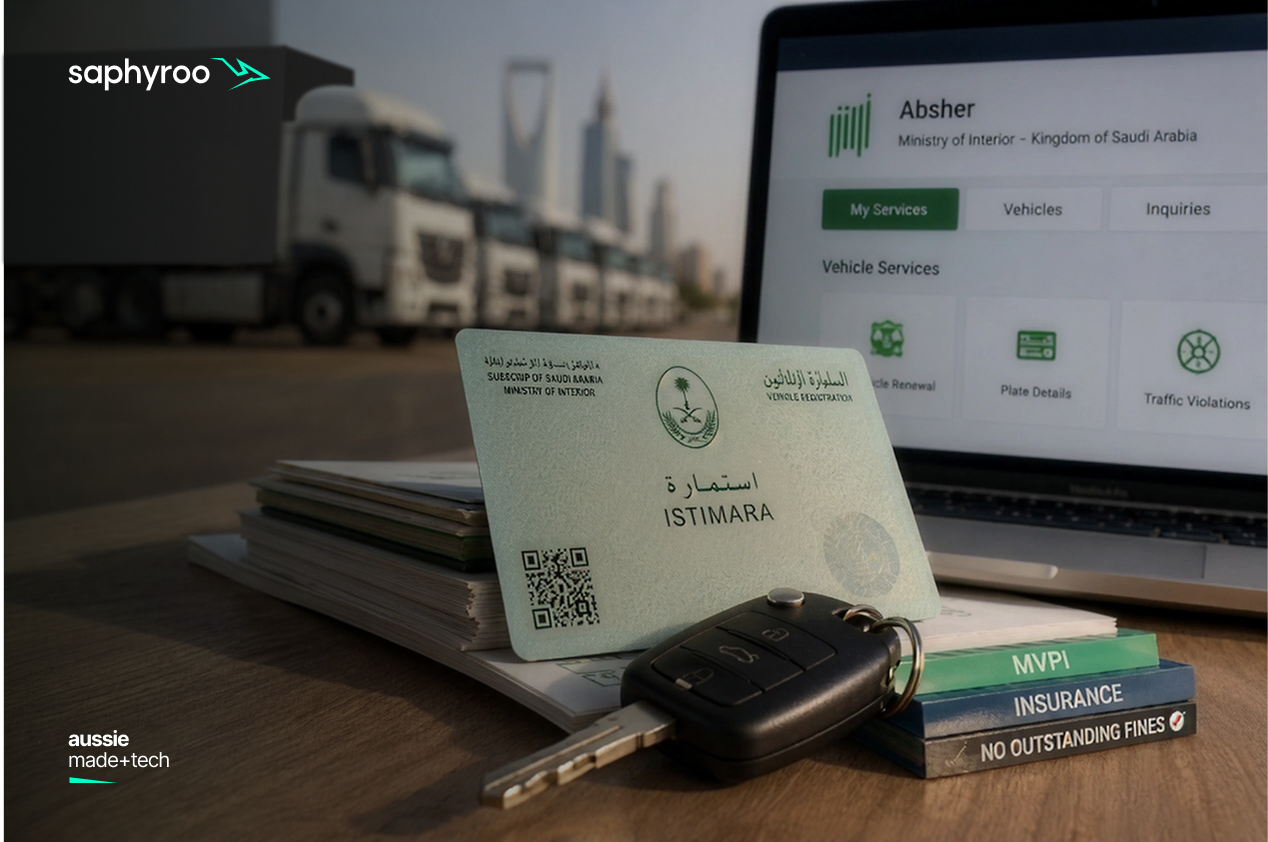
An istimara (استمارة) is the vehicle registration card issued by the General Directorate of Traffic (Muroor), the enforcement arm under the Ministry of Interior (MOI). It is renewed through Absher, the my.gov.sa National Portal and the Tamm platform. (Tamm is the Abu Dhabi government services platform used for cross-border operators in the UAE/KSA corridor.
The card records:
One detail most fleet managers miss is the expiry date as it is not printed on the card. This can only be checked through Absher. This causes countless fleet renewal failures, because the expiry date cannot be seen on the physical document.
Three documents must be present and valid for a commercial truck to operate legally:
One of the most common and expensive mistakes in transport operations is confusing Istimara with Wasl. Wasl is not part of the Istimara process. It is a completely separate compliance requirement.
Validity periods and renewal timelines
Private vehicles are usually valid for three years from the date of registration. Commercial and public transport vehicles operate on an annual renewal cycle, both in practice and within the fee structure.
The renewal window opens 180 days before expiry. You cannot renew earlier than six months out, which means the window for each vehicle is fixed and non negotiable.
Fleet operations become complex for example a 40 vehicle fleet with evenly spread registration dates creates a constant renewal cycle typically three to four renewals every month.
Every vehicle follows its own schedule for MVPI, insurance and Saher fines. None of it syncs automatically unless the fleet builds systems and processes around it.
Requirements before renewal
Before a renewal can be completed, Absher automatically verifies four separate requirements. If any one of them is missing or invalid, the renewal is blocked.
1
A valid MVPI certificate from an MVPI approved inspection station. There are 36 fixed stations across the Kingdom. For private vehicles, the first inspection is three years after registration, then annually after that. For commercial vehicles, the first inspection is two years after registration, with increased frequency by class thereafter.
2
The vehicle must have active insurance with at least third party coverage. The policy also needs to match the vehicle details recorded in Najm and visible through Absher.
3
There must be no outstanding traffic fines on the vehicle. All traffic fines linked to the vehicle must be cleared before renewal. Both Saher and Muroor violations can block the process. This includes speeding, red light violations, seatbelt offences, mobile-phone use, illegal lane changes and obscured plates. For istimara renewals, these fines are tied to the vehicle itself. It is important to keep in mind that fines paid through Absher can often clear on the same day. A recent violation does not always mean the renewal is permanently blocked. The renewal can usually proceed once the fine is paid and clearance is confirmed.
4
Updated owner and Iqama details matching the current civil status records.
The sequence matters more than the checklist.
If the MVPI has expired, the mechanic loses a day.
If the insurance has lapsed, the broker loses a day.
If a Saher fine is unpaid, the driver must clear it first.
Only when all three align will Absher allow the renewal to proceed. Across a large fleet, that coordination is the real operational challenge. A checklist alone does not solve it.
Many fleet managers rely on a mandoob (an outsourced runner who handles admin tasks on behalf of the business) to handle istimara and MVPI renewals. Whether the process is managed internally or outsourced, the same operational dependencies still apply.
How the renewal process actually works
Vehicle registration renewals are primarily completed through Absher.
Inside the app, go to My Vehicles, select the vehicle, choose Renew Vehicle Registration, confirm the details, pay the fee and select either digital delivery or Saudi Post for the physical card.
The SAR 400 fee category applies to public transport vehicles, including commercially operated HGVs. It is not limited to passenger buses. Any commercial fleet operating trucks under a public transport plate falls within this category and pays SAR 400 per vehicle annually.
The physical card is delivered via Saudi Post and takes three working days.Collection through Muroor is also available. If this option is selected, the appointment must be attended within seven days, otherwise a SAR 100 no show fine will apply.
Fleet renewals must still be completed through Absher. The real challenge is coordinating the timelines and requirements behind every renewal.
The cost of an expired istimara for fleets
The Ministry of Interior sets a 60 day grace period from the expiry date, renewal within the time frame incurs no penalty.
After the grace period: a fine of SAR 100 per year is charged. Driving a vehicle with an expired registration can result in penalties of up to SAR 300, along with possible vehicle impoundment for each traffic stop. If the same truck is stopped at two separate checkpoints in the same month, each stop is treated as a separate violation.
In these situations, the real problem is often not the fine itself, but the insurance implications that come with an expired registration.
An accident involving a vehicle with an expired istimara can jeopardise the validity of the insurance policy. For a single truck, the financial impact is significant. For a commercial HGV fleet, a rejected third party claim can create a level of liability far beyond the original traffic penalty.
Expired istimaras create more than just a renewal problem. They also create a Wasl compliance issue.
Even with an expired registration, the truck can still appear on Wasl as part of your active operation. Because TGA has visibility across both systems, the compliance risk sits with the operator as much as the driver.
The operational cost compounds quickly. If a fleet misses only one renewal per month and resolves it within two weeks, the business still loses roughly one week of available truck days over the course of a year.
Multiply that by the daily revenue generated by each vehicle, and the financial impact becomes obvious.
Managing istimara renewals across a fleet
In a commercial fleet, vehicles rarely share the same expiry date. That means renewals are not handled as a single event, but as a continuous and rolling compliance process.
Four operational controls fleets use to manage the process:
From August 2026, the Transport General Authority is requiring commercial operators to reclassify vehicles from private to public transport plates as part of a nationwide Wasl licensing compliance update.
During this transition, operators converting trucks from private to public transport plates should align the reclassification process with MVPI and insurance renewals rather than handling each step separately.
In some cases, reclassified vehicles may require a new inspection before the updated istimara can be issued. Operators should confirm the exact requirements with their local Muroor office before beginning the process.
If your operation is still managing istimara renewals through spreadsheets or shared WhatsApp reminders, see how our Riyadh based team helps Saudi fleets centralise compliance records on Drive360.
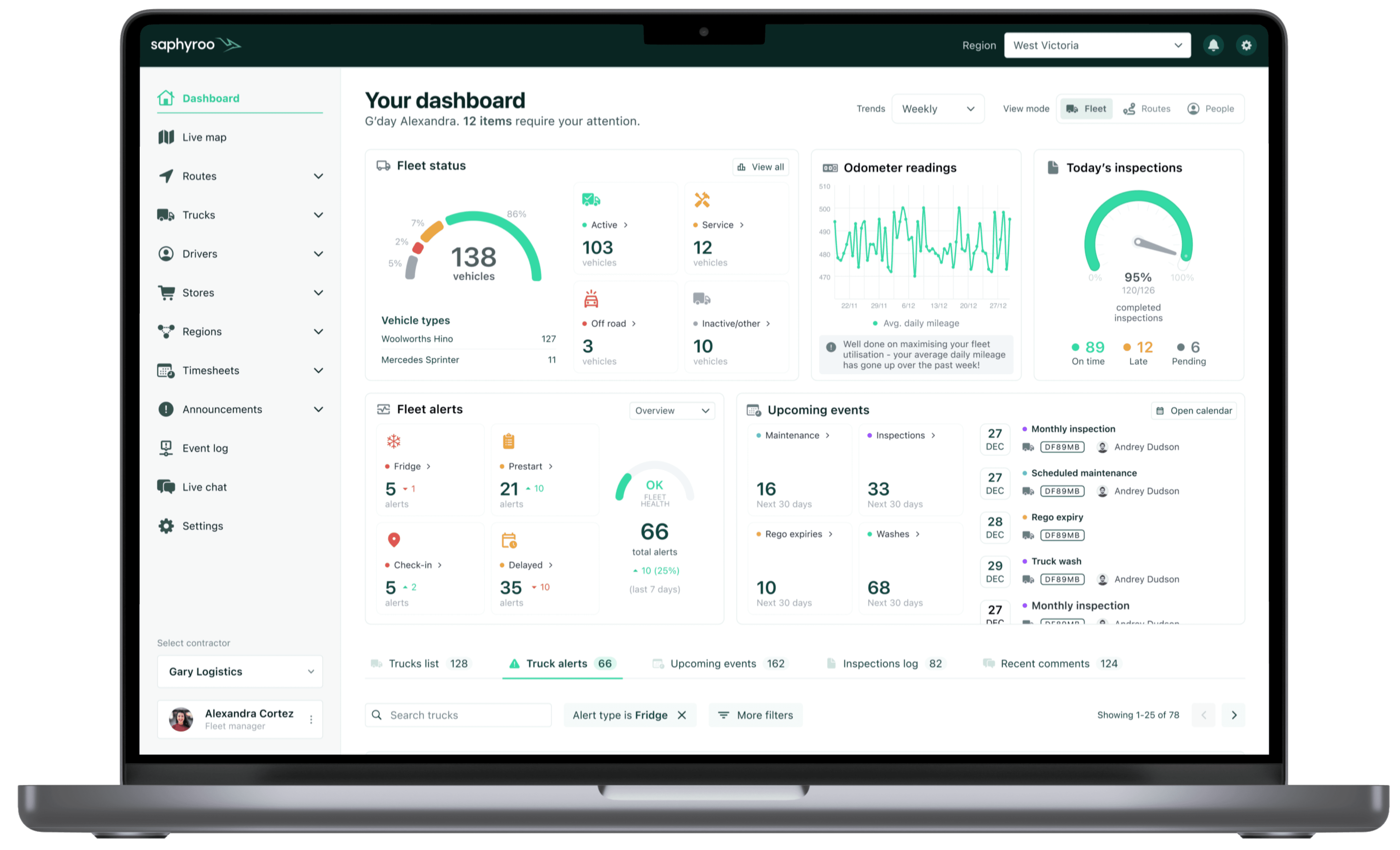
Drive360 centralises istimara, MVPI and insurance dates across every vehicle in your fleet. One screen, every dependency and every expiry date.