

Most Saudi fleet owners know they need a valid MVPI certificate. What they get wrong is the 14 working days that follow a failed inspection. Miss the window and the cost triples. Across a fleet, MVPI becomes an operational problem, not just a fee.
In other situations, Saher can detect an expired istimara the moment a vehicle hits a major highway. No Fahas means no renewal. No istimara means the vehicle is off the road. In an accident, Najm can challenge the claim.
Here’s how Saudi fleets manage MVPI properly.
TL;DR
What MVPI Actually Is
MVPI stands for Motor Vehicle Periodic Inspection (Arabic: al-fahs al-dawri; locally: Fahas).
The programme has been in place since 1986 under the General Directorate of Traffic (Muroor). Today it is supervised by SASO, with testing operated by a consortium including Muroor, 3M, Morouj, Hyundai and FAS. As of early 2026 there are around 36 fixed inspection stations across the Kingdom, plus 6 mobile units introduced in October 2024.
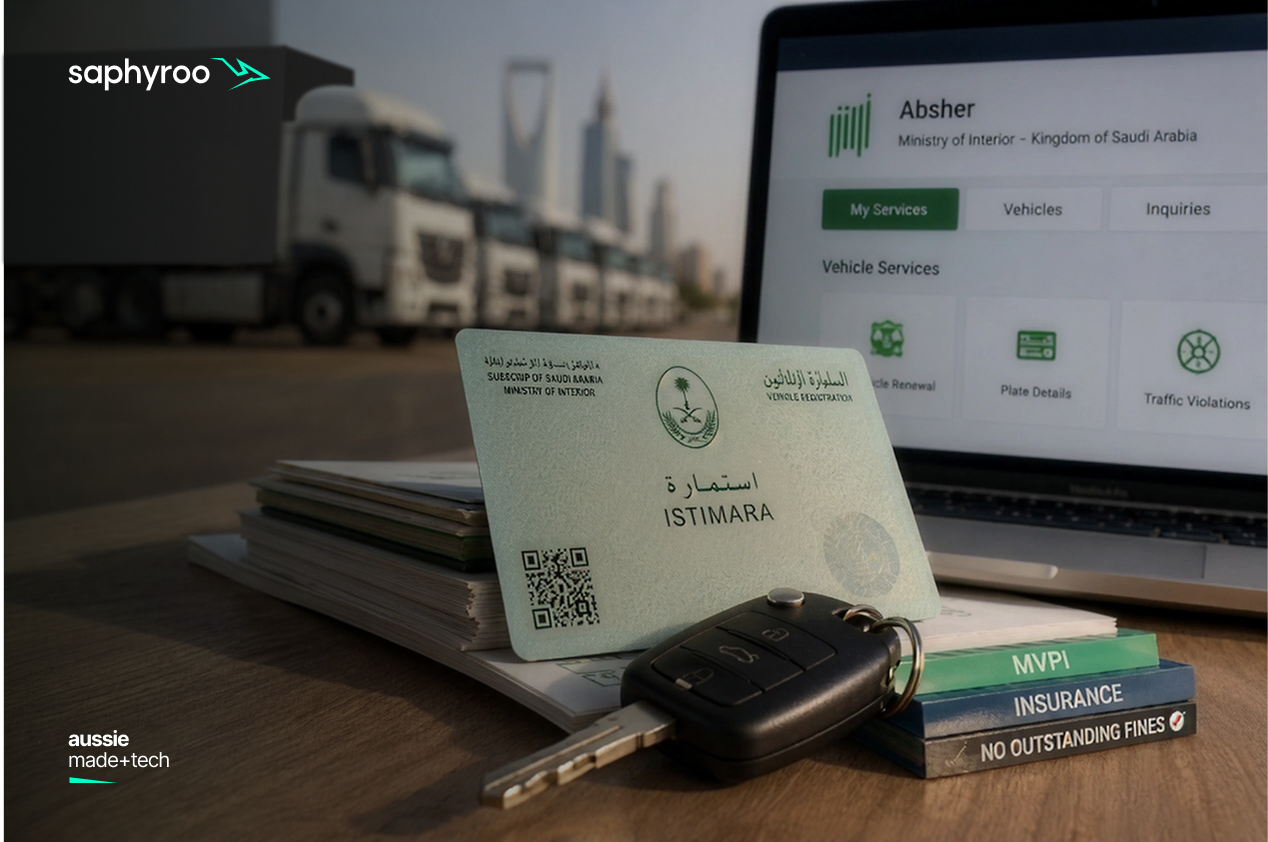
The key point many operators miss is that MVPI determines whether your vehicle can stay on the road. You cannot renew your istimara without a valid Fahas. Without a valid istimara, the vehicle is no longer legally allowed to operate. From there, everything else follows: fines, enforcement and insurance risks.
Who Needs It and When
Commercial fleets undergo MVPI annually from year two. Private vehicles begin in year three. The calendar below is the full schedule.
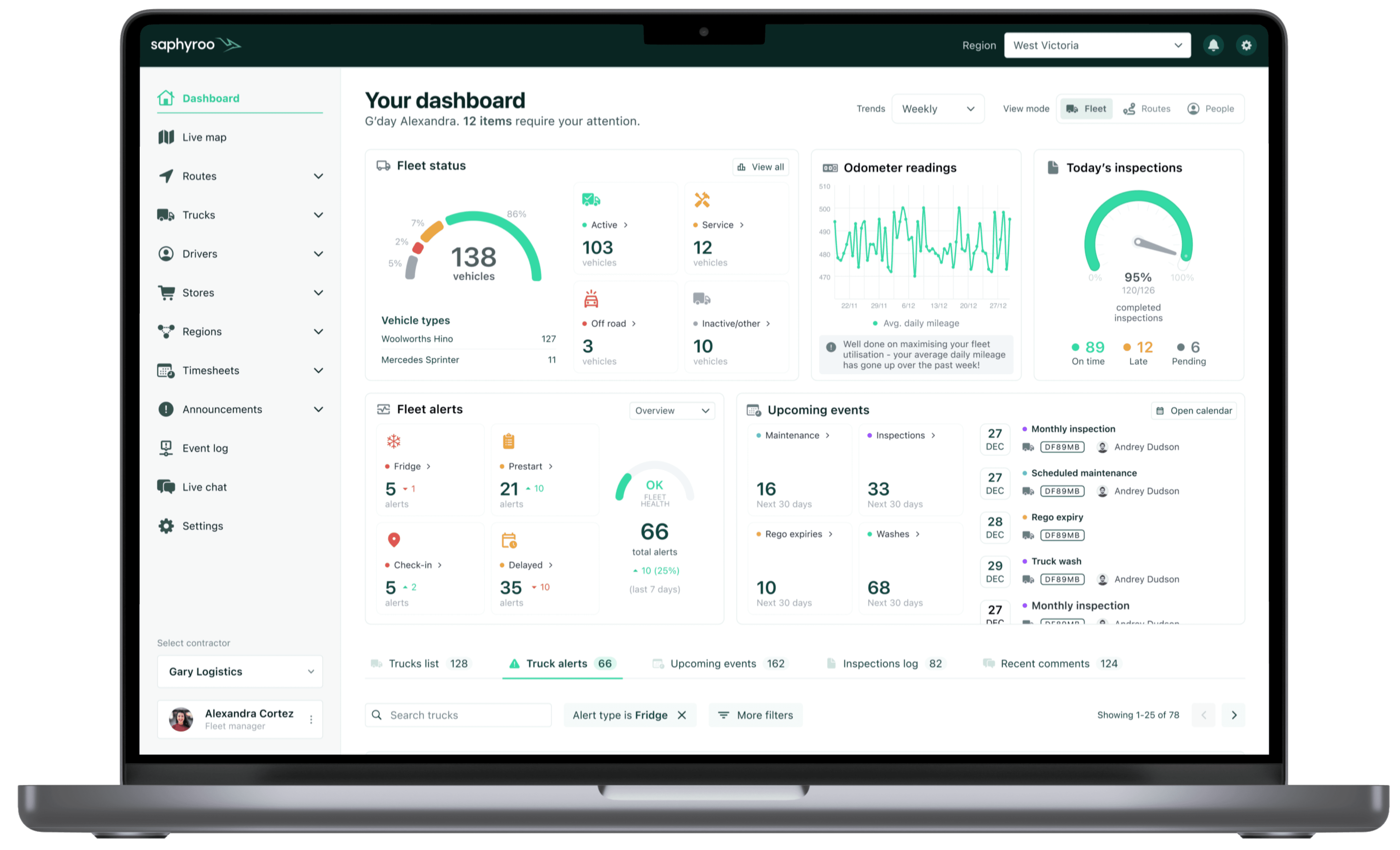
Each truck runs on its own MVPI cycle with staggered expiry dates. That is why fleets need a centralised view. The best operators link compliance with maintenance so deadlines are tracked before Muroor flags them. Most Saudi fleet management teams run MVPI dates, istimara renewals and workshop scheduling off the same calendar for this reason.
What MVPI Checks
Five key areas, assessed in one continuous inspection.
How Fleets Keep First-Pass Rates High
Here’s what most operators get wrong. They treat MVPI as an appointment. It isn’t. It’s the outcome of the month’s maintenance work.
Run to a scheduled service calendar and most vehicles pass first time. Defer maintenance until something breaks and you collect re-inspections.
Your workshop signs these off before any truck leaves for the station:
The last two items disappear from cabs more than anything else. Both fail the vehicle if missing.
Booking, Documents and the Tafweed
One detail causes more failed fleet appointments than anything else: the tafweed.
It’s the digital authorisation that lets a driver who isn’t the registered owner present the vehicle. In practice, fleets don’t send the legal owner. They send whichever driver is closest. Without a valid tafweed, the inspection won’t go ahead. The booking is lost and so is the fee.
Generate the tafweed through vi.vsafety.sa when booking. Better still, maintain a list of pre-authorised drivers per vehicle so you aren’t chasing a fresh tafweed every visit.
What you need at inspection: booking confirmation, valid istimara, owner’s national ID, customs clearance certificate (for imported vehicles), commercial registration details (for company-owned vehicles) and authorised-representative documentation.
Salamah: Why Larger Fleets Move On-Site
Past 30 vehicles, the maths changes. Station visits can take half a day per truck. Salamah brings the inspection to your yard so you can batch the lot in a single sweep.
For forty trucks running the Jubail–Jeddah corridor, batching on-site pays back the lead time several times over. Booking sits at salamah.net, separate from vi.vsafety.sa.
When a Vehicle Fails
You have two re-inspection attempts within 14 working days. Only the failed items are rechecked, unless new issues are identified during the follow-up visit. Re-inspection fees are typically around one-third of the original cost.
Fees current on mvpi.com.sa, retrieved 15 April 2026.
This is where fleets lose money. A truck fails on day one, goes back to the workshop for a gearbox-housing leak that overruns and returns on day 15. It’s no longer a re-inspection. It’s a full inspection at full cost. Book the return slot the moment the repair is scheduled, not days later.
Running MVPI Across the Fleet
A fleet of 100 doesn’t have 100 simultaneous MVPI expiries. They’re staggered across the year. Without a central view, the first sign of an overdue certificate is usually a Muroor checkpoint or a rejected istimara renewal. By then you’re already paying.
The fine itself is small: 100 SAR per year of delay on an expired istimara, capped at 300 SAR per vehicle, applied 60 days after expiry. The real cost is operational. A truck pulled off route during a Saher check. A registration bouncing three months after the MVPI lapsed. Worst case, an accident on an expired istimara where Najm disputes cover because the vehicle wasn’t legally on the road.
That’s significant exposure on a truck that could have been cleared with a routine inspection.
Saher’s automated enforcement flags expired istimara plates the first time a vehicle runs past a gantry on the main corridors. This is where visibility matters. Fleets that tie fleet GPS tracking to Wasl registration surface MVPI expiry alongside istimara renewals and the next scheduled service. Compliance calendar and workshop schedule in one view. That’s the difference between a planned cycle and repeated last-minute disruption.
With Saudi Arabia pushing toward a top-10 ranking in the World Bank Logistics Performance Index by 2030, compliance is becoming part of operational readiness. The fleets that carry that investment across the industrial corridors will be the ones running MVPI as a planned cycle, not a last-minute response.