

Fatigue isn’t just about feeling tired. In high risk industries like transport, construction, mining, and farming, it can have serious consequences. A tired driver might miss a stop sign, a loader operator could zone out at the wrong moment, or a delivery may run late because the roster pushed someone too far. If fatigue isn’t managed properly, it doesn’t only slow the job down, but can put people’s safety and health on the line. That’s why tackling it the right way is critical.
That’s exactly why every operator is expected to have a Fatigue Risk Management System (FRMS) in place. This isn't just a policy, it’s a structured, practical way to spot fatigue risks, keep track of them, and put the right controls in place across your business.
For anyone running rosters, compliance, and site safety, fatigue risk management doesn’t have to be complicated. Here’s how to keep it simple, effective, and compliant.
What is a Fatigue Risk Management System?
An FRMS is your business’s framework for managing fatigue. It goes beyond “max hours” rules, covering how you plan shifts, monitor drivers, and keep records for compliance. A good FRMS is dynamic, it considers work hours, conditions, and early warning systems to stop fatigue risks from becoming incidents.
Fatigue and the Law in Australia
In Australia, fatigue is a recognised hazard under WHS law. That means managing it isn’t optional, it’s the law!
NHVR Fatigue Management Options
| Option | How It Works | Best For | Compliance Load |
|---|---|---|---|
| Standard Hours | Fixed work/rest limits, simple rules | Small fleets, local/basic runs | Low |
| Basic Fatigue Management (BFM) | More flexibility, within NHVR guidelines | Medium fleets, longer/extended shifts | Moderate |
| Advanced Fatigue Management (AFM) | High flexibility, requires a documented FRMS | Large/complex ops, remote freight, mining | High |
Managers are personally liable for breaches. NHVR issue hefty fines for those who fail to manage fatigue risks.
Where Saphyroo Helps
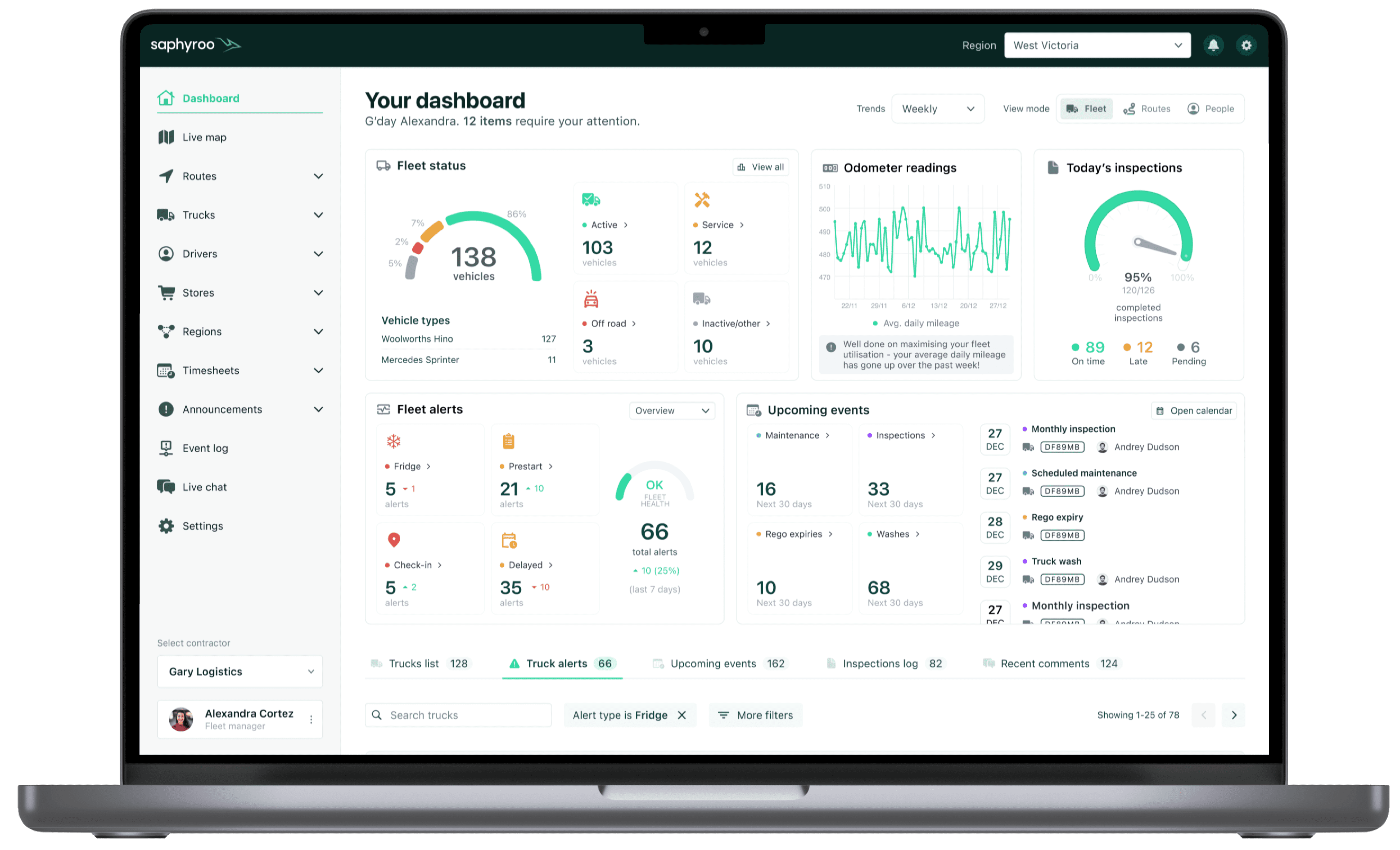
The Drive360 Console won’t let a roster go live if it breaks NHVR fatigue rules, cutting out compliance risks before they happen. And with built-in Electronic Work Diary (EWD) integration, every record is kept accurate, digital, and audit-ready, no need to worry about messy paper trails!
Why Fatigue Risk Management Matters Beyond Compliance
Fatigue is a leading cause of crashes in Australia. And it doesn’t just risk lives, it costs businesses through downtime, turnover, and lost contracts.
Saphyroo’s Vision360 AI cameras detect fatigue or distraction and alert drivers instantly, while the Drive360 App gives drivers in-cab fatigue alerts and an easy way to report if they’re not fit for duty.
Vision360 AI + Drive360 App = instant alerts, safer drivers, and fewer fatigue risks.
Running a Fatigue Risk Assessment
A fatigue risk assessment should be a live document that shapes your rosters and site practices.
Fatigue Risk Assessment Template
| Risk Factor | How to Measure | Control to Apply |
|---|---|---|
| Long shifts (>12 hrs) | Review rosters | Cap hours, schedule breaks |
| Night/early morning work | Check rostered start times | Rotate drivers every 3 days |
| Consecutive shifts | Track weekly totals | Enforce 24–48 hr recovery |
| Remote/isolated work | Map locations | Schedule check-ins and AI monitoring |
| High physical demand | Review task type | Rotate duties, add hydration/rest |
| Driver self-reports | Collect feedback | Adjust rosters when required |
Common mistakes to avoid: Counting only hours, trusting drivers to self-report without data, and failing to update assessments regularly.
Building a Fatigue Risk Management Plan
Once you’ve worked out the risks, your FRMS should roll into a practical game plan. That means having clear rules for rosters, a simple way to report fatigue incidents, the right tools to keep an eye on things, and a routine for regular check ups. Training supervisors to recognise fatigue signals is also critical.
It’s also worth getting your drivers involved. Their input is valuable because they know which runs are toughest and when they’re on board, your FRMS has a much better chance of working.
With Saphyroo, Drive360 compliance reports gives managers fatigue KPI’s instantly, they see see the risks, drivers log them in seconds.
Tools That Make Fatigue Management Practical
Plenty of managers still juggle fatigue compliance with Excel sheets or old-school paper logbooks. And sure it works, right up until a driver chucks a “sickie” and everything falls apart!
Now lets compare:
PAPER vs. EWD vs. DRIVE360
Manual assessments are a headache. See how Drive360 automates them: Book a demo.
From Paper to Practice: Making Fatigue Management Work
Even the best plan fails if they aren’t put into practice. The managers who make it work rotate drivers out of night runs, act quickly when fatigue alerts go off, and check reports monthly. The result is fewer compliance breaches, safer teams, and smoother operations.
Strengthen Your FRMS
Fatigue management isn’t something you do once and tick off the list. Rules get updated, risks shift, and the way your business runs keeps changing. The reality is, it’s not a matter of if fatigue will affect your operation, it’s a matter of when.
With Saphyroo, you’ve got the tools to catch fatigue before it turns into a breach, real-time monitoring with Vision360, compliant rostering through Drive360, and audit-ready records thanks to EWD integration.
👉 Protect your drivers and your business: Book a demo or See pricing.