
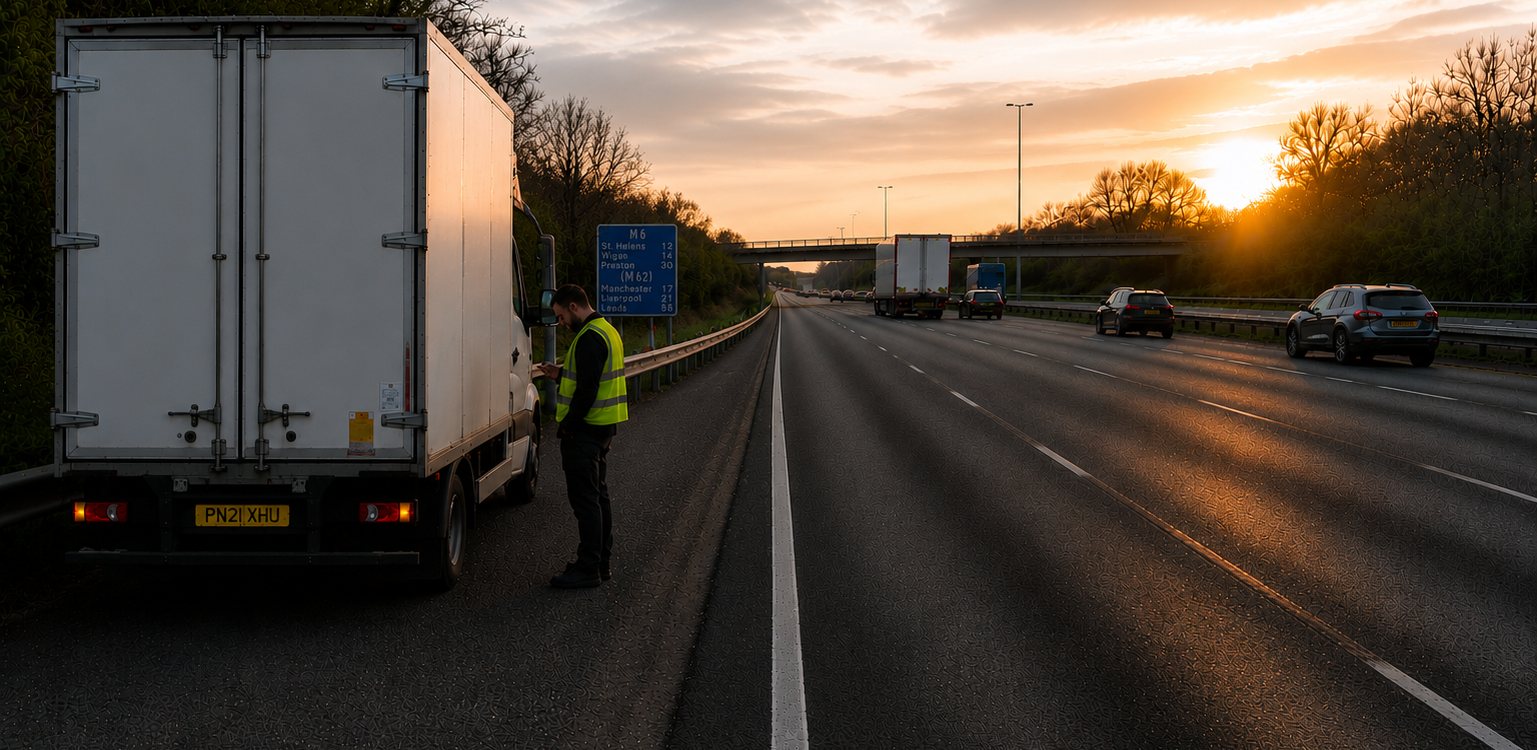

A single roadside check can result in up to £1,500 in fixed penalties. The DVSA can issue up to five in one stop for missed breaks, insufficient rest, exceeded driving limits or late card downloads. Each one is a separate offence.
Drivers and transport managers often use the terms “tachograph rules”, “tachograph laws” and “tachograph regulations” interchangeably. They all refer to the same framework: limits on driving and rest time and the requirement to record, download and keep that data.
This guide brings everything together in one place, covering driving limits, record keeping requirements, the Smart Tachograph 2 rollout and the rules taking effect on 1 July 2026.
One of the most commonly misunderstood rules is how Working Time and Drivers’ Hours interact. A driver can still be within the 9 hour driving limit but need an earlier break because the 6 hour Working Time threshold has already been reached.
What the Framework Covers
A tachograph is a device fitted to a vehicle that records driving time, breaks, rest periods and other work so enforcement officers can check legal limits have been followed. It is not a dashcam. A dashcam records video of the road and cab, while a tachograph records driver activity and hours. They serve completely different purposes.
Tachograph rules cover two main areas: the limits on driving and rest time, and the requirement for drivers and operators to record, download and keep tachograph data. These rules are based on two EU regulations: one that sets the drivers’ hours and rest requirements, and another that governs how tachographs are used. Both regulations now apply as part of UK law. Although the UK can amend these rules, only limited changes have been made so far.
The rules generally apply to goods vehicles with a Maximum Authorised Mass (MAM) of more than 3.5 tonnes and passenger carrying vehicles (PCVs) with 10 or more seats, including the driver. This applies whether the vehicle is used for hire and reward or to transport a business’s own goods.
Businesses operating these vehicles must also meet the relevant licensing requirements. Goods operators generally need an Operator’s Licence (O licence), while passenger operators are licensed under a separate system.
Running a compliant fleet operation means recognising that a tachograph is more than a legal requirement. It’s one of the DVSA’s primary enforcement tools and central to demonstrating compliance.
Driving, Break and Rest Limits Explained
In the UK, these limits come from retained EU Regulation 561/2006 (available at gov.uk/drivers-hours/eu-rules). The table below states them out clearly.
A few points that operators regularly miss:
All of this is recorded automatically on the driver’s card, which must be inserted into the tachograph at the start of each shift. Driving an in scope vehicle without the card inserted is an offence. Once the card is downloaded, tachograph analysis software checks that activity against the limits above and flags any infringement, work a transport manager would otherwise do by hand.
Working Time vs Drivers’ Hours
Drivers’ hours rules limit driving time, while Working Time Rules cover all work a driver does, not just time spent at the wheel.
This distinction matters more than many operators realise. The Road Transport (Working Time) Regulations 2005 apply to mobile workers on UK roads and run alongside drivers’ hours rules. Operators must comply with both regimes at the same time, depending on which sets the stricter limit.
The commonly referenced ‘6 hour rule’ is based on total working time rather than driving alone, covering activities such as driving, loading, unloading and vehicle checks The break required depends on how long the shift is:
The practical consequence is this: a driver can still be within the 9 hour daily driving limit but may need a break earlier if the 6 hour working time threshold is reached first.
Managing driver fatigue across both rules means keeping track of both time limits as they build up during the day. A platform designed for managing driver fatigue tracks working time as well as driving time, because enforcement officers check both.
Recording, Downloading and Keeping the Data
The record keeping duties sit in gov.uk’s tachograph rules guide. They are straightforward but often misunderstood.
A digital tachograph card usually stores around 28 days of activity before it starts overwriting the oldest records. If a driver card is only downloaded on day 35, up to a week of data may already be lost. That missing week can itself lead to a records issue at the roadside. Scheduling those downloads automatically through tachograph management software keeps both the 28 day card cycle and the 90 day vehicle unit cycle on time, so nothing is lost to an overwrite.
Drivers must carry records for the current day plus the previous 28 days. For international journeys within the EU, this increases to the current day plus the previous 56 days. These records can be stored on the driver card and supported by printouts or downloaded data for any days the driver was not driving.
If a driver cannot produce them during a DVSA check, it is treated as an immediate records offence.
Smart Tachograph 2: What Changes in 2025 and 2026
This is where many compliance guides get it wrong. The Smart Tachograph 2 rollout is happening in stages, with different requirements depending on the type of vehicle, when it was registered and whether it operates internationally.
What This Means for Operators
The 1 July 2026 deadline is the next major milestone for many mixed fleets. Operators using larger vans for international hire and reward should identify affected vehicles now and plan any required upgrades well before the deadline.
Vehicles operating only on UK domestic routes are not subject to the international retrofit requirement and can continue using their existing tachograph where permitted.
Smart Tachograph 2 records the vehicle’s location at the start and end of each duty, every three hours of driving and at border crossings using Galileo satellite positioning. It also supports remote roadside checks, allowing enforcement officers to read selected compliance data without stopping the vehicle.
For operators, the biggest change is that location data now forms part of the tachograph record itself, creating a more complete compliance record alongside drivers’ hours and rest periods.
Who Needs a Tachograph and Who is Exempt
Goods vehicles over 3.5 tonnes MAM and passenger carrying vehicles with 10 or more seats, including the driver, are in scope by default. They are only out of scope where a specific exemption applies.
A 7.5-tonne lorry (an HGV) is over 3.5 tonnes, so it needs a tachograph unless it fits within one of the derogations in the assimilated exemptions framework (available at gov.uk/drivers-hours/exemptions-from-eu-law). Each exemption has specific conditions, so you must check the details before relying on it.
The 100km derogation is one of the most commonly misunderstood exemptions. The exemption only applies if all four conditions are met:
For example, a building firm using a 4-tonne Luton van to carry its own tools within 80km of its yard would usually be exempt. However, the same vehicle used to carry a subcontracted load for a haulier, where driving is the main job, would not be exempt.
Types of Tachograph Cards
There are four types of tachograph cards and each one controls who can read or write data. Each card also has a specific role in the enforcement and compliance process.
Driver cards are applied for, renewed and replaced through the DVLA digital tachograph card service. A driver must have a valid card to legally drive an in scope vehicle.
Company cards are issued to the operator and secure the data so it cannot be accessed by other firms, whereas control cards are used by enforcement officers to download records directly from the vehicle unit at the roadside.
DVSA Penalties and Fines
Drivers’ hours and tachograph offences can result in fixed penalties, with the amount depending on the seriousness of the breach. During a single roadside check, the DVSA can issue up to five drivers’ hours fixed penalties, resulting in fines of up to £1,500.
The DVSA sets out its approach in its enforcement and penalties guidance. The offences most commonly identified at the roadside include insufficient daily rest, missed 45 minute breaks, exceeding daily driving limits and failing to download driver card data on time. Failing to download data is a records offence in its own right, separate from any drivers’ hours infringement.
Falsifying or tampering with tachograph records is a much more serious offence. It is a criminal matter that can lead to prosecution and a potentially unlimited fine, depending on the court. The DVSA has prosecuted operators for these offences, including cases where company directors received suspended prison sentences.
The unlimited fine reflects the removal of the level 5 cap on fines in England and Wales in 2015. As a result, the £5,000 maximum fine still mentioned in some older compliance guides no longer applies.
Persistent or serious breaches can lead to more than fixed penalties. Cases may be referred to a Traffic Commissioner, who oversees operator licensing and can call an operator to a public inquiry.
Following a public inquiry, an O licence can be suspended, curtailed or revoked. Losing an O licence means losing the legal right to operate goods vehicles commercially, and continuing to operate without one can result in prosecution.
The biggest compliance risk for most transport managers isn’t a single infringement. It’s recurring patterns of non compliance, whether that’s drivers regularly missing daily rest requirements, overdue driver card downloads or vehicle unit data not being downloaded for months.
The DVSA looks for repeated issues rather than isolated mistakes, making persistent patterns far more likely to be referred to a Traffic Commissioner.
How Operators Stay on Top of Compliance
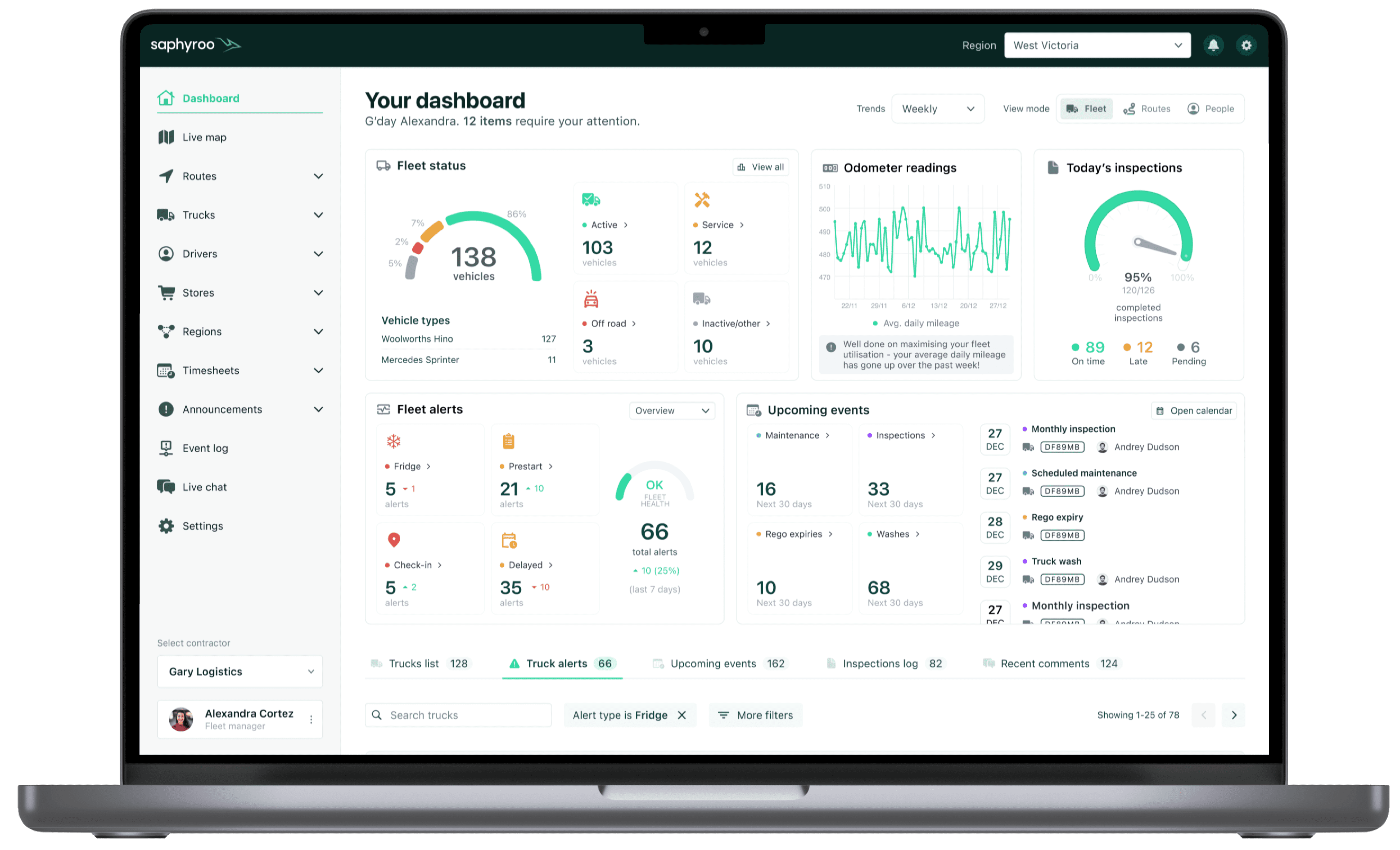
Modern tachograph software removes the need for manual driver card collection, routine downloads and time consuming infringement reviews, helping operators stay on top of compliance before issues become enforcement action.
For operators looking to connect tachograph compliance with wider fleet operations, Drive360 manages telematics, fatigue, scheduling, proof of delivery and vehicle management alongside specialist tachograph platforms. It integrates with providers such as Tachomaster and TruTac, allowing operators to retain their existing tachograph workflows while managing the rest of their fleet from one platform.
UK data residency is available on request through a dedicated AWS London deployment. Drive360 securely stores compliance records for at least 12 months, making it easier to produce information for DVSA inspections, analyse recurring infringement trends, and identify issues before they become wider compliance risks.
A note on DVSA Earned Recognition: operators who have held an O licence for two or more years can apply to join the scheme. It requires a DVSA validated IT system that reports key performance indicators every four weeks, along with a third party audit every two years. Participation is limited to approved IT systems and operators that meet the DVSA’s eligibility criteria.
FAQs
What is the difference between tachograph rules and drivers’ hours rules?
Drivers’ hours rules set limits on driving time, breaks and rest periods. Tachograph rules include those same limits, but also require drivers and operators to record and store that data using a tachograph. In practice, they form two parts of the same compliance framework.
Do tachograph rules still apply after Brexit?
Yes. EU Regulation 561/2006 and Regulation 165/2014 still apply in the UK as domestic law and continue to be used in the UK drivers’ hours and tachograph framework. The UK can make changes through its own legislation and has done so in limited areas.
What is the ‘6 hour rule’?
The 6 hour rule comes from Working Time Rules, not drivers’ hours. After 6 hours of work, including driving, loading, unloading and vehicle checks, a break must be taken.
A shift of 6 to 9 hours requires at least 30 minutes of break and a shift over 9 hours requires at least 45 minutes. This runs alongside drivers’ hours rules, and drivers must comply with whichever requirement is stricter.
Can I drive a 7.5 tonne lorry without a tachograph?
A 7.5 tonne lorry is above the 3.5 tonne threshold, so it requires a tachograph by default. The main exception is the 100km own equipment derogation. This only applies if all four conditions are met:
- The vehicle is 7.5 tonnes or less.
- It carries the operator’s own materials or equipment rather than goods for hire and reward.
- It operates within 100km from the base.
- Driving is not the driver’s main job.
If any one of these conditions is not met, a tachograph is required.
How long do I have to keep tachograph records?
Operators must keep tachograph records for at least 12 months and make them available for DVSA inspection. At the roadside, drivers must carry records for the current day plus the previous 28 days.
What happens if the tachograph breaks down?
If a tachograph becomes faulty, it must be repaired as soon as possible. If the vehicle cannot return to base within a week, it must be repaired on the road. Until it is repaired, the driver must keep manual records of driving, rest and other work. Driving without a working tachograph and without manual records is an offence.
Drive360 handles tachograph downloads, infringement review and compliance records in one platform and integrates with Tachomaster and TruTac for operators who already have specialist tacho software in place.
This article is editorial guidance, not regulated compliance advice. Figures and regulatory requirements are taken from gov.uk and DVSA sources, verified June 2026. Confirm current rules at gov.uk before acting on them.