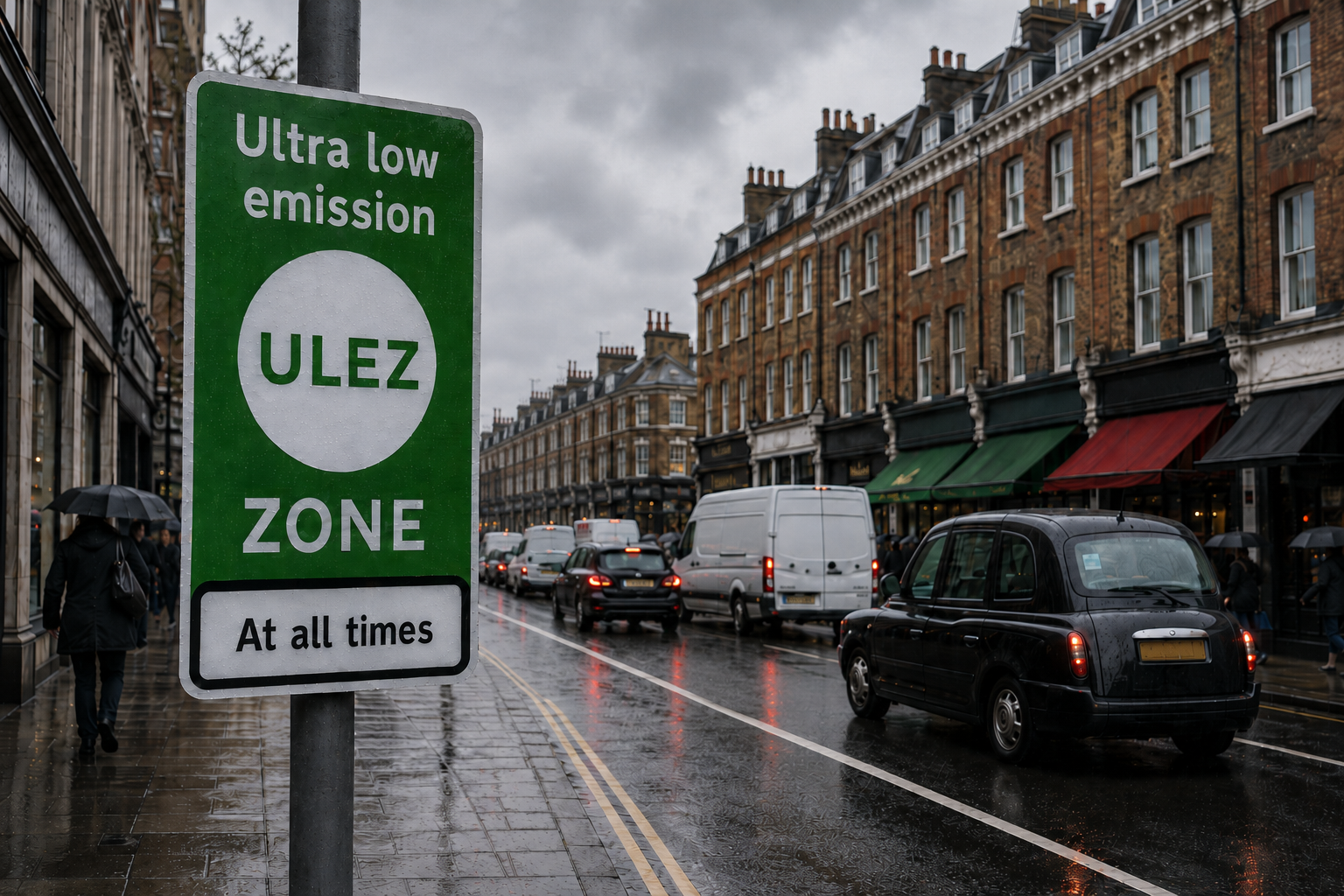
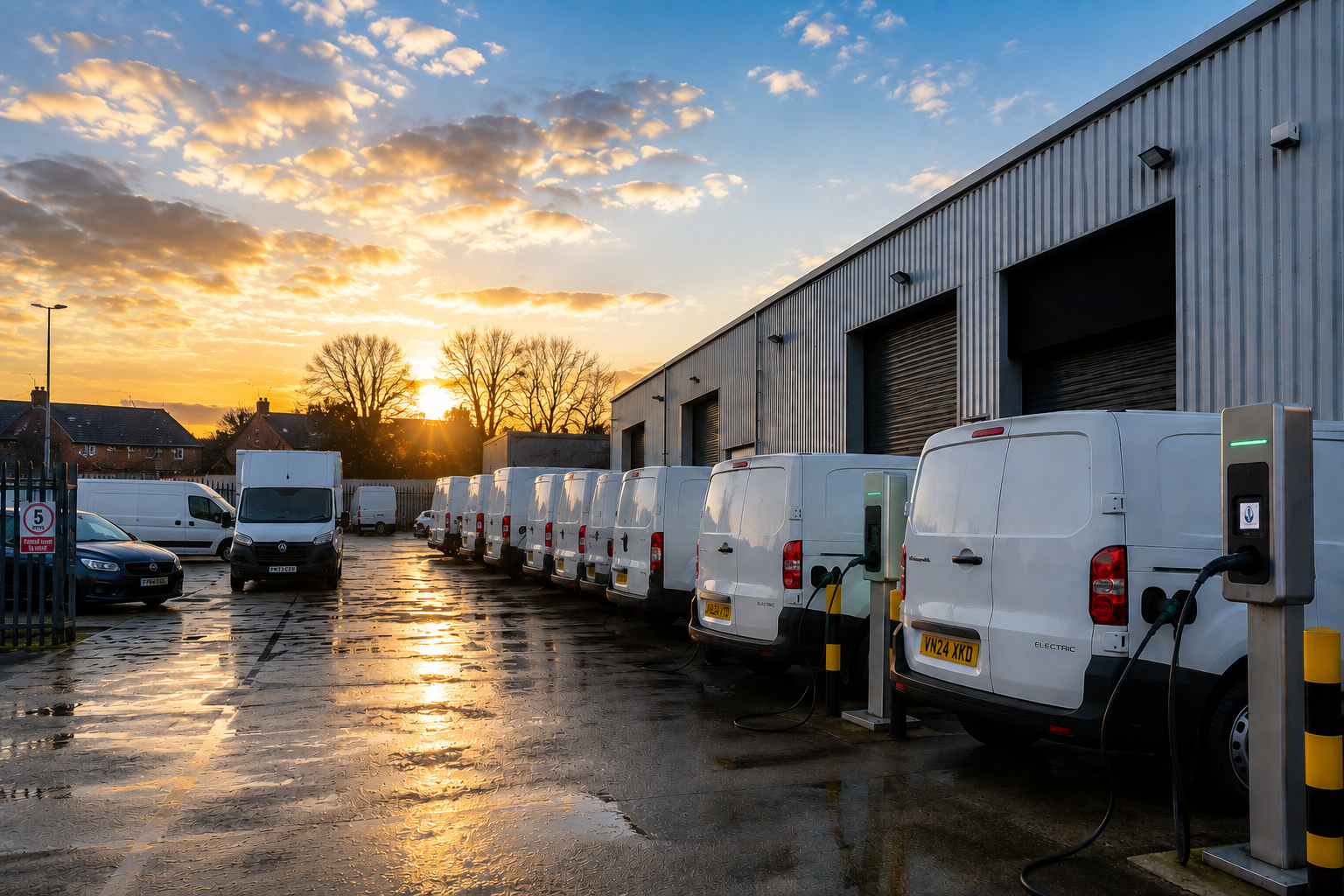
Most ULEZ guides are written for someone driving a car into central London. Fleet operators deal with a different set of costs and rules. Many of the plans put in place in 2024 are already outdated.
Vans are subject to ULEZ, whilst HGVs fall under the LEZ, where daily charges are significantly higher. Electric vans remained exempt until 2 January 2026.
A scheme called the “ULEZ scrappage scheme” was introduced to help operators replace older, higher emission vehicles with cleaner alternatives by providing financial support for eligible upgrades or vehicle removals. Many fleets still reference the scheme today, however it ended in 2024 and has not been replaced.
The four schemes affecting every fleet
A mixed fleet can be impacted by all four London compliance schemes at the same time. These are not different levels of one system, but separate charging and compliance frameworks, each with its own rules, costs and vehicle requirements.
The 3.5 tonne line is the key dividing point. Below it, vans are typically charged £12.50 under ULEZ. Above it, the same trip can reach £300 under the LEZ depending on emissions.
Both ULEZ and LEZ operate across Greater London, including all 32 boroughs and the City of London. The Congestion Charge sits within this area, covering central London. DVS applies on top for HGVs over 12 tonnes.
Real costs by vehicle type
In practice, ten Euro 5 LCVs operating in London 250 days a year generate £31,250 in ULEZ charges. Three Euro V tractor units spending 200 days a year in London accumulate £60,000 under the LEZ. Pre-Euro IV vehicles push those costs significantly higher.
Timing also has a direct cost impact. A vehicle entering at 23:55 and exiting at 00:05 is charged for two separate days, meaning a £300 tier HGV can incur £600 from a single journey.
PCN tip: If PCNs are paid within 14 days the charge is reduced by 50%. Leave them beyond 28 days and the penalty increases by 50% above the full charge.
Checking compliance across the fleet
Most fleets are more compliant than they think once a proper review is carried out. TfL’s VRM (Vehicle Registration Mark) checker lets operators enter a registration number to check ULEZ, LEZ and Congestion Charge statuses in a single search. Fleet Auto Pay accounts, for fleets with six or more vehicles, allow VRMs to be uploaded in bulk against a single fleet management record so daily compliance is visible at a glance.
Compliance is based on a vehicle’s declared emissions, not simply on its age. The Euro standard can usually be found on page two of the V5C, under “Exhaust Emissions”.
As a general rule, most petrol cars and vans registered after 2005 comply, along with most diesel vehicles registered after September 2015 and HGVs registered from 2014 onwards if they meet Euro VI standards. Every vehicle should still be checked individually.
For Euro V tractor units operating regularly in London, a CVRAS (Clean Vehicle Retrofit Accreditation Scheme) approved retrofit can bring the vehicle up to Euro VI standard. Most operators have chosen to replace vehicles rather than retrofit them, but the option still remains for buses, coaches and slower cycle assets.
Key changes in 2026
Many older guides now fall out of date, particularly on two points: the EV congestion charge and the scrappage scheme.
The 100% Cleaner Vehicle Discount ended on 25 December 2025. From 2 January 2026, EVs are no longer exempt from the Congestion Charge. Under Auto Pay, electric vans, HGVs and quadricycles are charged £9 a day (50% of £18). Electric cars are charged £13.50 (25% of £18). Without Auto Pay, the full £18 daily charge applies. Any EV business case built before December 2025 should be reassessed.
ULEZ, LEZ and DVS Progressive Safe System requirements have remained unchanged since 28 October 2024. The van and minibus scrappage scheme stopped accepting new applications on 8 September 2024, with final payments processed by July 2025. HGVs were never eligible and no replacement scheme has been introduced.
As of 1 January 2026, EVs must be correctly classified as zero emission within a Fleet Auto Pay account for the new tiered discount to apply.
Understanding a PCN notice
PCNs are issued by post following ANPR detection and a DVLA keeper lookup. If unpaid after 28 days, the penalty increases by 50% above the full rate, before escalating to enforcement action through bailiffs.
Grounds to challenge a PCN (within 28 days)
One thing operators often miss is that unpaid PCNs can accumulate and be used as evidence of operator conduct. The Senior Traffic Commissioner’s Statutory Document on Good Repute treats them as relevant to an operator’s fitness and repute. The correct approach is to either pay or formally challenge them. Ignoring them is not a practical strategy.
The three levers operators still have
1
Allocation: Most fleets already operate a mix of Euro 6 and Euro VI vehicles. Setting a London geofence allows you to tag compliant units and route London jobs to them, at no additional cost.
2
Sub-contracting: Outsource the London portion of the job to a compliant 3PL where routing is flexible. In many cases, this is cheaper than upgrading a vehicle already due for replacement within 18 months.
3
Replacement cycle: Bring forward the replacement of any non-compliant LCV doing 100+ London days a year. The annual ULEZ cost often offsets a large part of the upgrade gap.
A non-compliant Euro 5 LCV operating in London 180 days a year pays £2,250 in annual ULEZ charges. This covers a large portion of the cost difference when upgrading to a used Euro 6 vehicle, before taking into account the resale value of the older van.
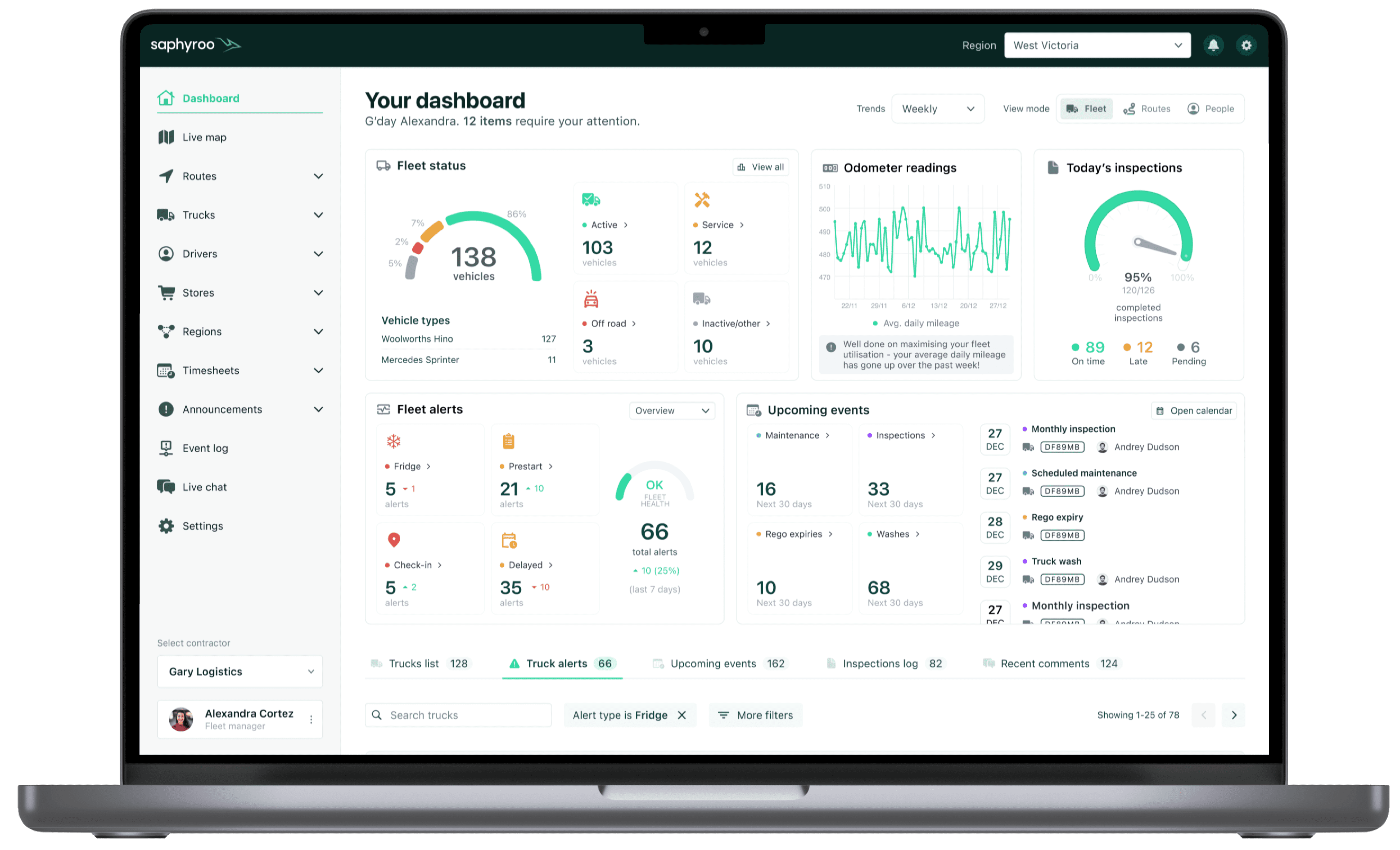
For mixed fleets, geofence based allocation is often the first step. Platforms like Saphyroo can support zone aware route optimisation for this type of mixed-inventory problem.
EV van savings still exist, but the cost advantage has narrowed in 2026. Under Auto Pay, electric vans now pay £9 per day for the Congestion Charge, compared with £18 per day for a Euro 6 diesel van. Across 200 operating days in central London, this represents an annual saving of around £1,800 compared with diesel vehicles. This is significantly lower than the savings figures often quoted in older guides, which were typically based on non-compliant Euro 5 diesel vans facing much higher daily charges.
EV HGVs are not yet practical for most general haulage, so fleets should continue planning around Euro VI replacements while keeping an eye on future grant support.
Outside of London
If a vehicle meets London’s ULEZ and LEZ standards, it will also meet all Clean Air Zone requirements across England and LEZs in Scotland, because they all use the same Euro emissions standards.
England has seven Clean Air Zones in 2026:
Scotland operates LEZs on a penalty basis rather than daily charging. Glasgow has been live since June 2023, with Edinburgh and Aberdeen introduced on 1 June 2024 and Dundee on 30 May 2024. The standard penalty is £60, doubling for repeat offences within 90 days and up to a maximum of £480 for cars and vans and £960 for HGVs and buses.
Wales currently has no live LEZ and Northern Ireland has no equivalent scheme in place.
Auto Pay for fleet operators
Auto Pay links charges to a registered vehicle and bills them automatically for the Congestion Charge, ULEZ, LEZ and the Blackwall and Silvertown tunnels, removing the need to make daily payments manually.
Fleet Auto Pay is designed for operators with six or more vehicles, allowing charges to be consolidated into a single monthly direct debit with up to five account managers and no registration or renewal fees.
Both systems reduce administration and the risk of missed payments, but they do not reduce the underlying charges themselves.
FAQ
How much is ULEZ for HGVs?
HGVs over 3.5 tonnes do not pay ULEZ. They fall under the LEZ, with charges set at £100 a day for Euro V vehicles, £300 a day for pre-Euro IV PM vehicles and no charge for Euro VI.
Is the ULEZ scrappage scheme still open?
No. The scheme closed to new applications on 8 September 2024, with final payments completed by July 2025. HGVs were never eligible and no replacement scheme has been introduced for 2026.
Are electric vans exempt from ULEZ?
Yes. However, from 2 January 2026 electric vans are no longer exempt from the Congestion Charge in central London and pay £9 a day under Auto Pay (£18 without it).
What is Fleet Auto Pay?
Fleet Auto Pay is TfL’s billing service for operators with six or more vehicles. A single monthly direct debit covers the Congestion Charge, ULEZ, LEZ and the Blackwall and Silvertown tunnel charges, with no registration fee.
Can I challenge a ULEZ PCN?
Yes. Challenges can be made within 28 days on grounds such as an incorrect VRM, vehicle exemption status, proof the charge was already paid, or if the vehicle had been sold or stolen before the detection date.
Does my Euro V tractor unit pay LEZ if it has a CVRAS retrofit?
No, provided the vehicle’s CVRAS certification remains valid and the annual emissions check is up to date.
What operators should do next
1
Check every VRM through TfL’s checker before the next month end review to confirm which vehicles are compliant.
2
Use Fleet Auto Pay if you operate six or more vehicles so charges are handled automatically and payments are not missed.
3
Add a London geofence to your telematics system and route compliant vehicles to London jobs wherever possible.
None of these steps adds direct cost. The bigger long term decision is the vehicle replacement cycle.
Saphyroo is an Australian fleet management platform with a UK office. This article is editorial guidance, not regulated compliance advice. Charges and PCN amounts are TfL figures as published April 2026. Confirm current rates on tfl.gov.uk before acting on them.