EV Fleet Management in the UK: Costs, Charging and Compliance for Van Fleets
If your EV strategy hasn't changed since 2025, it's already behind. Costs, charging infrastructure and government policy have all moved on.
Sana Kazi9 MIN READ
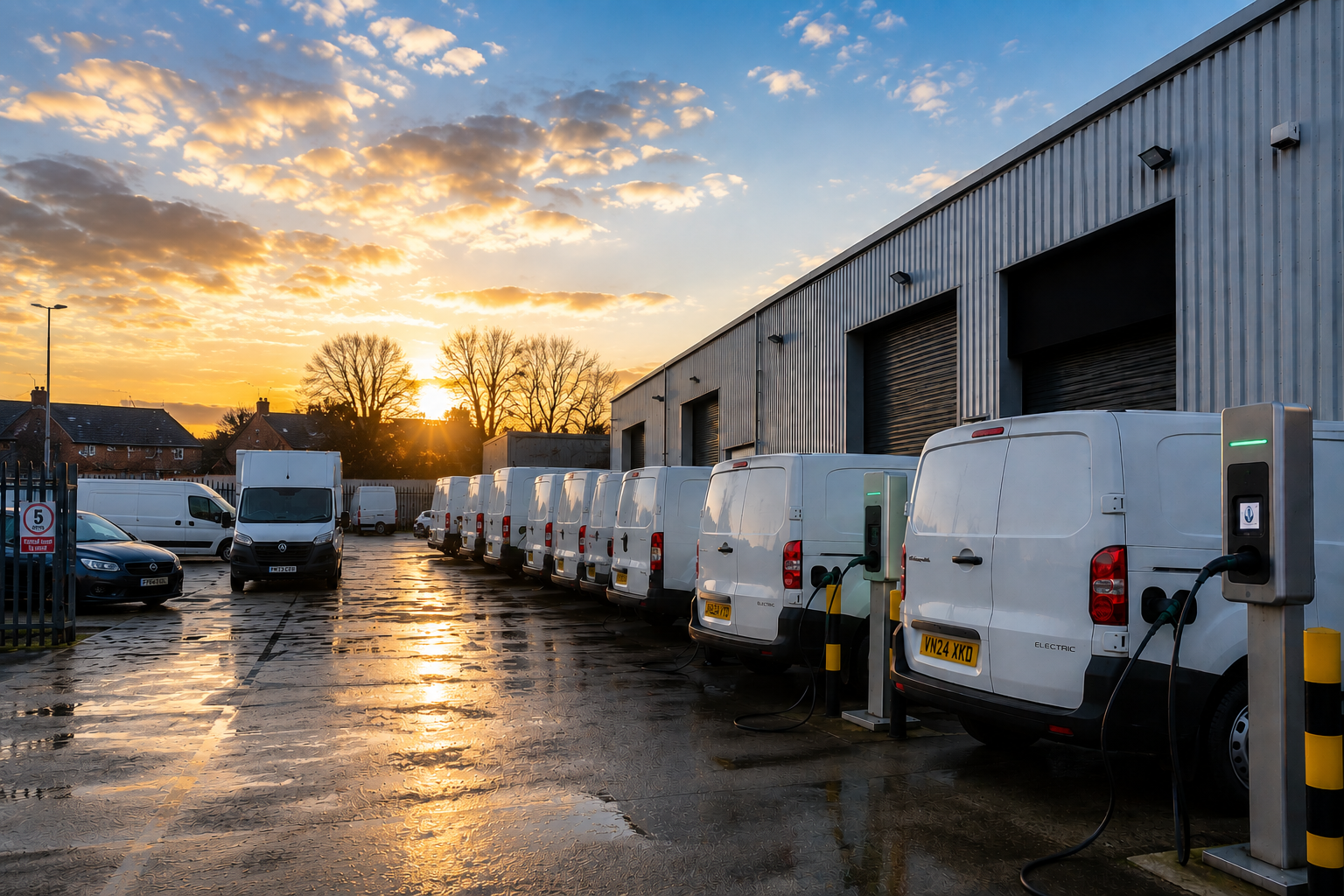
For many UK fleets, the challenge is no longer whether to adopt electric vehicles, it’s how to integrate them efficiently alongside diesel vehicles while balancing running costs, charging infrastructure and evolving regulations.
The assumptions that underpinned many business cases just a few years ago no longer hold true. Zero emission vans became subject to Vehicle Excise Duty (VED) from 1 April 2025, and the full London Congestion Charge exemption ended on 2 January 2026. Fleet managers now need to reassess the real cost of operating electric vehicles and determine where they make operational and financial sense.
At a glance
- £0 to £9 – Electric vans now pay 50% of the London Congestion Charge daily rate from 2nd January 2026, down from full exemption.
- £500 per socket – The Workplace Charging Scheme now covers up to £500 per socket, up from £350, until 31st March 2027.
- Up to £5,000 – The plug in van grant offers up to £5,000 for vans between 2,500kg and 4,250kg, while funding remains available.
- 100% to 0% – Zero emission vans moved from nil VED to the standard light goods rate from 1st April 2025.
- 29p vs 17p per mile – Public rapid charging an electric van can cost more per mile than running diesel. Depot charging changes that calculation entirely.
Does the ZEV mandate actually make you go electric?
The ZEV mandate does not force your fleet to replace diesel vans with electric ones. It sets targets for manufacturers, not deadlines for fleet operators.
The practical impact for fleets is:
- The mandate requires manufacturers to increase the share of zero emission vehicles they sell in Great Britain.
- By 2030, 70% of new vans sold must be zero emission, rising to 100% by 2035.
- Existing diesel vans can continue operating beyond 2030. The ZEV Mandate affects manufacturers, not existing fleet vehicles.
The biggest impact for fleets will likely come from vehicle availability, customer requirements and city access rules rather than a legal requirement to switch.
As manufacturers adjust their ranges to meet the mandate, diesel van availability may reduce and incentives may shift towards electric. For many operators, these market pressures will shape fleet decisions well before any direct legal requirement applies.
EV Depot Charging: Power Supply, Infrastructure and Grid Capacity
Before costing an EV fleet, the first question is not which vehicles to buy. It is whether your depot can charge them. For most operators, the van is the easy part. The real issue is having enough power available where those vans park.
Buying chargers is only part of the investment. Installation, cabling, load management and potential grid upgrades often account for a significant proportion of the total cost.
The Workplace Charging Scheme now offers up to £500 per socket (up from £350), covering up to 75% of eligible costs for up to 40 sockets until 31st March 2027.
However, funding the charges is only part of the equation. The main constraint is often your site’s electricity supply. Your DNO (Distribution Network Operator) controls how much power your depot can draw from the grid.
A dozen vans charging overnight can quickly exceed the capacity of an existing depot supply. Increasing that capacity can take months and larger grid upgrades may take over a year to complete. For larger sites, the cost can also run into six figures.
Dynamic load balancing, which spreads charging demand across available capacity overnight, can help reduce pressure on the grid and make better use of existing supply.
For vans that do not reliably return to base, public charging can provide a fallback. It works, but the higher cost per mile means it needs to be planned carefully.
That planning starts with understanding how vehicles are actually used. Route and utilisation data helps fleets decide where electric vans will work best. Saphyroo’s Drive360 provides that visibility, helping operators manage electric and diesel vehicles together in one fleet system.
Depot Charging Checklist:
- Confirm depot capacity with your DNO before ordering electric vans.
- Separate charger costs from grid upgrade costs.
- Identify which vehicles return to base each night.
- Plan charging around actual fleet usage
The Real Cost of Running an EV Fleet
An EV can reduce running costs, but the savings depend heavily on how it is used. Charge at the depot and the numbers can work in your favour. Rely heavily on public charging and the advantage can disappear.
The biggest factor is where the van charges. Depot charging is typically much cheaper, often costing around 10 pence per mile or less, while frequent public rapid charging can cost more than running diesel.
For comparison, a van achieving around 2.7 miles per kWh and using public rapid charging at around 79p per kWh costs approximately 29p per mile. A diesel van returning 38mpg at 145p per litre costs around 17p per mile.
Real world conditions also matter. Load, weather and use of heating all reduce efficiency. In winter, public rapid charging costs can rise closer to 35p per mile, while depot charging generally remains the lower cost option.
Running cost by charging method (pence per mile)
| Method | Pence per mile | Basis |
|---|---|---|
| Diesel, ~38mpg | ~17p | At ~145p a litre |
| EV, depot overnight | Single digits to low teens | Commercial tariff |
| EV, public rapid | ~29p | ~79p/kWh at 2.7 mi/kWh |
HMRC’s Advisory Electricity Rate (AER) should not be used as a measure of commercial van running costs. It is a reimbursement rate for company vehicles, not the actual cost of operating an electric van fleet.
Purchase Price and Total Cost of Ownership
The purchase price is often the first figure operators compare, but it’s rarely the one that determines long term value. The true cost of an electric van depends on its total cost of ownership, including purchase price, running costs, maintenance, taxation and resale value.
Government incentives can help reduce the initial investment. The Plug in Van Grant currently offers up to £2,500 for eligible small vans under 2,500kg and up to £5,000 for larger vans between 2,500kg and 4,250kg, while funding remains available.
However, the upfront saving is only one part of the equation. Used electric van values have been more volatile than many fleets expected, meaning depreciation can offset some of the savings made through lower running costs. The BVRLA has highlighted falling residual values as one of the key financial challenges affecting fleet electrification.
Taxation has also changed. Zero emission vans now pay Vehicle Excise Duty (VED) at the standard light goods rate, bringing them into line with diesel vans. Some incentives remain, including the nil van benefit charge for zero emission vans used privately during the 2025/26 tax year.
For fleets that also provide company cars, it’s important to understand the “Benefit in Kind” (BiK) tax. BiK is the tax employees pay when they use a company car for personal travel. Electric company cars continue to benefit from lower BiK rates than petrol or diesel vehicles, although these rates will gradually increase from 5% in 2027/28 to 9% by 2029/30. The £40,000 Expensive Car Supplement under VED applies to cars not vans.
Maintenance is another area where electric vans can reduce operating costs. With fewer moving parts and no engine oil or exhaust systems to service, maintenance requirements are often lower than for diesel vehicles. However, tyres, accident repairs, insurance and battery health should still be included when comparing whole life costs.
Ultimately, the cheapest electric van isn’t always the one with the lowest purchase price. The best value comes from matching the right vehicle to the right operation and assessing its total cost over the life of the fleet.
Real Range Matters More Than Brochure Figures
The range advertised on the spec sheet is only part of the picture. Fleet decisions need to be based on what electric vans can realistically deliver on the road. Conditions such as load, weather, heating and driving patterns can significantly reduce the range an electric van delivers.
A loaded van running a multi drop route in winter may achieve a quarter to a third less range than its official WLTP (Worldwide Harmonised Light Vehicle Test Procedure) figure. A van advertised at 150 miles may realistically deliver closer to 100 to 112 miles in colder conditions. While WLTP figures provide a useful benchmark, they do not capture every operating condition a commercial fleet will face.
The answer is not always a bigger battery. The better approach is matching each van to the work it needs to do. A vehicle completing 60 miles of local drops most days may have plenty of range, even with winter reduction. A van covering 130 miles on a single route may need charging built into the working day.
Load is another factor fleets need to consider. EVs are heavier because of the battery, which can reduce available weight compared with an equivalent diesel model. The 4.25 tonne allowance helps offset this, allowing drivers with a standard category B licence to operate eligible zero emission vans up to that weight.
For mixed fleet operators, electric vans up to 4.25 tonnes also remain exempt from operator licensing (O Licence) despite exceeding the usual 3.5 tonne limit.
Choosing the right electric van starts with understanding how each vehicle is actually used. Utilisation and tracking data show the routes, mileage and patterns behind each vehicle, turning real world range estimates into a plan fleets can operate.
Regulatory Changes Every Fleet Should Know
While several financial incentives have changed, electric vans continue to benefit from exemptions in many emissions based charging schemes. Because they produce zero tailpipe emissions, they generally avoid charges in zones such as the Ultra Low Emission Zone (ULEZ), Low Emission Zone (LEZ) and Clean Air Zone (CAZ).
However, some of the wider financial benefits have changed. The biggest shift for fleets operating in London is the Congestion Charge.
The 100% Cleaner Vehicle Discount, which previously allowed electric vehicles to travel through central London without paying the Congestion Charge, ended on 25 December 2025. From 2 January 2026, electric vans pay 50% of the standard Auto Pay charge, reducing the daily cost from £18 to £9. This discount is also scheduled to reduce further from 2030.
The impact depends on where your fleet operates. While ULEZ, LEZ and the Congestion Charge are London schemes managed by Transport for London (TfL), other parts of the UK have different approaches:
- England: Clean Air Zones (CAZs) operate in a number of cities.
- Scotland: Low Emission Zones (LEZs) operate on a penalty-based system.
- Wales and Northern Ireland: There are currently no CAZ or LEZ charging schemes.
- Vehicle Excise Duty (VED): Applies across the UK.
Running Diesel and Electric in One System
For most operators, the challenge isn’t managing diesel vehicles or electric vehicles, it’s managing both together.
As fleets transition to electric, many find themselves managing two different types of vehicles with the same operational responsibilities. Regardless of how a vehicle is powered, operators still need visibility over:
- Location
- Utilisation
- Geofencing
- Drivers’ hours
- Inspections
- Defects
- Scheduling
- Proof of delivery
Electric vehicles introduce another layer of operational data, including state of charge (SoC), charging activity and battery condition. Unlike traditional fleet data, this information typically comes from the vehicle or charging network rather than the GPS tracker.
For fleets transitioning to electric, the challenge is keeping all of this information connected. Drive360 provides a single operational view across diesel and electric vehicles, helping operators manage routes, vehicles and performance without creating separate workflows for different fuel types.
As fleets electrify, the goal isn’t simply to add electric vehicles, it’s to manage the entire operation through one connected platform.
FAQs
What is EV fleet management?
EV fleet management is the process of running electric vehicles alongside the rest of your fleet. It covers charging, route planning, running costs, vehicle suitability and keeping operational data visible across both electric and diesel vehicles.
Should I only charge an electric van to 80%?
There is no requirement to stop charging an electric van at 80%. The right charging level depends on the vehicle’s route, daily mileage and when it can charge. Fleets should plan around real world range rather than a fixed percentage.
Do electric vans pay ULEZ or the London Congestion Charge?
Electric vans avoid ULEZ, LEZ and CAZ emissions charges because they produce no tailpipe emissions. The London Congestion Charge is different. From 2nd January 2026, electric vans pay 50% of the standard Auto Pay rate (£9 per day) instead of the full exemption they previously received.
Does the ZEV mandate force my fleet to go electric?
No. The ZEV mandate sets sales targets for manufacturers, not replacement deadlines for fleet operators. The impact for fleets is more likely to come through vehicle availability, customer requirements and city access rules.
The transition to electric isn’t about replacing every diesel van overnight, it’s about making informed decisions using real operational data. Saphyroo helps fleet operators manage diesel and electric vehicles together through one connected platform giving you complete visibility as your fleet evolves.