Agriculture & farm operations
Farm Vehicle Tracking Made for Australian Agriculture
Manage the vehicles, machinery and people behind every working day, from paddock to road.
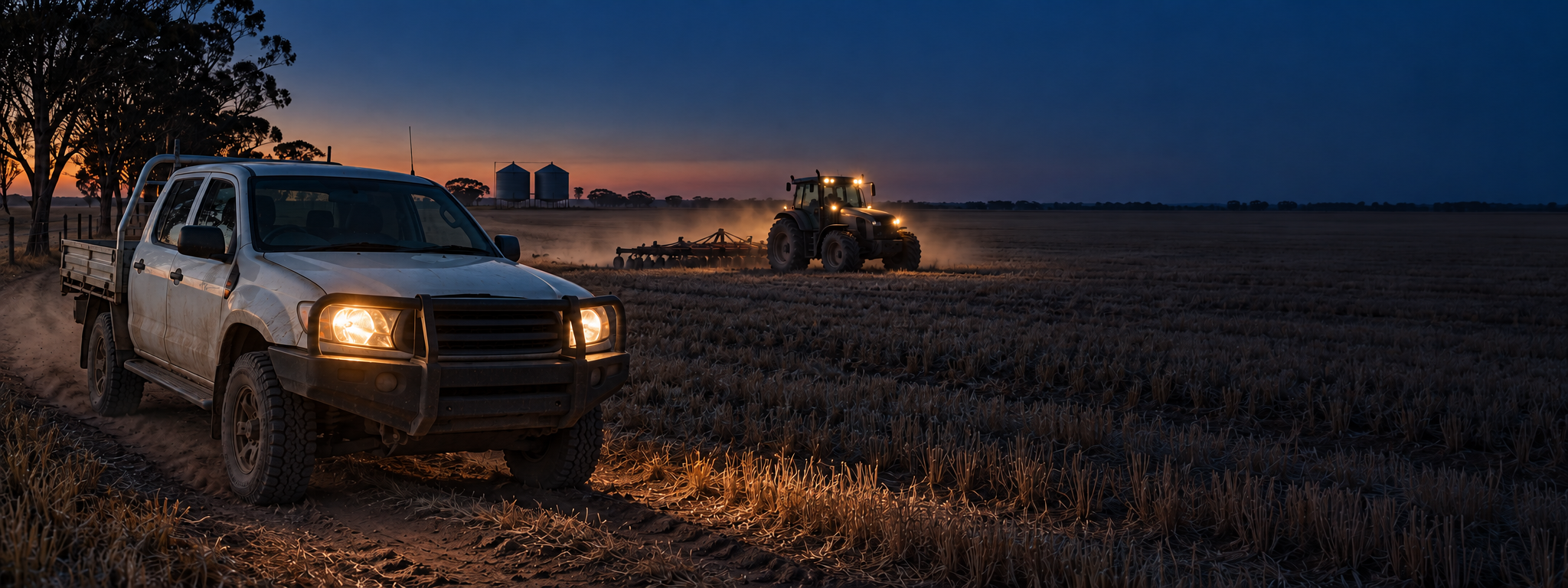
- Machinery & implementsKnow where equipment is and how it is being used across the property.
- Drivers & hoursManage timesheets and rosters without the paperwork.
- Servicing & registrationKeep service dates and registration renewals on schedule.
- Fuel & operating costsTrack on road and off road fuel use by vehicle.
- Assets accounted forSee the location and usage of every unit in real time.
- Produce protectedMonitor conditions throughout storage and transport.
- Costs controlledSee fuel use and operating costs across every vehicle.
- Downtime reducedPlan maintenance before equipment takes you off schedule.
Where Innovation Meets Agriculture
- 01
Agricultural Route Planning
Optimise routes with Route360 to reduce unnecessary mileage, fuel use and idle time.
- 02
Protecting Produce Quality
Monitor temperature and transport conditions throughout the journey to help preserve freshness, protect product quality and maintain the cold chain.
- 03
Agricultural Asset Tracking
Track machinery and implements in real time, with visibility of location, usage and activity across the property.
- 04
Agricultural Fleet Costing
Track vehicle operating costs, fuel use and off road activity to understand where money is being spent and identify opportunities to reduce costs.
- 05
Agricultural Predictive Maintenance
Use equipment hours, service schedules and maintenance data to stay ahead of servicing and keep machinery ready when it matters most.
Machinery, hours and servicing
The Full Picture Behind Every Farm Vehicle
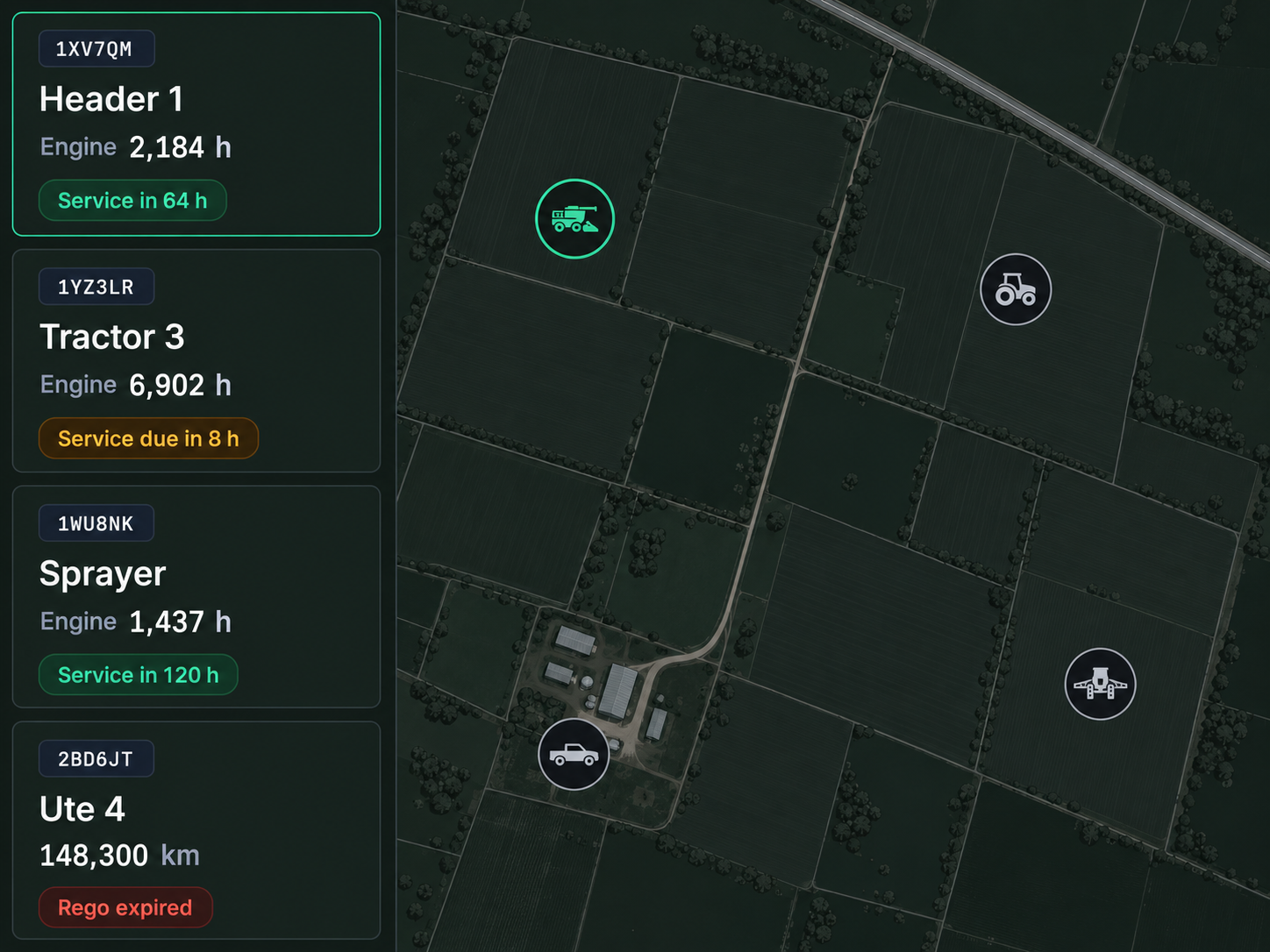
Machinery and implements on one map
Know where every tractor, header, ute, trailer and implement is and whether it’s working or sitting idle.
Engine hours, not odometers
Track servicing by the hours a machine actually works, not the kilometres it travels.
Servicing and registration due dates
Stay ahead of upcoming services and registrations before they put a machine out of action.
Know where the hours were worked
Separate paddock and road use to get a clearer picture of fuel, utilisation and running costs.
Driver hours without the paperwork
Capture start times, finish times and breaks digitally, keeping driver hours and timesheets together without relying on paper records.
Farm operations control centre
Every Machine. Every Hour. The Whole Day Under Control.
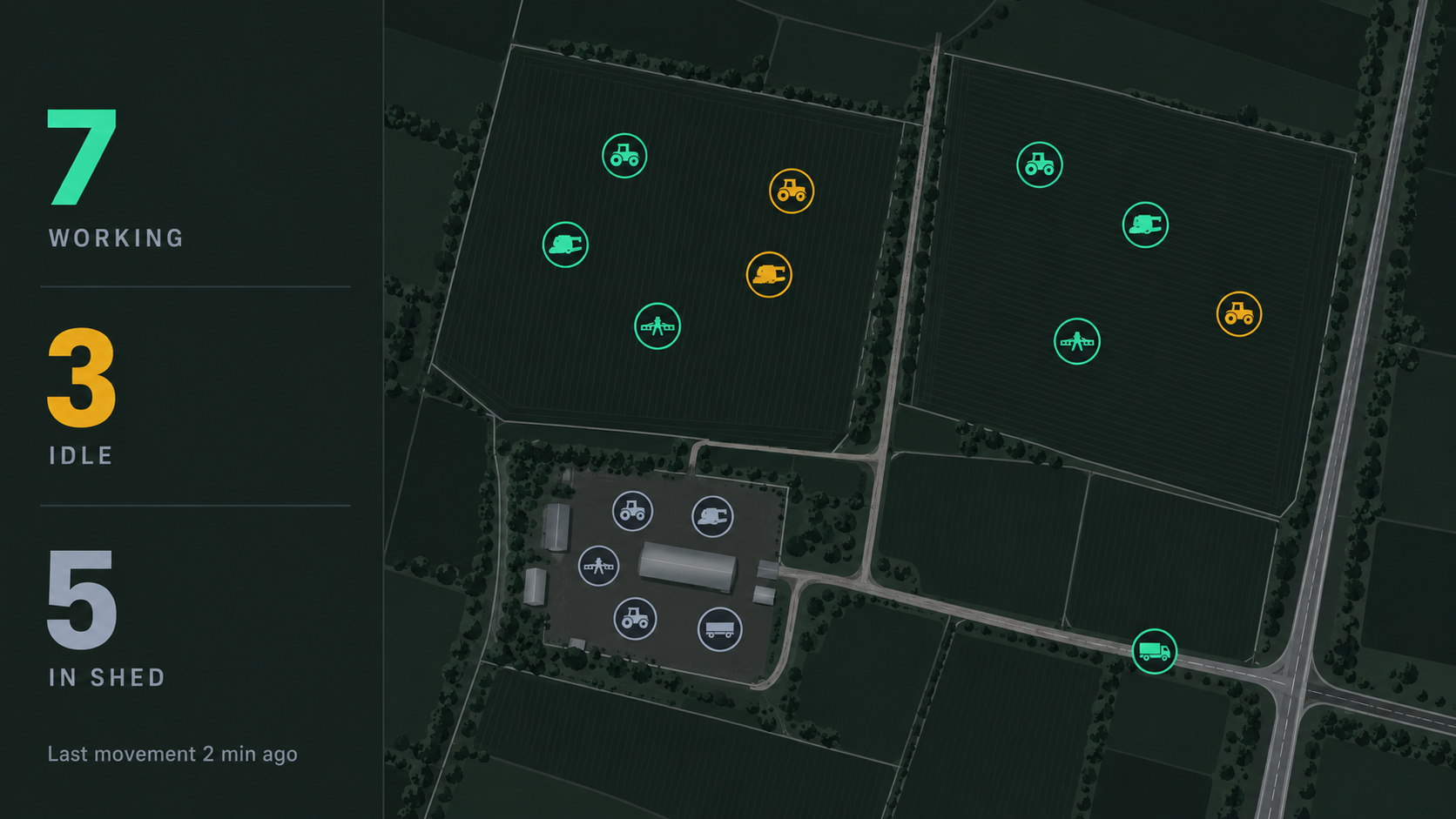
Activity
Know what’s working and what’s not
Track machines working, machines idle, operating hours and where vehicles and equipment are across the property and on the road.
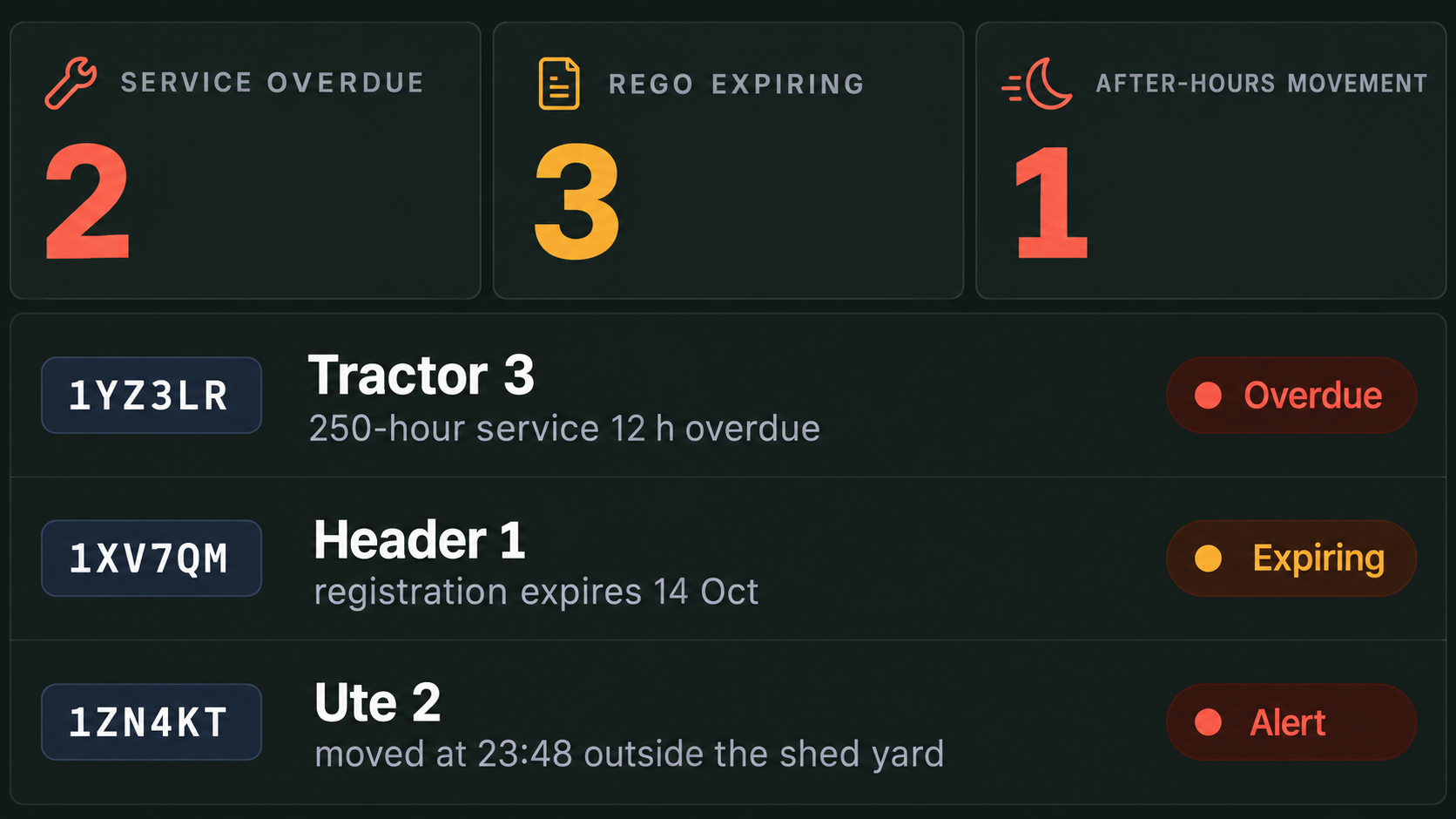
Disruption
Know what could stop the day
Stay ahead of overdue servicing, expiring registrations, unexpected movement and offline devices before they disrupt the work.
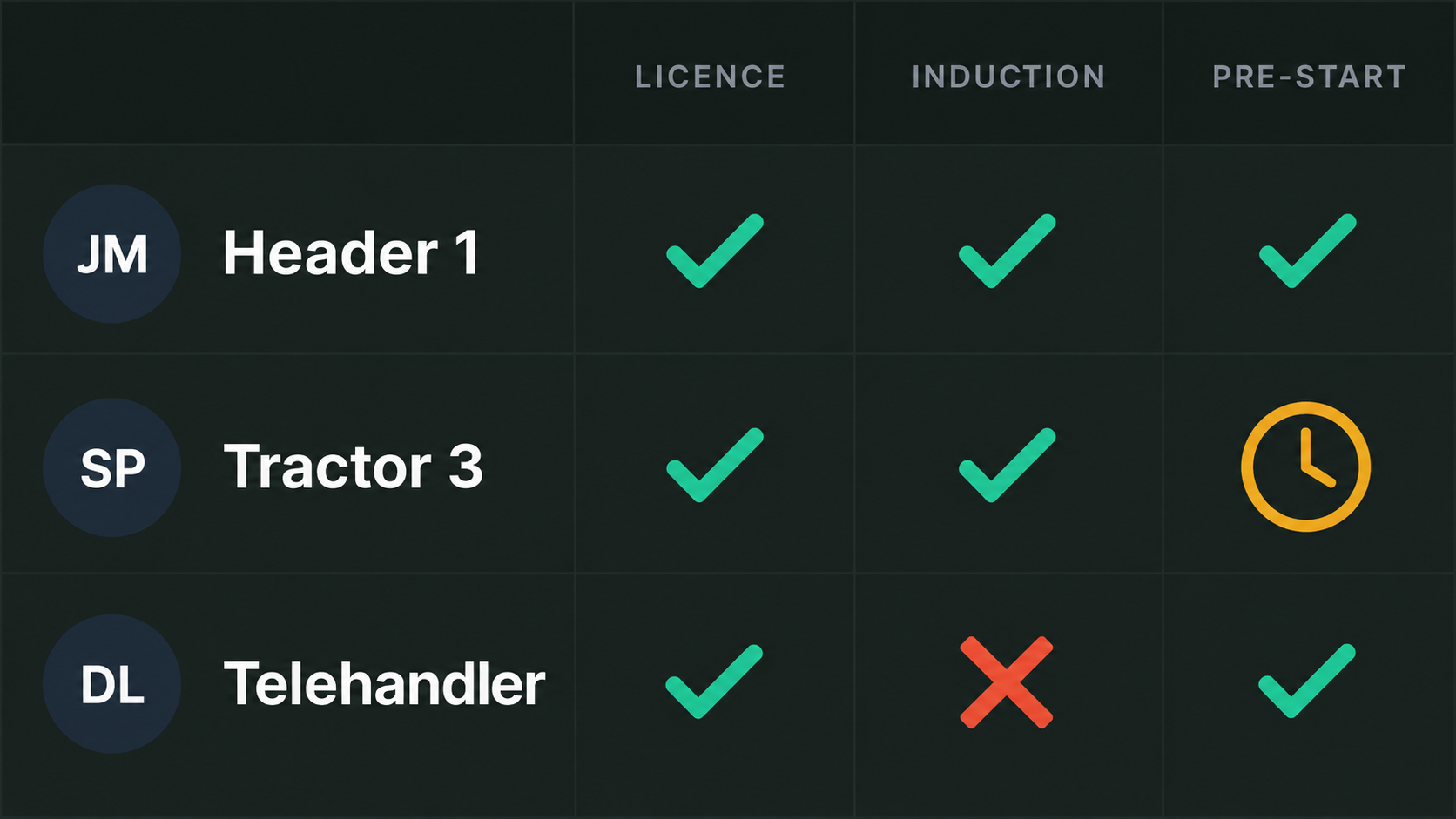
Operator and machine readiness
Know who is operating each machine, whether licences and inductions are current and whether required pre starts have been completed.
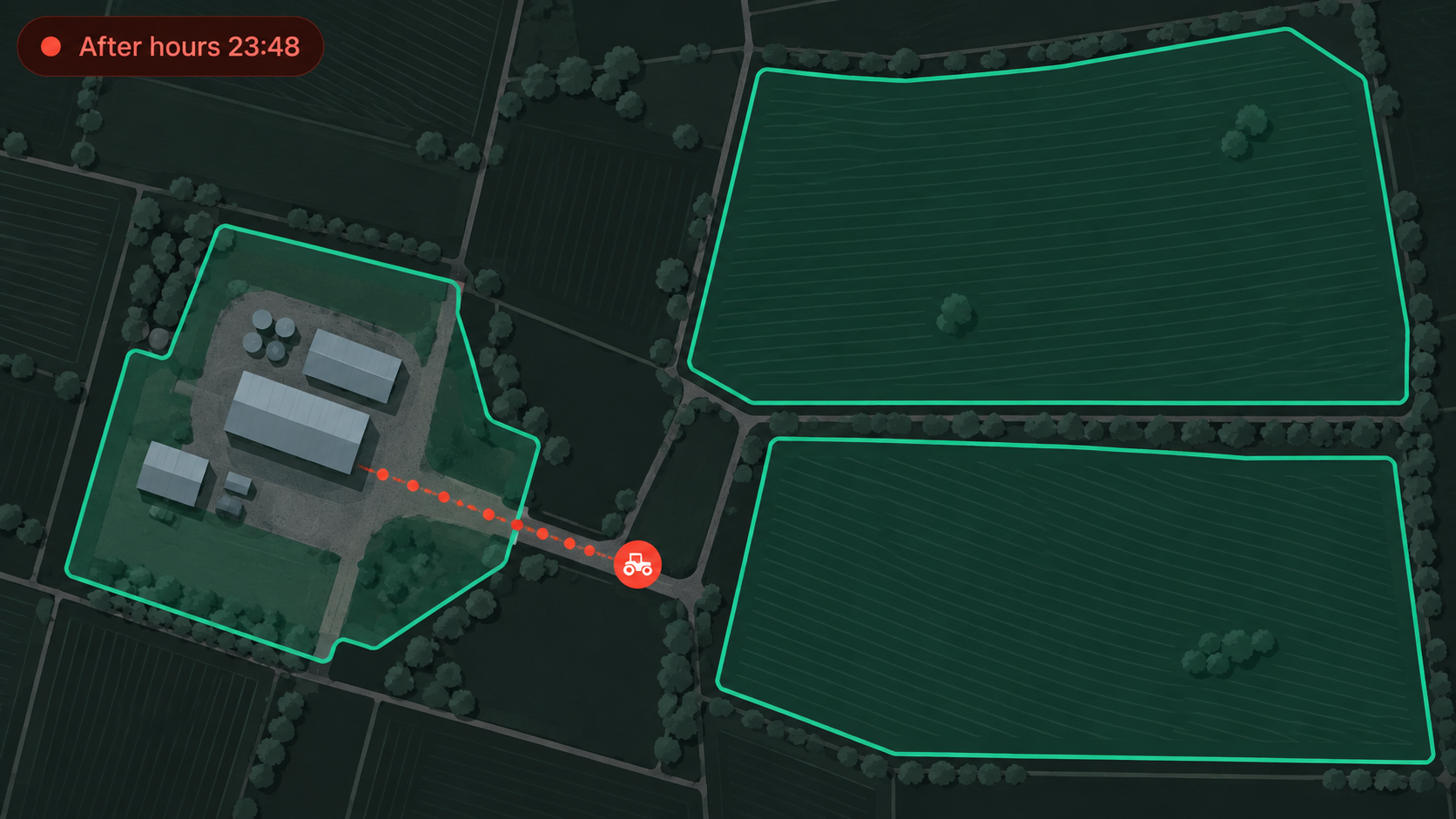
Boundaries and after hours movement
Set boundaries around sheds, yards and paddocks, with alerts when machinery moves outside them or at unexpected times.
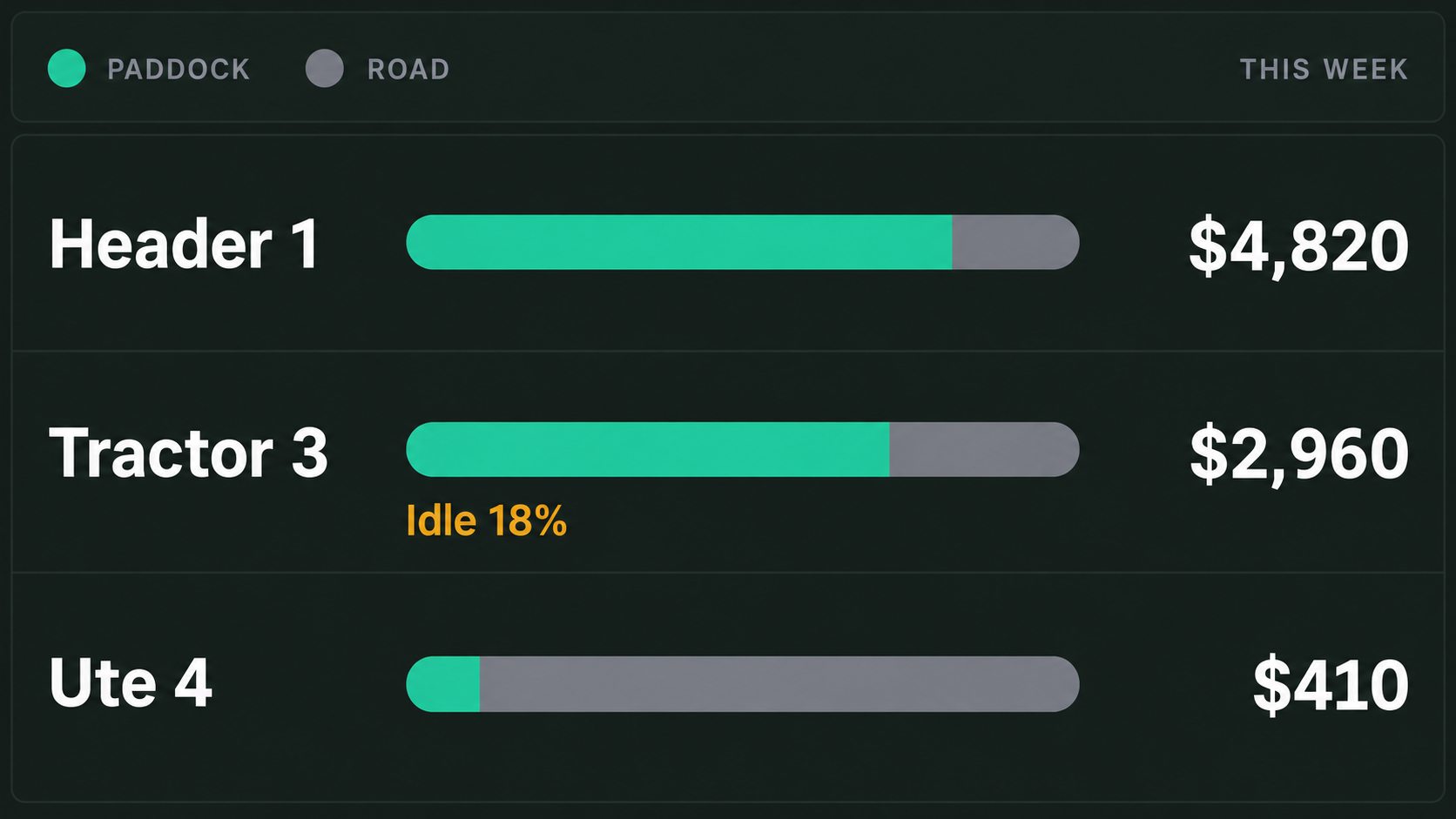
Fuel and running costs
Track fuel use, idle time and running costs by machine, with road and paddock activity clearly separated.
Across the Paddock. Around the Shed. On the Road to Market.
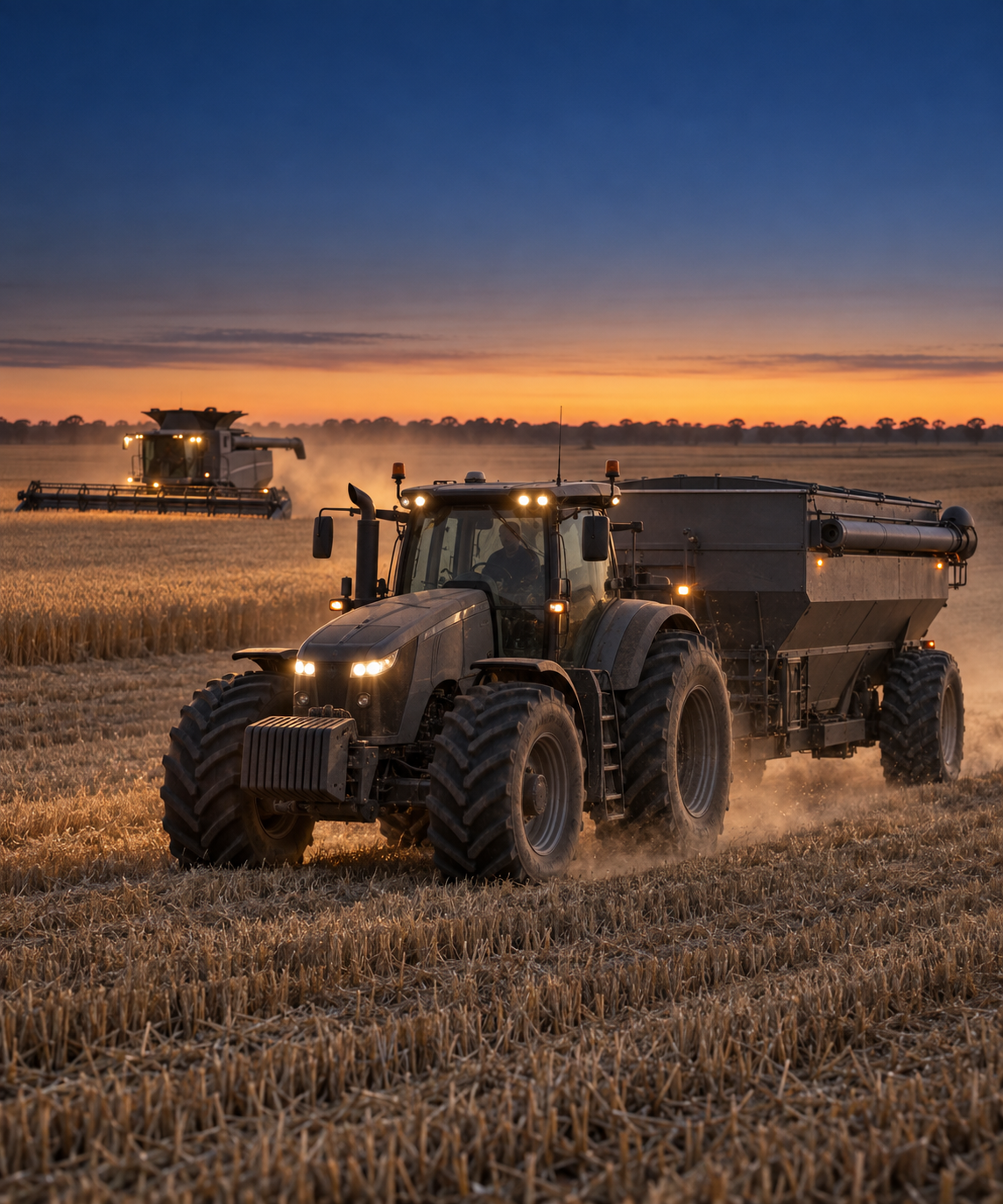
In the paddock
Tractors, headers and implements at work
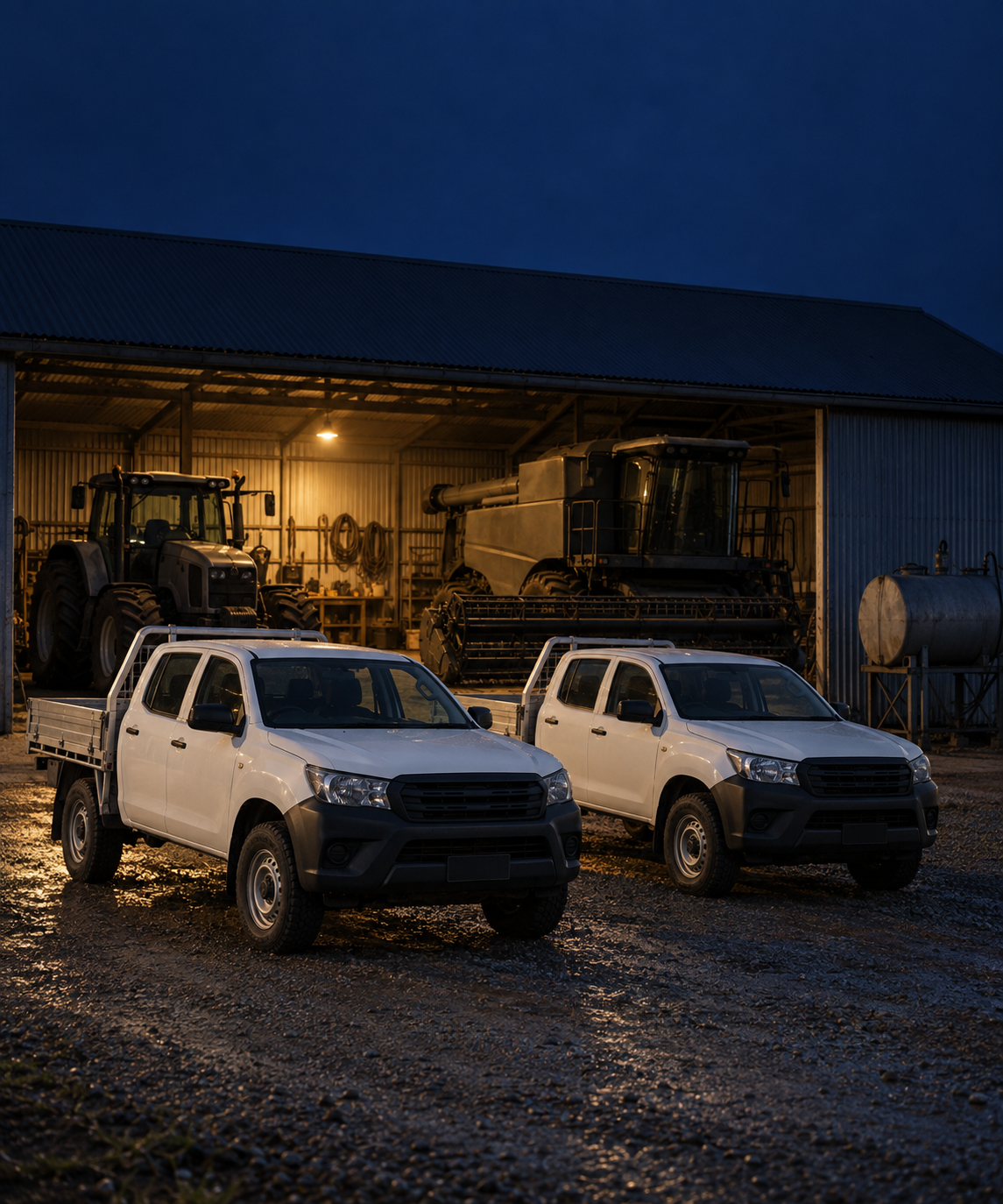
Around the shed
Utes, workshops and machinery around the shed
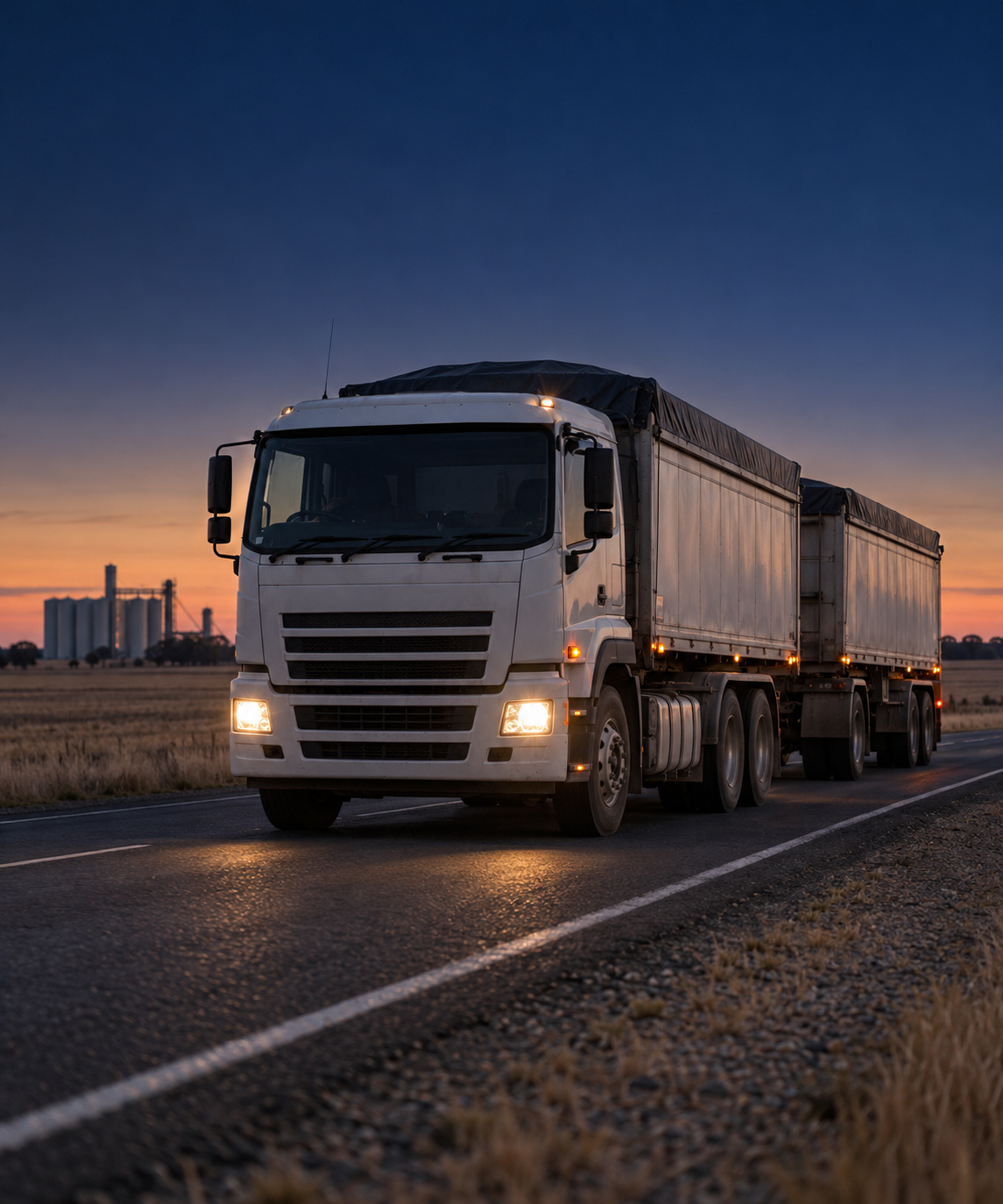
On the road
Getting produce to the buyer
Hardware Built for Life on the Land
Purpose built hardware that connects vehicles, machinery and implements across the property. Equipment and availability depend on vehicle type, environment and configuration.

GPS Vehicle Trackers
Live position, usage and history across tractors, utes and trucks.
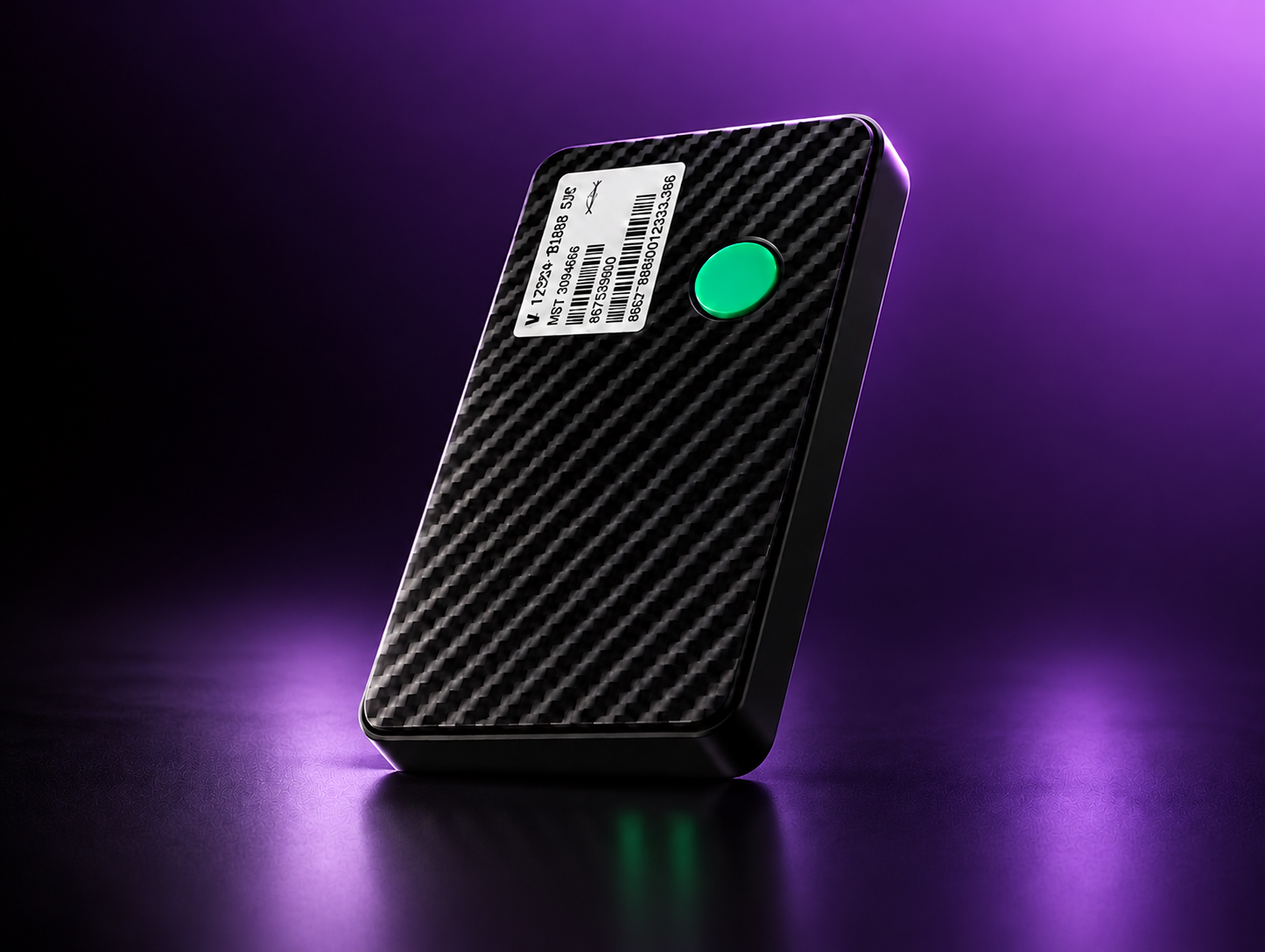
Asset Trackers
Battery powered tracking for trailers, plant and implements.

AI Dash Cameras
Road and driver facing cameras with in cab safety alerts.
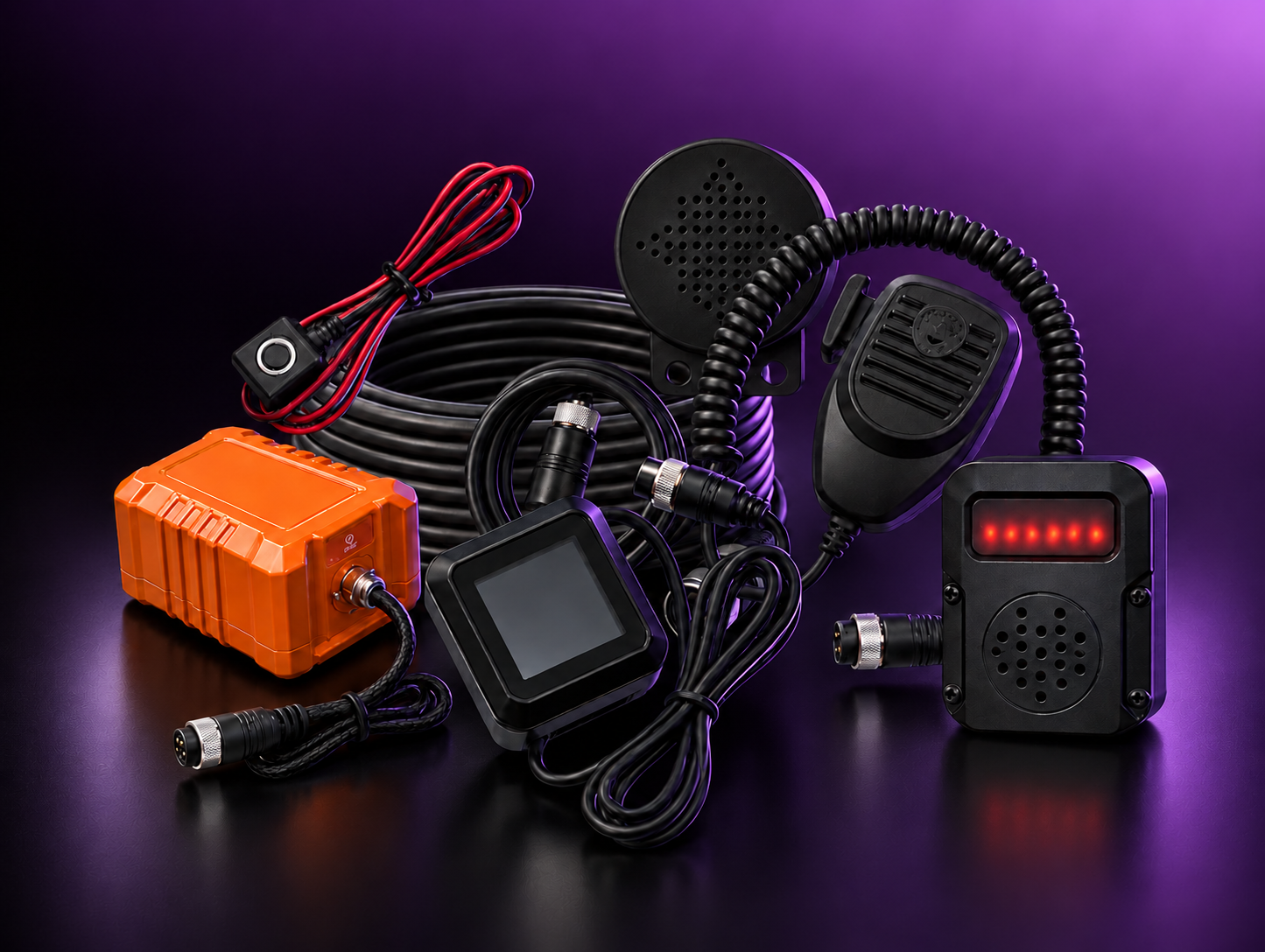
Sensors & Inputs
Temperature, door and PTO data for produce, vehicles and implements.
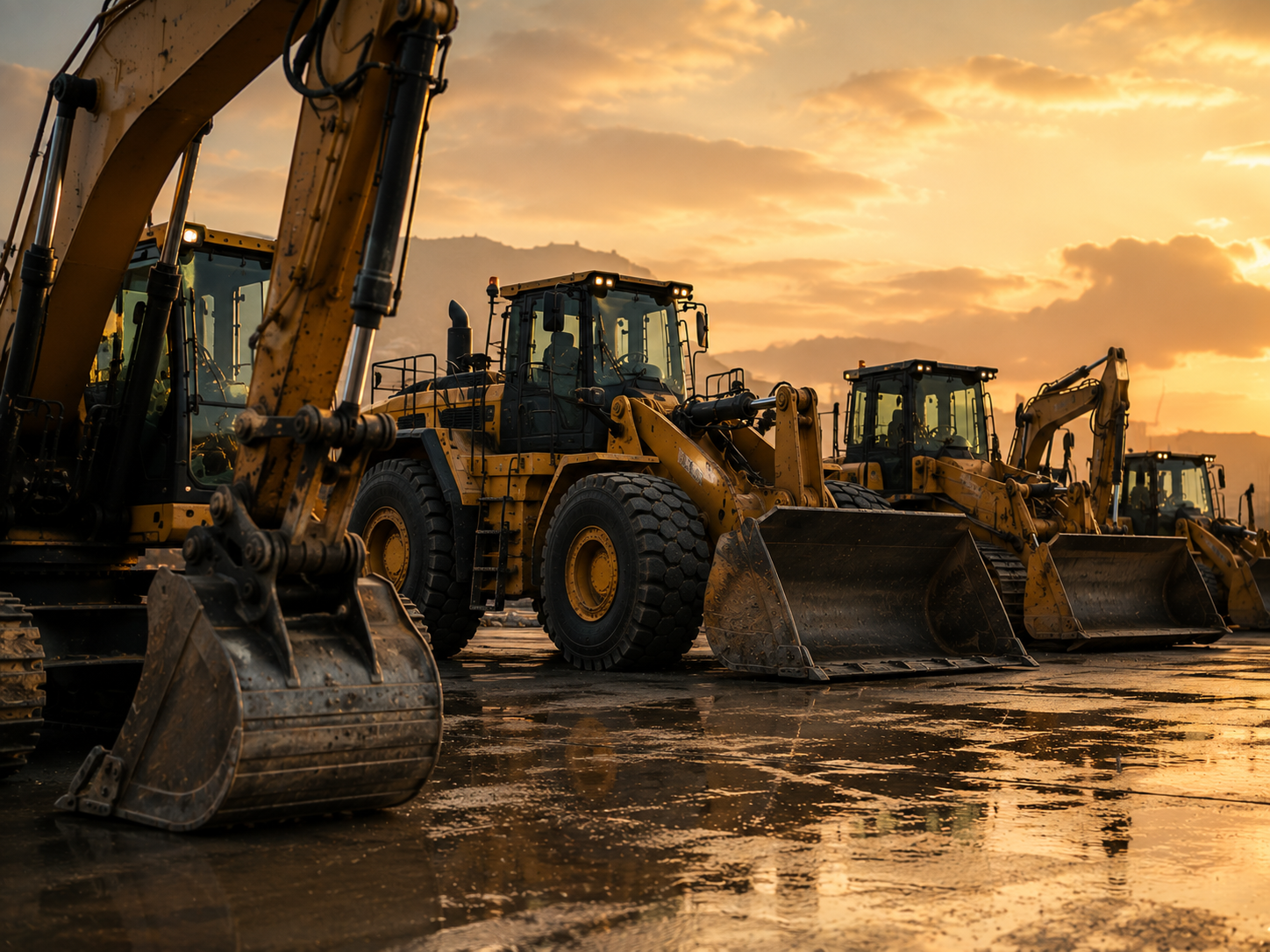
Heavy Equipment Hardware
Built for off road operation, long hours and demanding conditions.
More for Farm and Agricultural Operators
View all →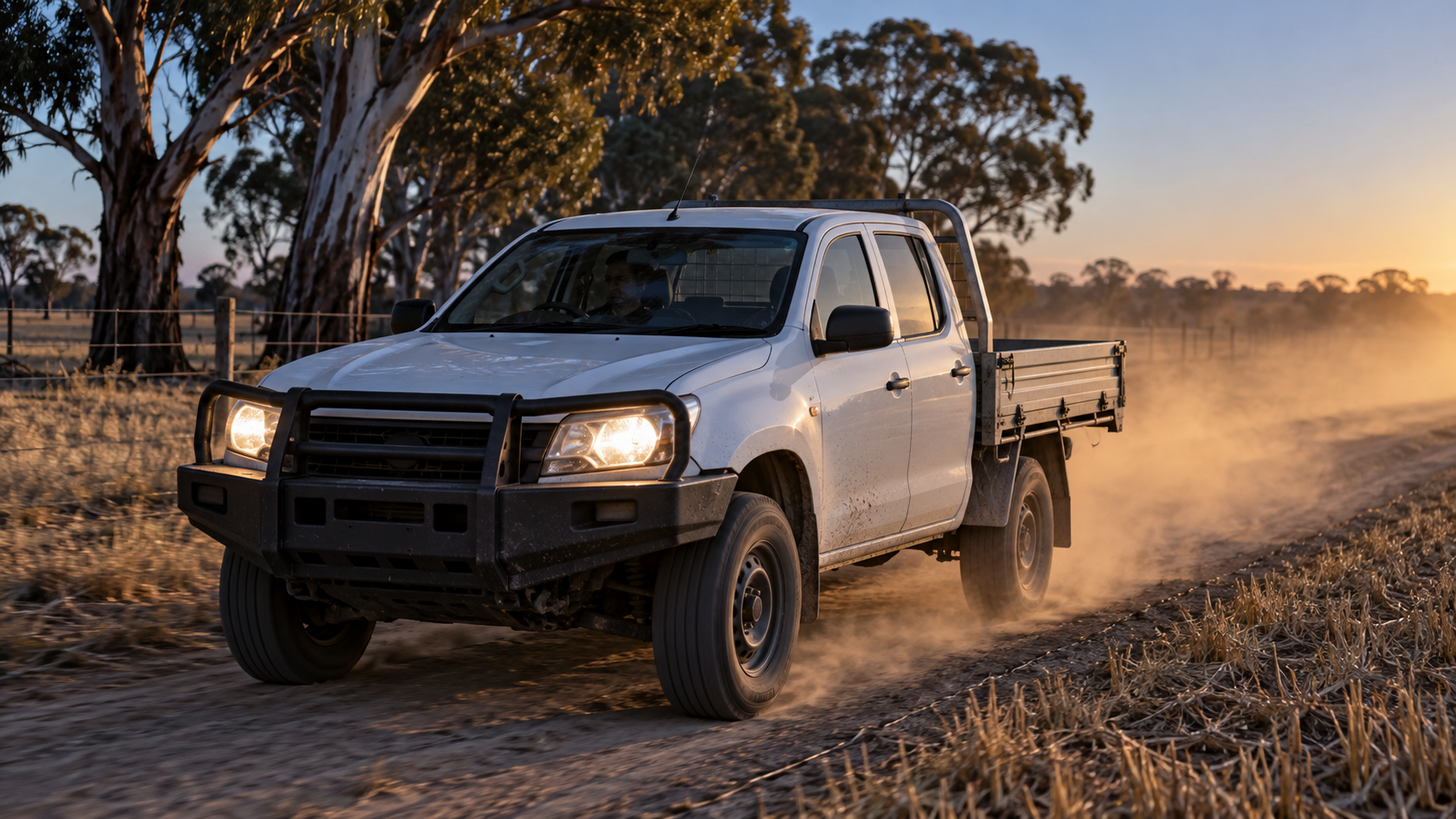
Guide
What is fleet management?
The job, the tools and what actually changes when it is done properly.
Guide
The modern fleet manager's playbook
How the role has changed, and the habits that hold up at scale.
Guide
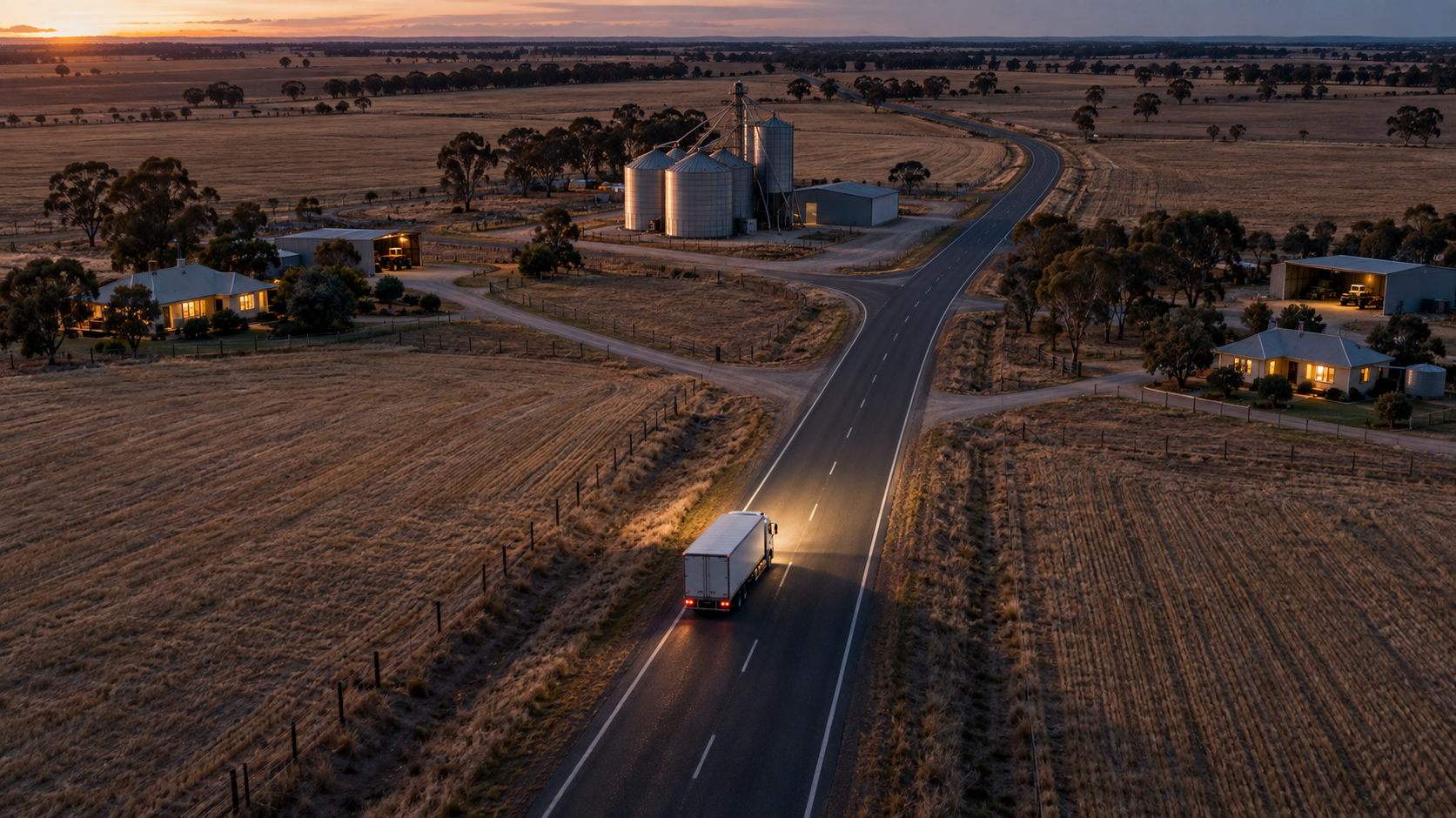
Multi-stop route optimisation
Why the order of the drops decides the length of the day.
Keep Australian Agriculture Moving
Bring your machinery, vehicles, people and work together in one platform, helping you reduce downtime, control costs and keep every working day moving.
What is agricultural telematics?
Agricultural telematics uses GPS tracking, sensors, and real-time data to monitor farm vehicles, machinery and assets helping farmers improve efficiency, safety and productivity.
Why is agricultural asset tracking important?
It allows farmers to protect high value equipment, reduce downtime, optimise usage and maintain full visibility across their operations.
What causes inefficiencies in farm operations?
Poor visibility of machinery, unplanned downtime, fuel misuse, theft and inefficient routing between paddocks or delivery points all contribute to lost productivity.
How can farmers improve equipment utilisation?
By monitoring real time location, engine hours and usage patterns, farmers can schedule work efficiently, avoid overuse, and extend the lifespan of machinery.
How does technology support modern farm management?
Tools like GPS tracking, geofencing, and remote monitoring help automate workflows, prevent asset loss, track livestock, reduce wastage and support informed decisions.
What is a farm equipment alert?
These are automated notifications for example, maintenance reminders, unauthorised movement alerts, or engine health warnings to help prevent issues before they disrupt operations.
What data helps farmers optimise productivity?
Location history, fuel usage, idle time, engine hours, route paths, geofence activity and maintenance logs all give insights into how efficiently the farm is running.
How does Saphyroo support agricultural operations?
Saphyroo provides real time tracking, route optimisation, geofencing, maintenance management and detailed reporting helping farmers run safer, more productive operations.
How does DRIVE360 benefit farm workforces?
DRIVE360 improves driver safety, monitors work hours, provides routing for farm to delivery tasks and ensures staff operate efficiently across large properties.
How can an agricultural telematics system support farm profitability?
By reducing equipment downtime, improving fuel efficiency, preventing theft, lowering maintenance costs and enabling better planning for harvest and delivery.