[ Forward Collision & Near Miss Detection ]
Detect Forward Collision Risk Before Impact
Identify forward collision risks and near miss events, alert drivers in the moment and give operations the context to respond.
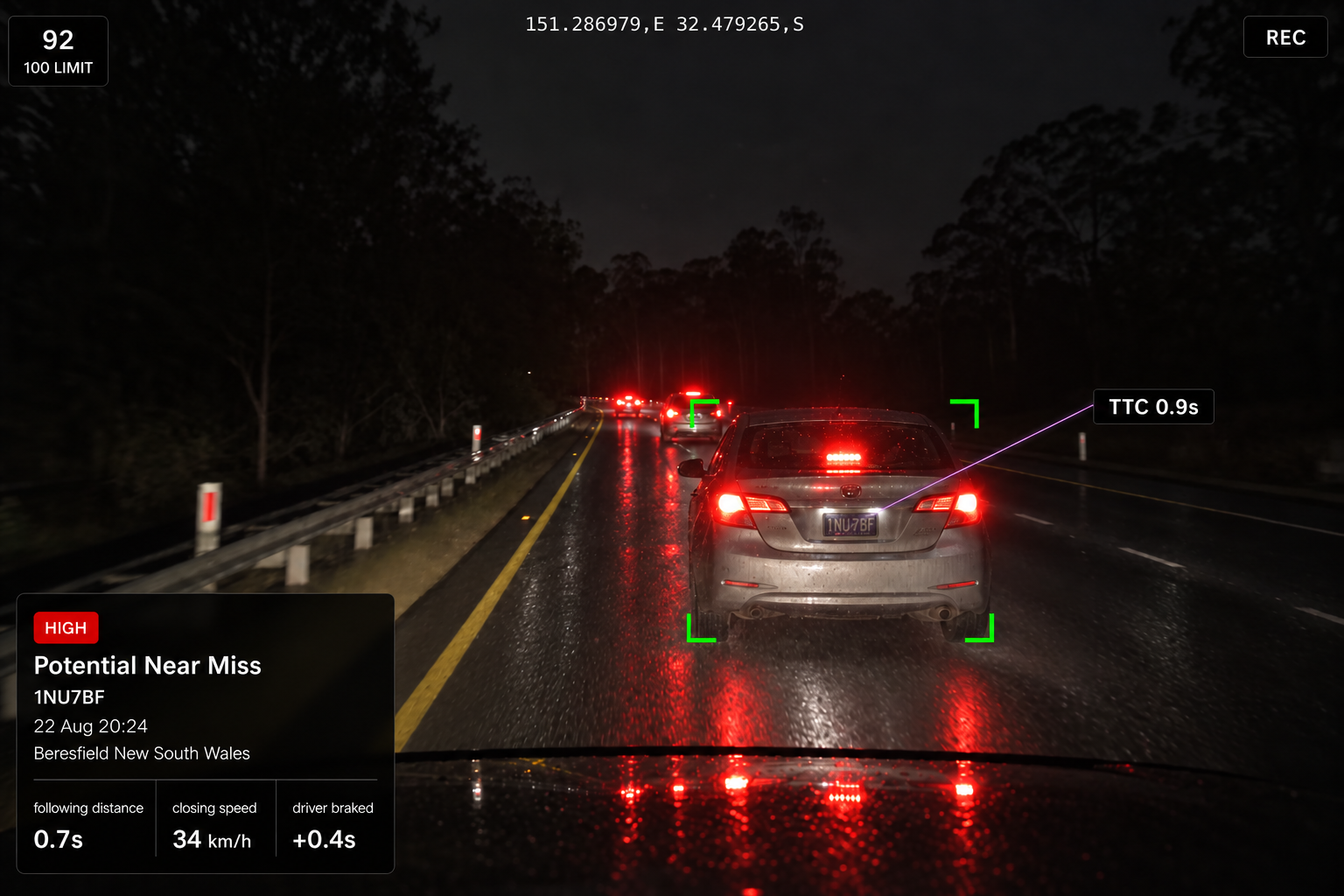
From policy to escalation
Set the Detection Rules. Define the Response.
01
Detection policy
Set the trigger condition, minimum speed, driver alert and severity for each detection type.
02
Driver alert
Prompt the driver with visual, audible and haptic alerts where supported by the fitted device.
03
Response acknowledgement
Record the vehicle response after the alert, such as braking or increasing following distance. Acknowledgement is recorded post event.
04
Escalation
If no response is observed, escalate the event to a manager or supervisor rather than closing it quietly.
What we detect
Events Detected on the Road Ahead
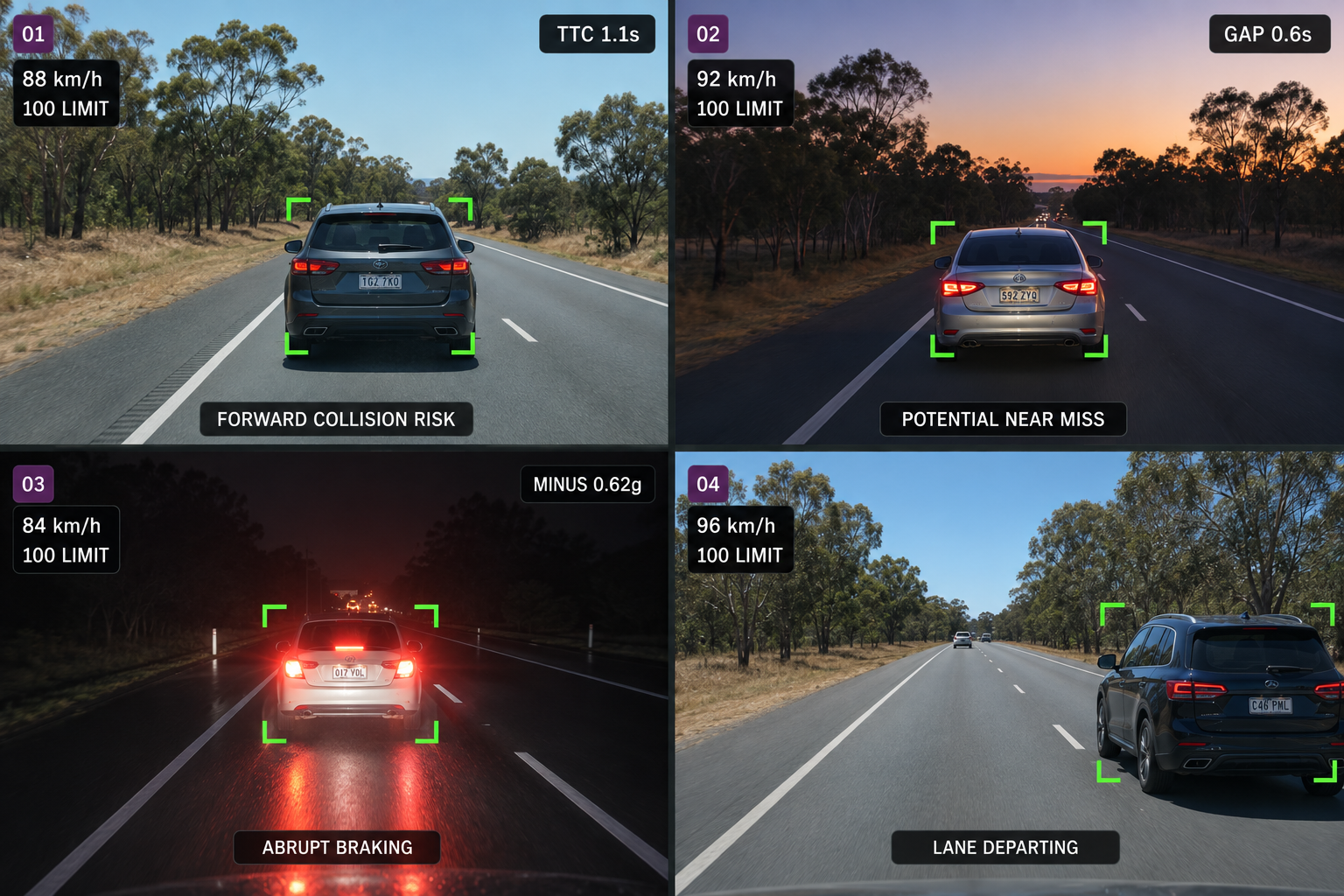
Forward collision risk
A collision risk identified through time to collision, closing speed and distance. Uses Vision360 camera data with Drive360 speed and movement data.
Potential near miss event
A close call where a collision was avoided, identified through time to collision and available gap. Helps highlight recurring risky driving patterns.
Abrupt braking event
High deceleration linked to a potential road risk event, using Drive360 braking data with Vision360 video.
Lead vehicle departure
Identifies when the vehicle ahead begins to move, helping keep the driver aware of changing traffic conditions.
Additional features
Time to Collision
Estimate time to collision from supported camera and vehicle data.
Following Distance
Record the gap to the lead vehicle alongside speed.
Relative Speed
Compare your speed with the lead vehicle's.
Configurable Sensitivity
Set thresholds and alerts for each detection type.
Minimum Speed Gates
Prevent low speed manoeuvres from raising events.
Severity Levels
Set high, medium and low severity levels.
Event Video
Capture ten seconds before and after the event.
Road and Lane Context
Record where the event occurred on the road network.
Vehicle Response
Record braking or increased following distance after the alert.
Under Review Status
Hold events for review before they are actioned.
Policy Management
Manage detection rules across the fleet from one place.
Full Event Context
Bring video, telematics and contextual data together on every event.
One Road Event. The Full Picture.

On the road
The gap closes faster than it should
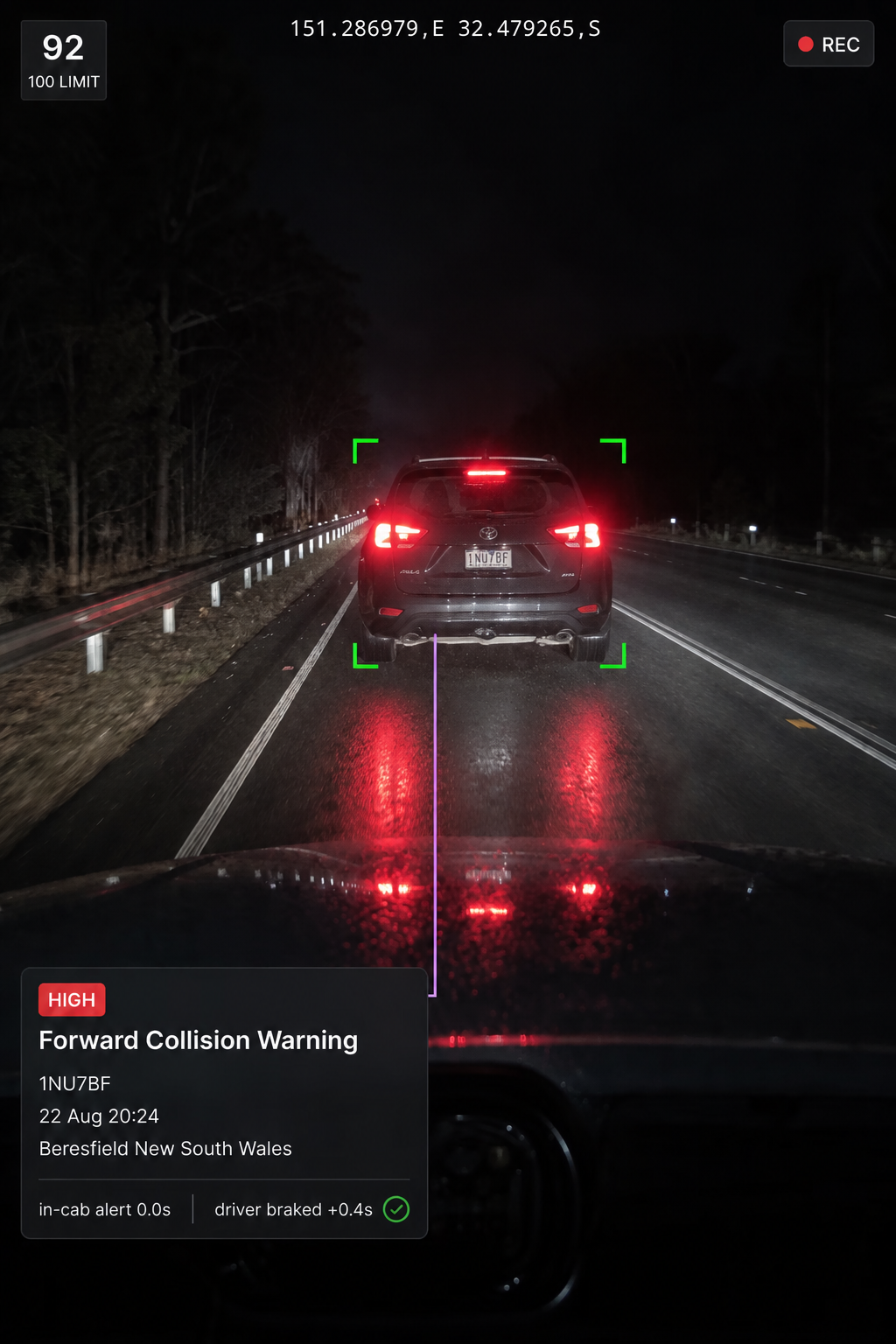
In the cab
The warning arrives before the brake
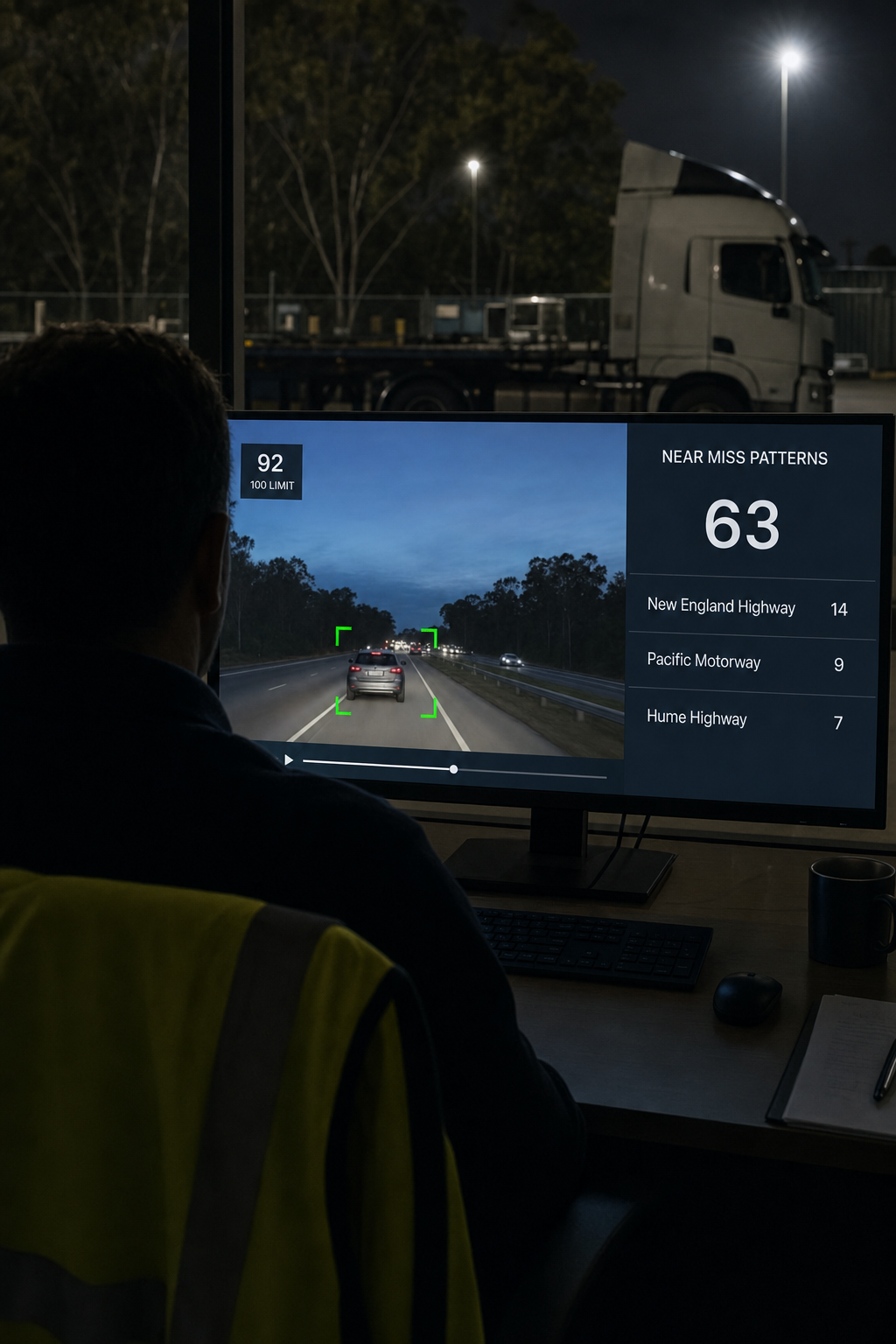
In review
The pattern behind the near misses
What is time to collision and how accurate is it?
It is an estimate of how long it would take the vehicle to reach the one ahead if neither changed course, based on supported camera and vehicle data. Accuracy can vary with the environment, weather and road conditions.
What counts as a near miss?
A close call where a collision was avoided, identified using time to collision and the gap to the vehicle ahead. Near misses can highlight risky driving patterns even when no collision occurs.
Can we set our own thresholds?
Yes. Configure the trigger condition, minimum speed, driver alert, post event notification and severity for each detection type. Defaults provide a starting point rather than a fixed model.
Why is there a minimum speed?
To prevent low speed manoeuvring, yard movements and crawling traffic from creating events that do not need review.
What affects detection performance?
Camera view, weather, lighting, traffic conditions and calibration can all affect detection. Sensitivity can be configured to suit your operating environment.
Is the driver alerted in real time?
Yes. Collision risk warnings are delivered through supported in cab devices. The vehicle response is then assessed after the alert, such as braking or increasing following distance, with events escalated if no response is observed.
See the Risk Before it Becomes an Incident
Road facing detection, real time driver alerts and the event context your team needs to act.