[ Road safety AI ]
Lane Departure, Swerving & Potential Wrong Direction Events
Identify unsafe lane movement and potential wrong direction travel, alert drivers in the moment and give your team the context to respond.
EXPLORE EVENT TYPES
How Each Event Is Detected and Responded To
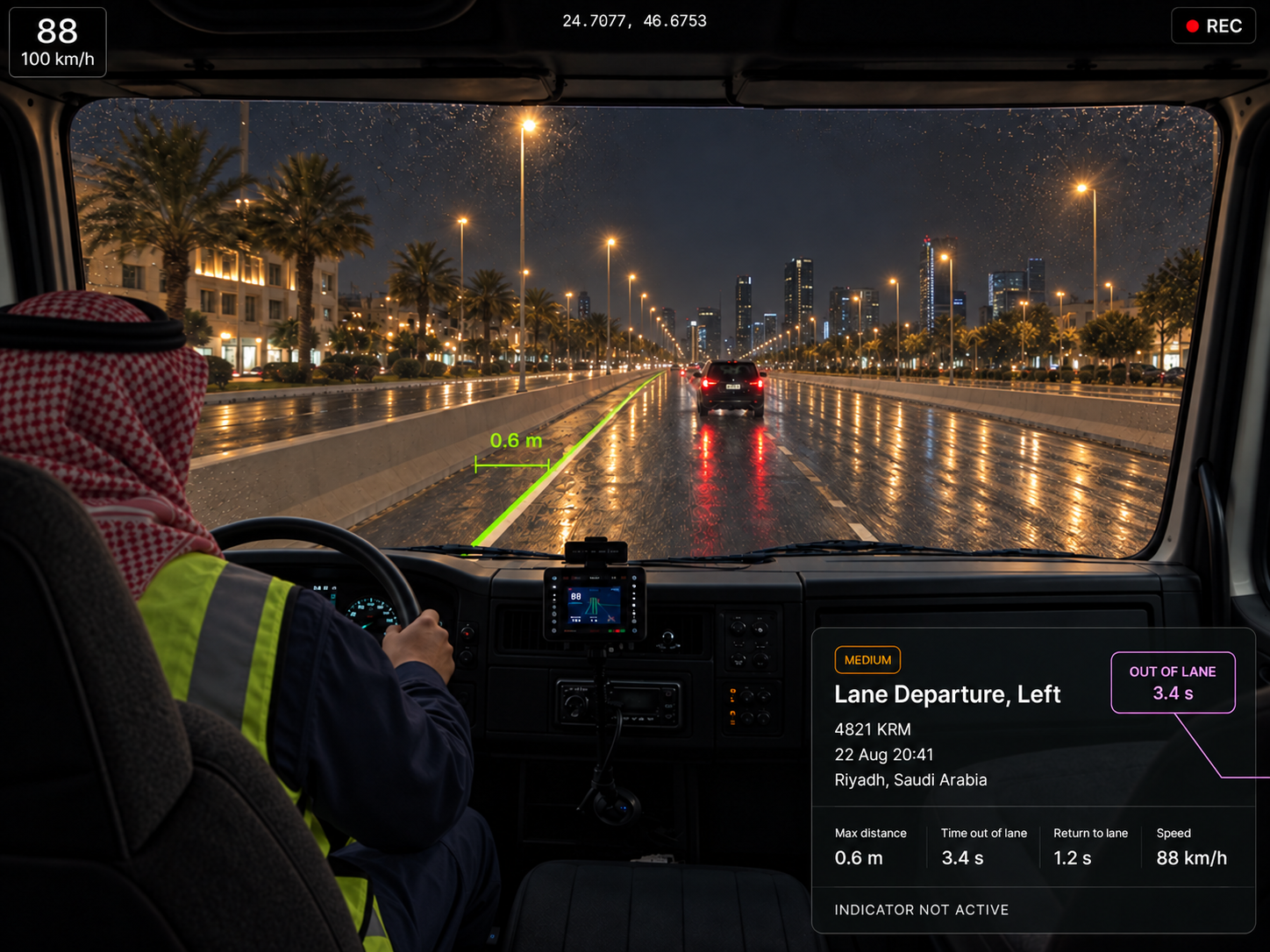
Lane departure
Detects when a vehicle crosses or remains outside a lane boundary for longer than the configured time. Uses road facing camera data to track lane position, time and distance outside the lane, while considering indicator status where available.
Swerving and unstable driving
The vehicle weaves within the lane or makes repeated steering corrections. Measures lateral movement and lane position to identify excessive corrections.
Potential wrong direction driving
Identifies when a vehicle appears to be travelling against the expected road direction, using vehicle heading and supported map data. Events are reviewed before being confirmed.
Related road alerts
Other road safety events that add context to lane risk, including unsafe lane changes, road edge departure and hard braking in lane.

BUILT FOR SAUDI FLEET OPERATIONS
Lane Visibility Across Demanding Road Environments
From intercity highways and busy urban roads to industrial sites and project operations, Vision360 helps identify supported lane-movement events and gives teams the video, vehicle and journey context to review what happened.
Intercity & Long-Distance Operations
Review lane-departure and swerving events across longer highway journeys, with available speed, location and journey information connected to the event.
City & Commercial Operations
Bring supported lane events into view across busy urban and commercial driving environments.
Industrial & Project Operations
Review lane and vehicle-movement events across supported project, industrial and site operating environments.
In Cab Driver Alerts
Prompt drivers when defined lane departure conditions are identified, using supported visual, audible or haptic alerts.
Additional features
Time out of lane
How long the vehicle was over the lane boundary.
Maximum distance from lane
How far the vehicle moved beyond the lane boundary.
Return to lane
How quickly the vehicle returned to its lane.
Indicator status
Whether the indicator was active, where available.
Lane marking type
Solid and broken markings detected with their own severity.
Lateral corrections
Steering corrections counted within the detection window.
Map confidence
Direction confidence considered before a wrong direction event is raised.
Human review
Wrong direction events require review before confirmation.
Detection quality
Calibration, camera view, marking confidence, geometry and visibility.
Weather and light
Conditions recorded on the event.
Five seconds either side
Video from before and after the departure.
Vehicle response
Lane position and speed before and after the alert.
Three Movements. Three Different Signals.
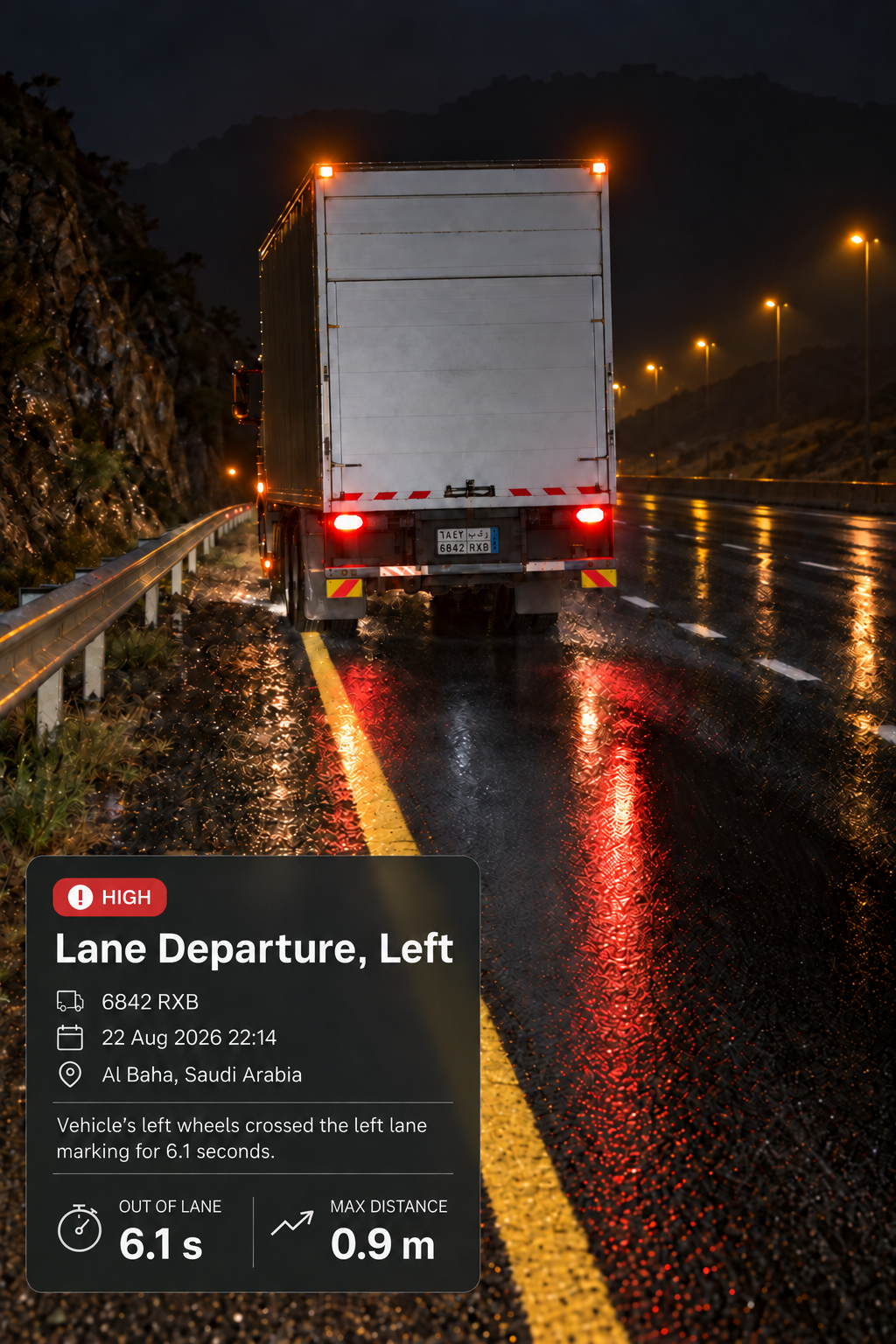
Lane departure
Over the line, long enough to matter
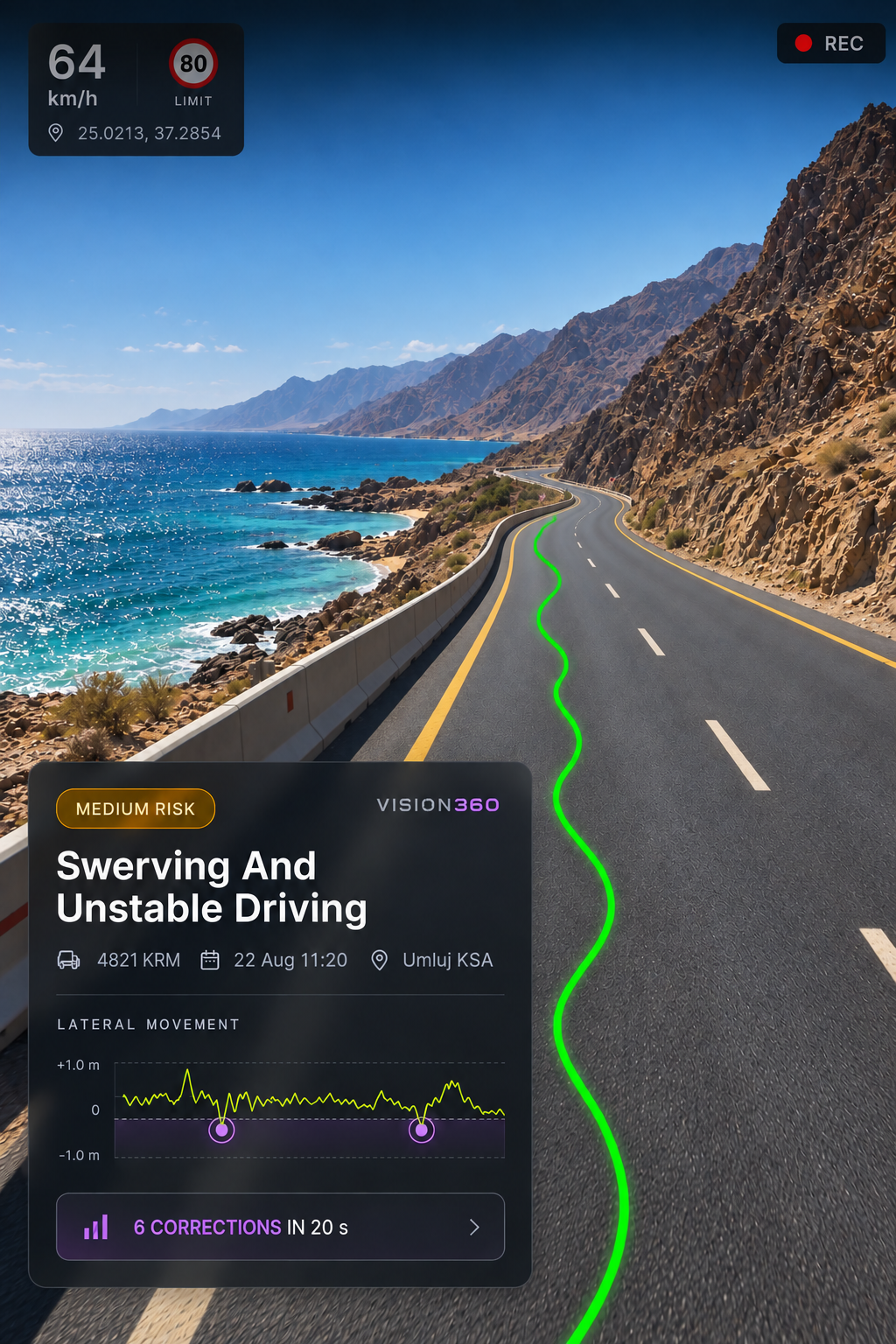
Swerving
Movement that keeps pulling the vehicle off line
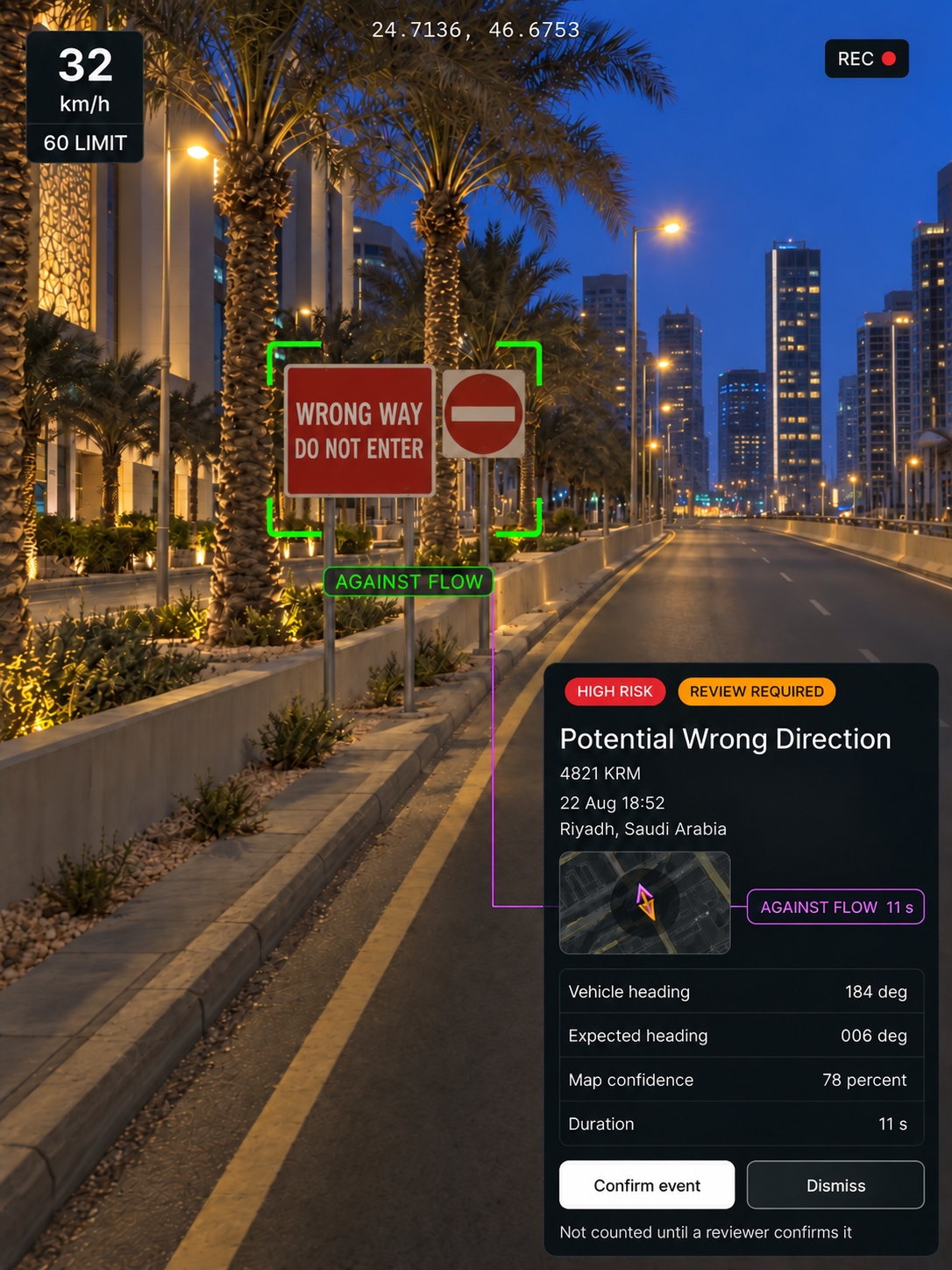
Wrong direction
Potential High Risk Event Requiring Human Intervention
Does an indicated lane change raise an event?
Indicator status is used where available, so a signalled lane change can be treated differently from an unsignalled departure. Where indicator data is unavailable, the event still records what happened for review.
How is swerving different from lane departure?
Lane departure means crossing the detected lane boundary. Swerving means repeated lateral movement or rapid steering corrections within the lane, making it an earlier indicator of unstable driving.
Why does a wrong direction event need human review?
Map data and road type are not infallible. Service roads, private access roads, junction layouts, temporary traffic arrangements and roadworks can produce headings that appear wrong when they are not. High severity is reserved for public roads with strong direction confidence, but confirmation always requires human review.
What if the lane markings are poor?
The event records lane marking confidence, road geometry, camera calibration, camera view and road visibility, so a reviewer can assess whether the detection is reliable enough to act on.
Can we set different rules for solid and broken lines?
Yes. Each can have its own minimum speed, minimum time out of lane, driver alert, manager notification and severity.
Is the driver alerted at the time?
Yes. A lane departure prompt can be delivered through supported in cab devices when defined conditions are met. Available vehicle information can then provide additional context around what happened after the alert, such as the vehicle returning to the detected lane.
See the Movement. Act Before It Escalates.
Bring supported lane and road facing events into view with in cab alerts, video and the context your team needs to review and respond across Saudi fleet operations.