[ Alerts. Automation. Escalation. ]
Turn Safety Events Into Action
Set rules to alert the right people, create follow up actions and escalate when something still needs attention.
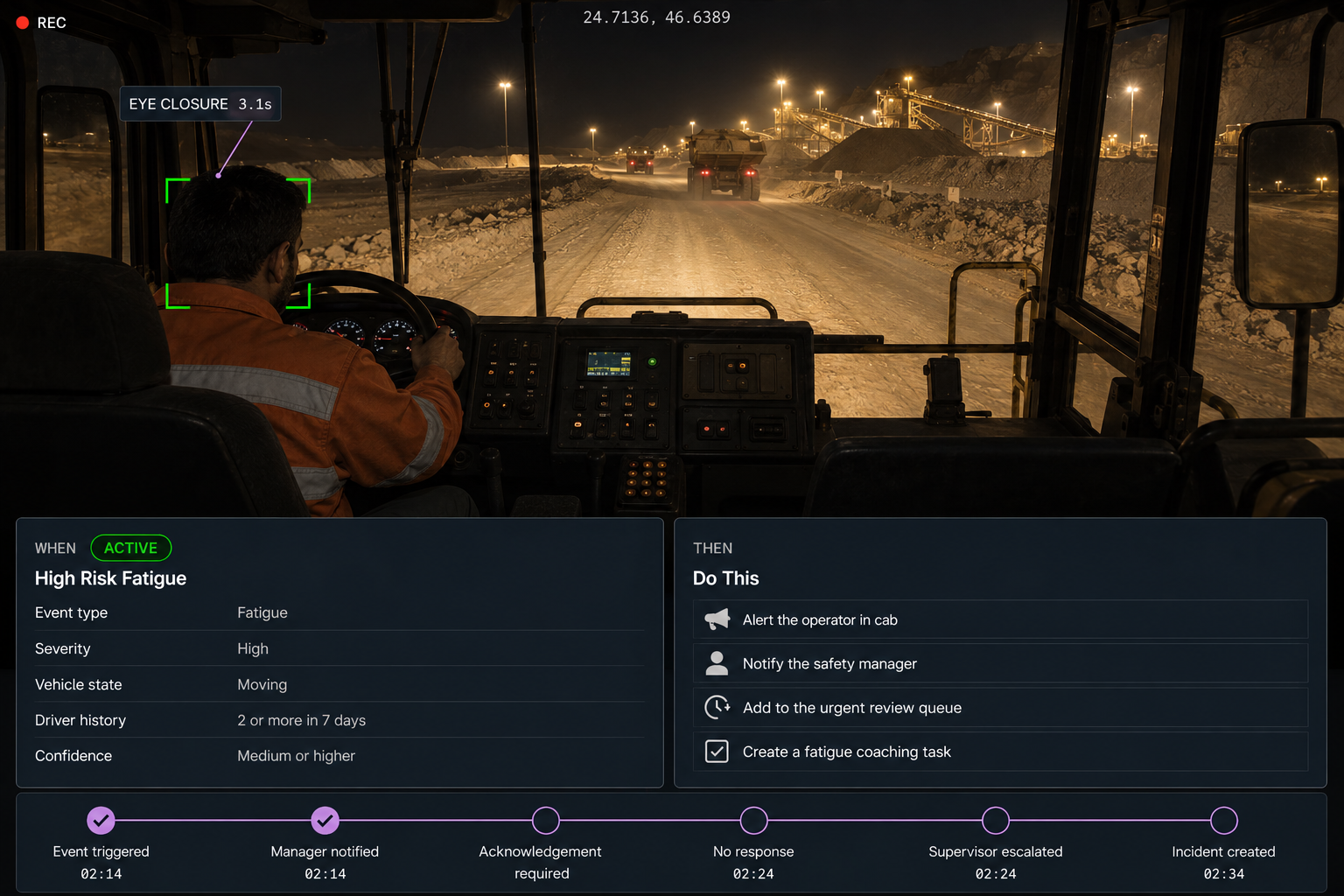
HOW A RULE IS BUILT
Choose the Event. Set the Response.
01
Build the rule
Choose the event source from Vision360, Drive360 or Route360, then define the conditions that trigger the rule, from event type and severity to vehicle, driver, location and schedule.
02
Choose the actions
Set what happens when the rule triggers: notify a user or group, alert the driver, send an SMS, create an action or send data to another system.
03
Pick the channels
Choose in app, email, SMS or in cab delivery, with the recipient, message, priority, quiet hours and delivery window defined for each.
04
Escalate when nothing happens
Define what counts as an acknowledgement and what happens when there is no response, so an unanswered alert moves to the next person.
IN PRACTICE
One fatigue event. From alert to action.
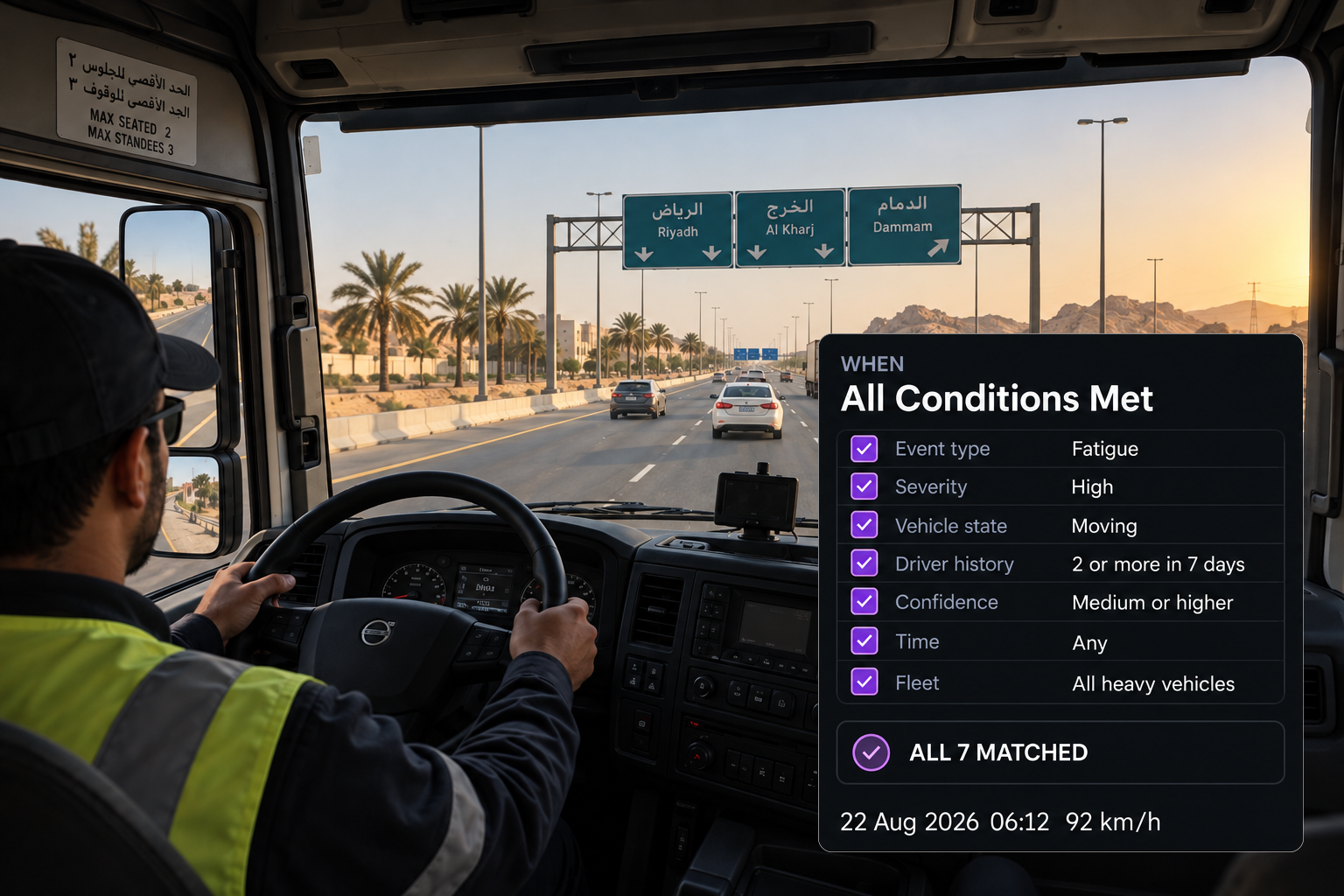
The conditions
All conditions must be met: a high severity fatigue event is detected while the vehicle is moving, from a driver with two or more fatigue events in seven days, with medium confidence or higher, across all heavy vehicles.
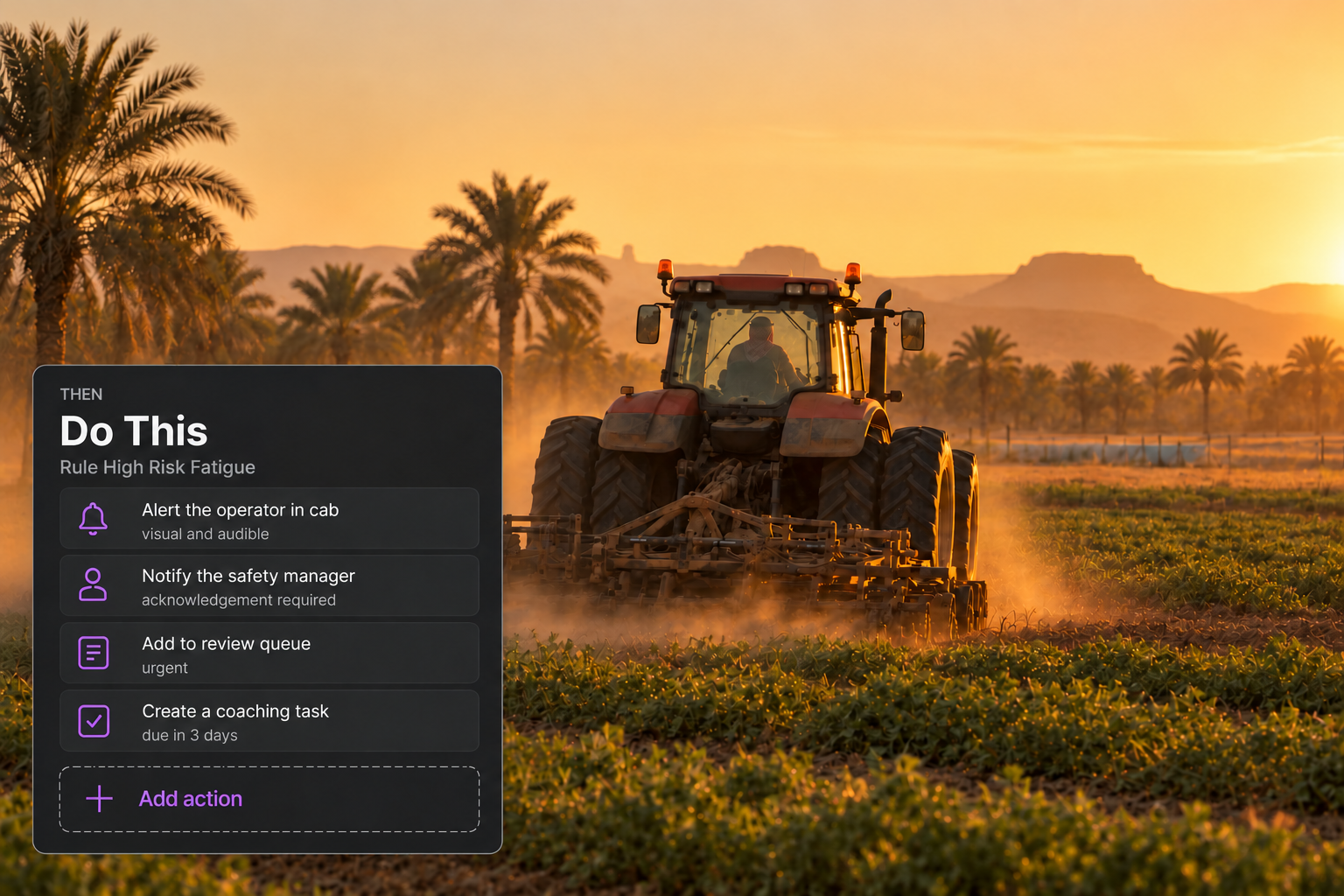
The actions
Alert the driver in cab, notify the safety manager in app and by email, add the event to the urgent review queue and create a fatigue management coaching task.
Every Event Has a Defined Next Step.
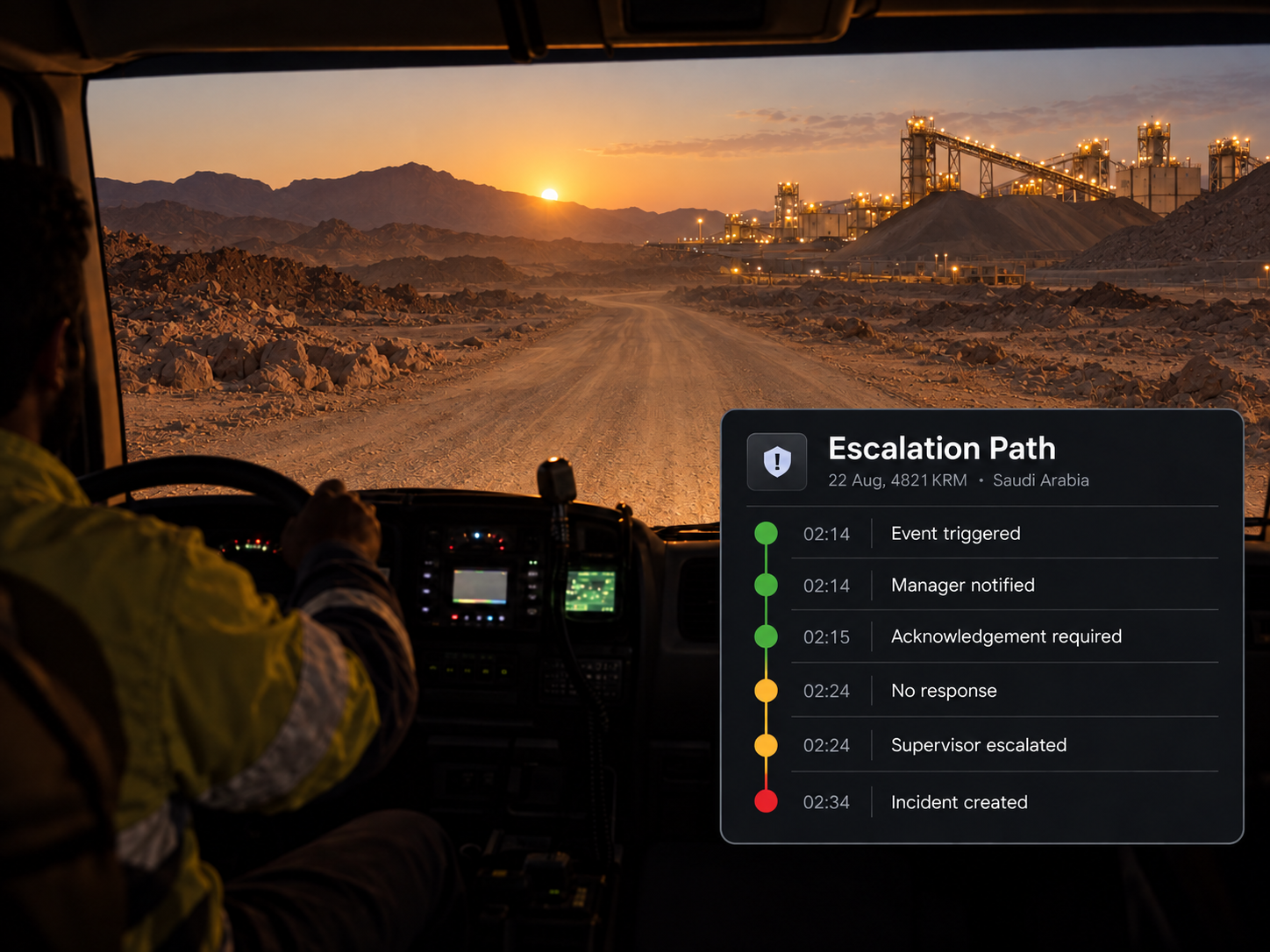
Escalation path
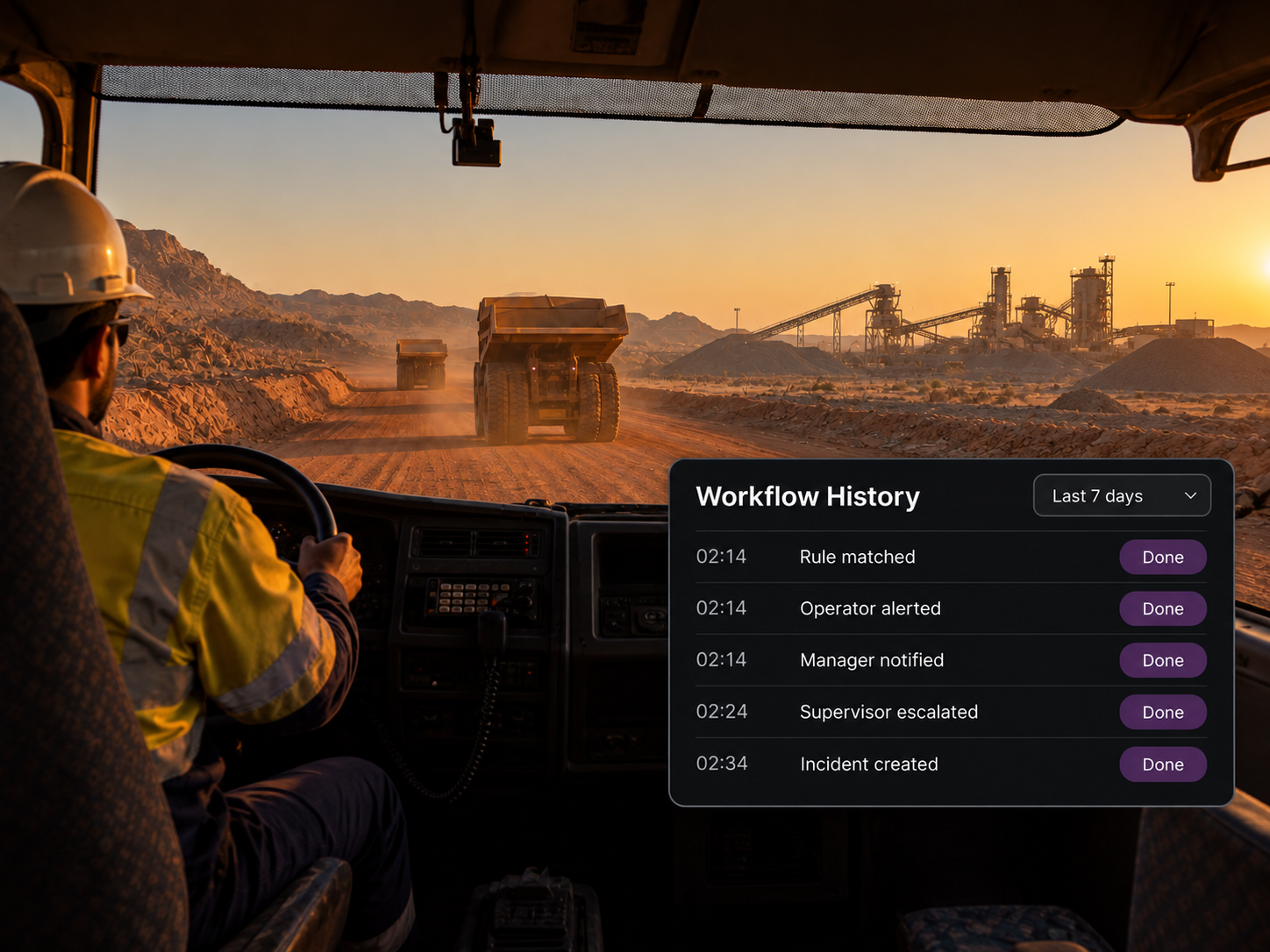
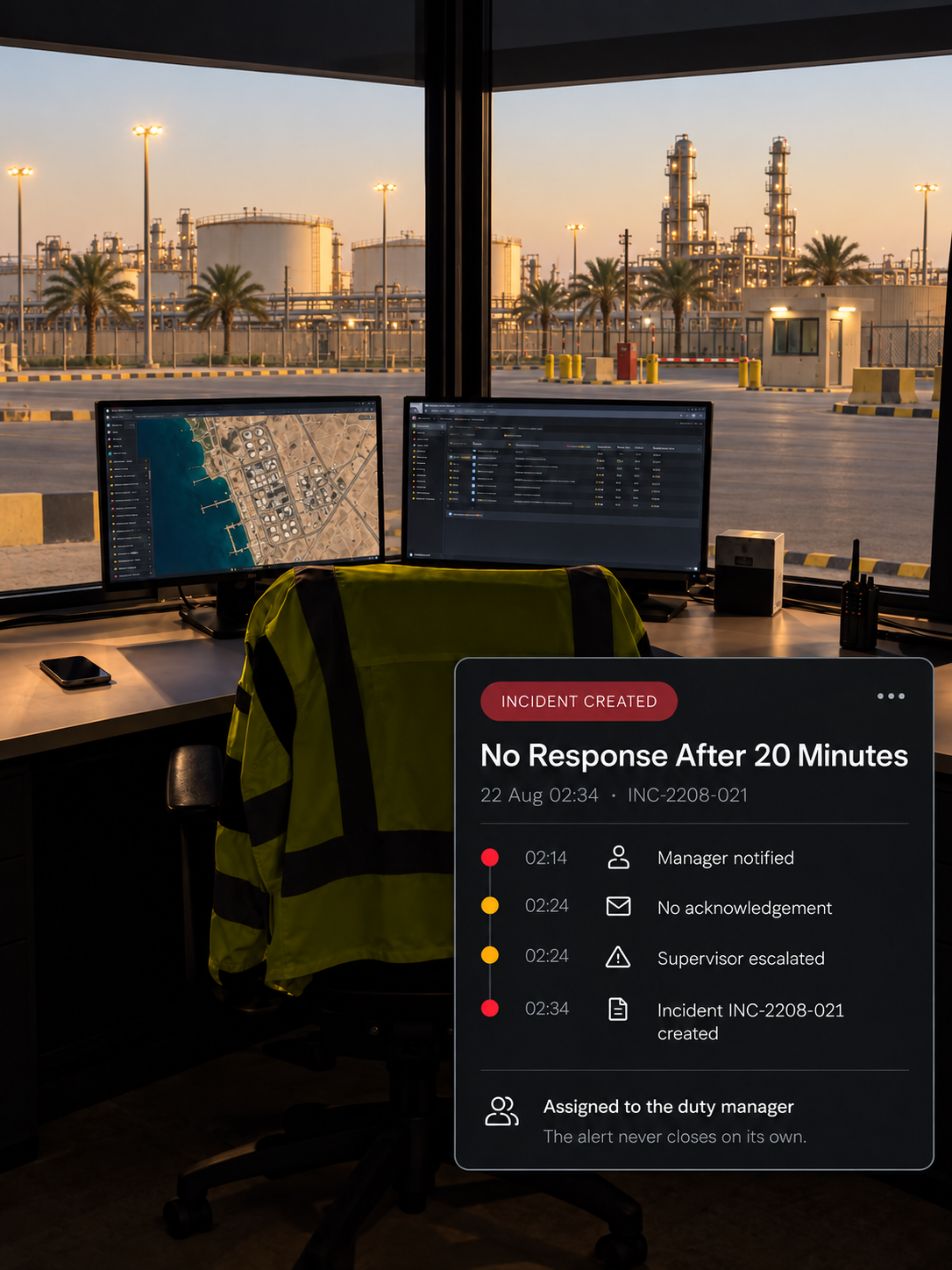
For example, an event can notify a manager and require acknowledgement. If it remains unacknowledged, the rule can escalate it to a supervisor. If there is still no response, it can automatically create an incident and add it to the urgent review queue.
Automation examples
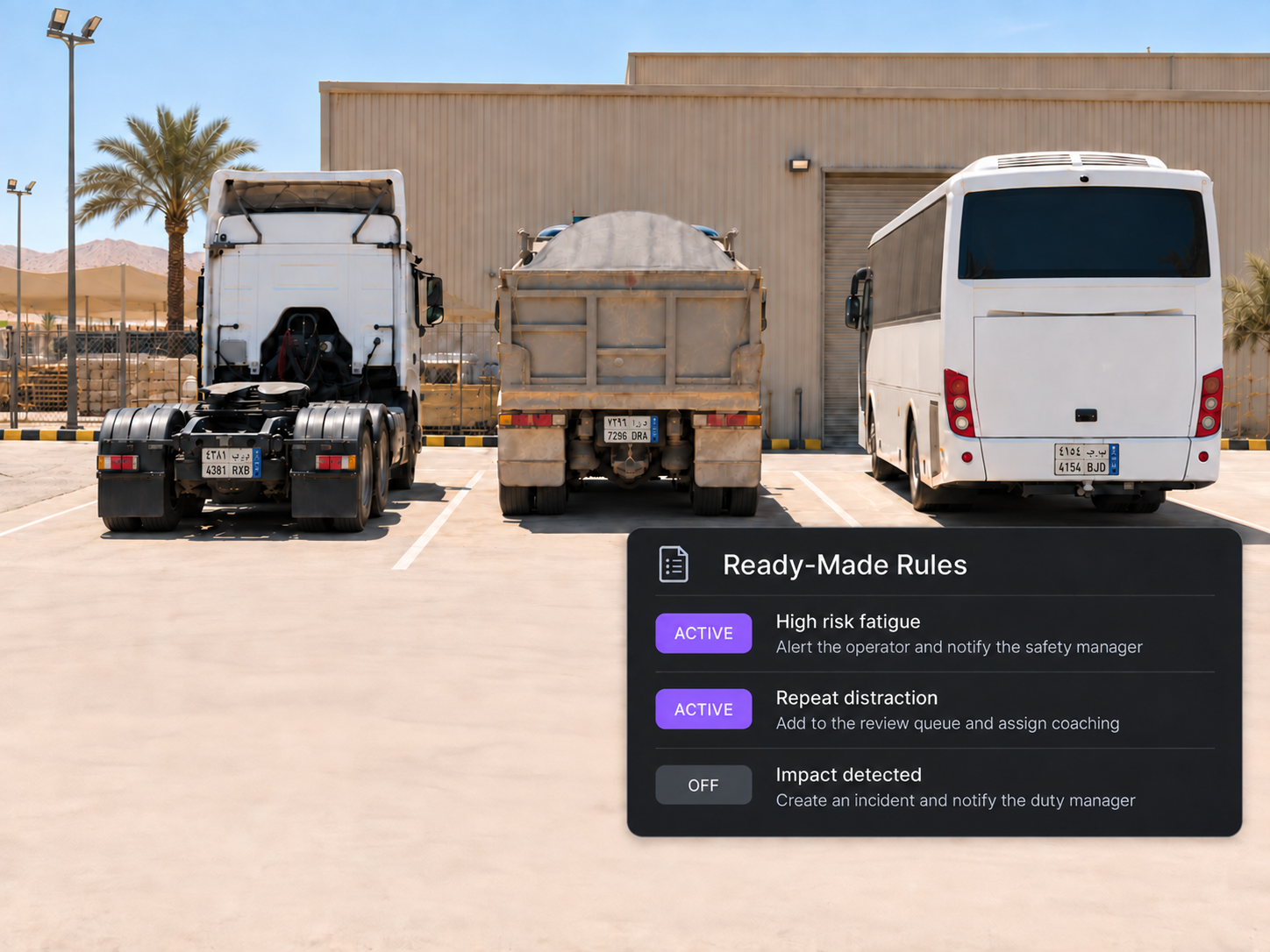
Start with pre built workflows, then adapt them to your operation instead of building every rule from scratch.
Workflow history
Track every step from trigger to resolution over the period you choose, so you can see what each rule actually did.
BUILT FOR SAUDI OPERATIONS
Rules That Fit the Way Your Fleet Operates
Configure alerts and escalation around the vehicles, drivers, locations and operating periods that matter. Set different responses across city fleets, intercity operations, project sites and remote locations, so the right people know when an event needs attention.
Fleet & Driver Groups
Apply different rules across vehicle types, driver groups, depots and operating teams.
Sites & Operating Areas
Set rules around depots, project sites, customer locations and defined operating areas.
Different Operating Periods
Adapt alerting and escalation around shifts, night operations and other locally defined operating periods.
Escalation by Responsibility
Route events to the relevant manager, supervisor or safety team based on the rule and escalation path.
Ramadan
Additional features
Connected event sources
Build rules from supported Vision360 events, with connected vehicle and camera information available within the workflow.
Severity conditions
Trigger rules only when an event reaches the required threshold.
Confidence conditions
Exclude detections below the required confidence level.
Fleet and driver groups
Apply different rules to different vehicles, drivers or operations.
Location and site
Apply a rule only where it is relevant, including depots, worksites, customer locations and defined operating areas.
Time and schedule
Set different rules for different times or operating periods, including Ramadan schedules, night operations and other locally defined working periods.
Repeat count
Trigger on repeated events rather than a single occurrence.
Acknowledgement state
Escalate when an alert has not been acknowledged.
In cab alerts
Send supported driver alerts through fitted in-cab devices while notifying the relevant operational team.
Webhooks
Send event data to an external system.
Quiet hours
Set delivery rules for non urgent notifications outside defined operating hours.
Message templates
Keep messaging consistent across channels.
The Alert that Finds the Right Person
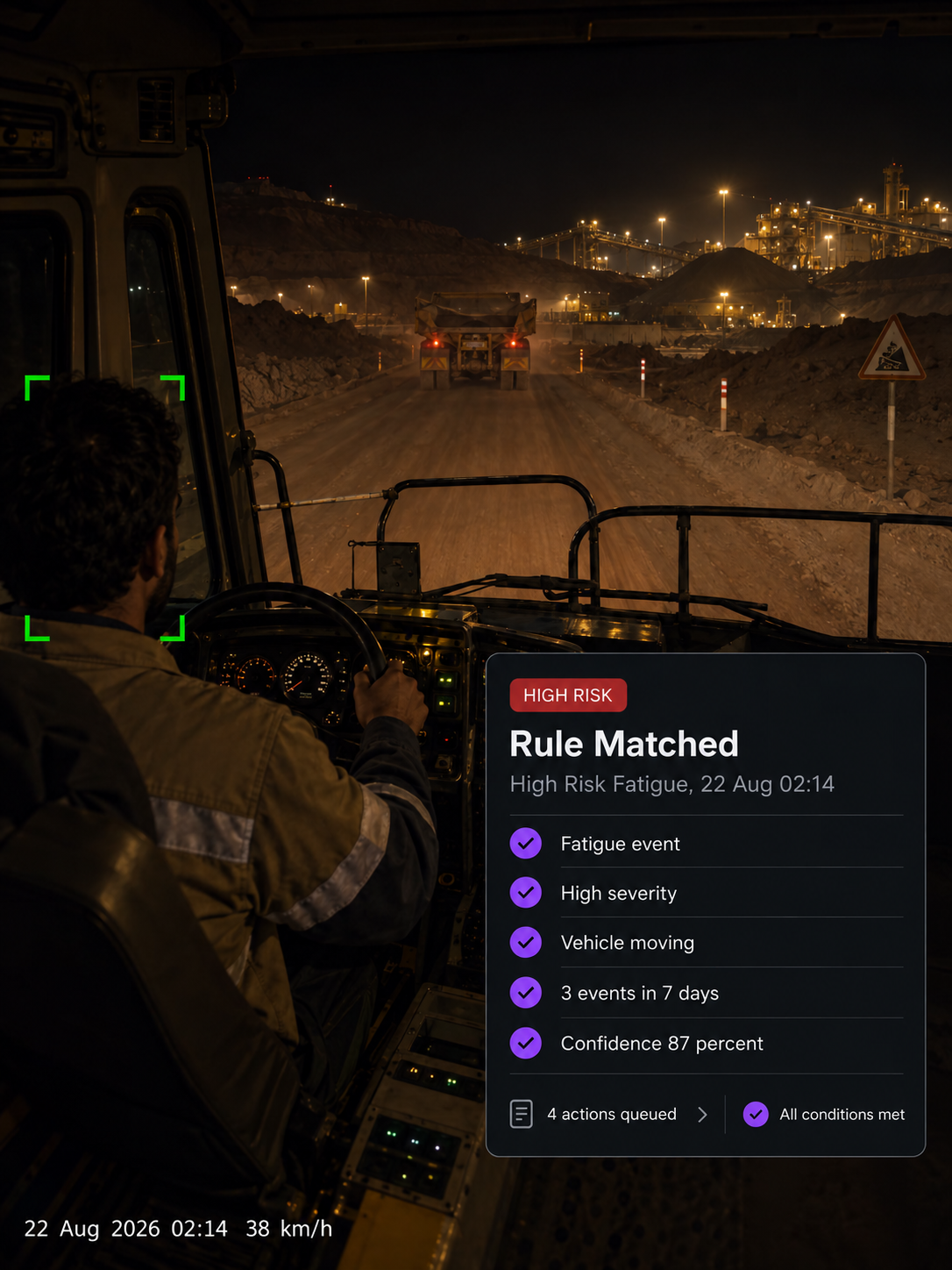
The trigger
An event that meets every condition
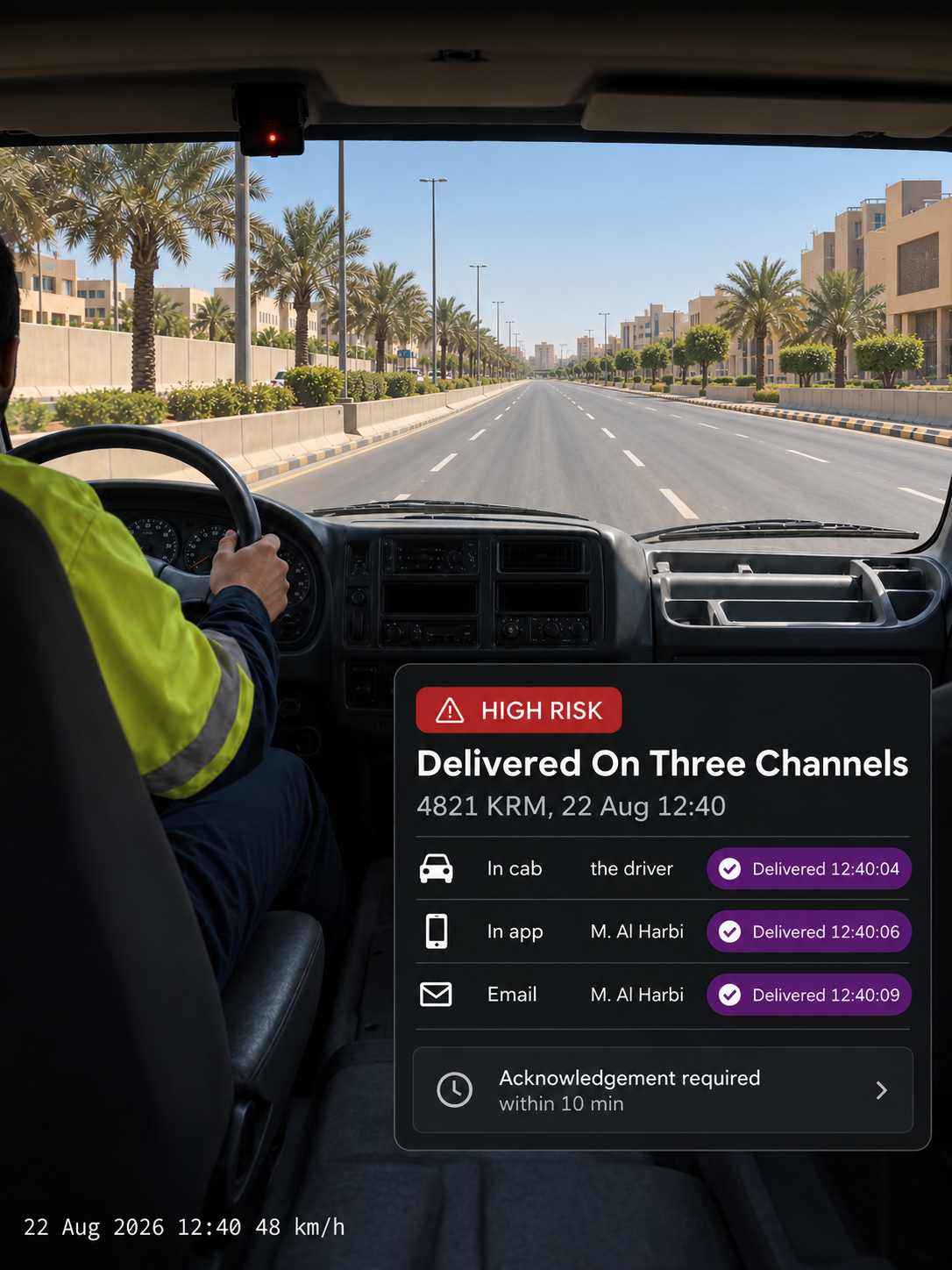
The notification
In cab, in app and by email
The escalation
No response. The rule escalates.
What can a rule trigger on?
Supported Vision360 events can be filtered by event type, severity, confidence, vehicle or driver group, location, time, repeat count or acknowledgement state. Rules can then be set to act when the defined conditions are met.
What can a rule do?
Notify users in app or by email, alert the driver in cab, send an SMS, add an event to a review queue, create a coaching task or incident, update a record or send data to an external system.
How does escalation work?
Define what counts as an acknowledgement and how long to wait. For example, notify a manager, escalate to a supervisor after ten minutes without acknowledgement, then create an urgent incident after twenty.
Can notification behaviour change outside operating hours?
Yes. Set quiet hours, delivery windows and time zones for supported channels, allowing non urgent notifications to follow different delivery rules while priority alerts can continue according to the workflow you define.
Can rules fire on a pattern rather than one event?
Yes. Use repeat count to trigger a rule only after a defined number of events within a rolling window, helping separate repeated risk from isolated events.
Do we have to build every rule ourselves?
No. Start with pre built automation examples and adapt them to your operation. Workflow history then shows how each rule has performed, so you can refine it based on what actually happened.
Give Every Event a Clear Next Step
Set who gets alerted, what happens next and how the workflow escalates when an event still needs attention.