[ Harsh Braking & Cornering ]
Measure the Movement. Understand the Event.
Review harsh braking, acceleration and cornering events with video, vehicle data and road context, identify patterns in driver behaviour and decide what needs action.
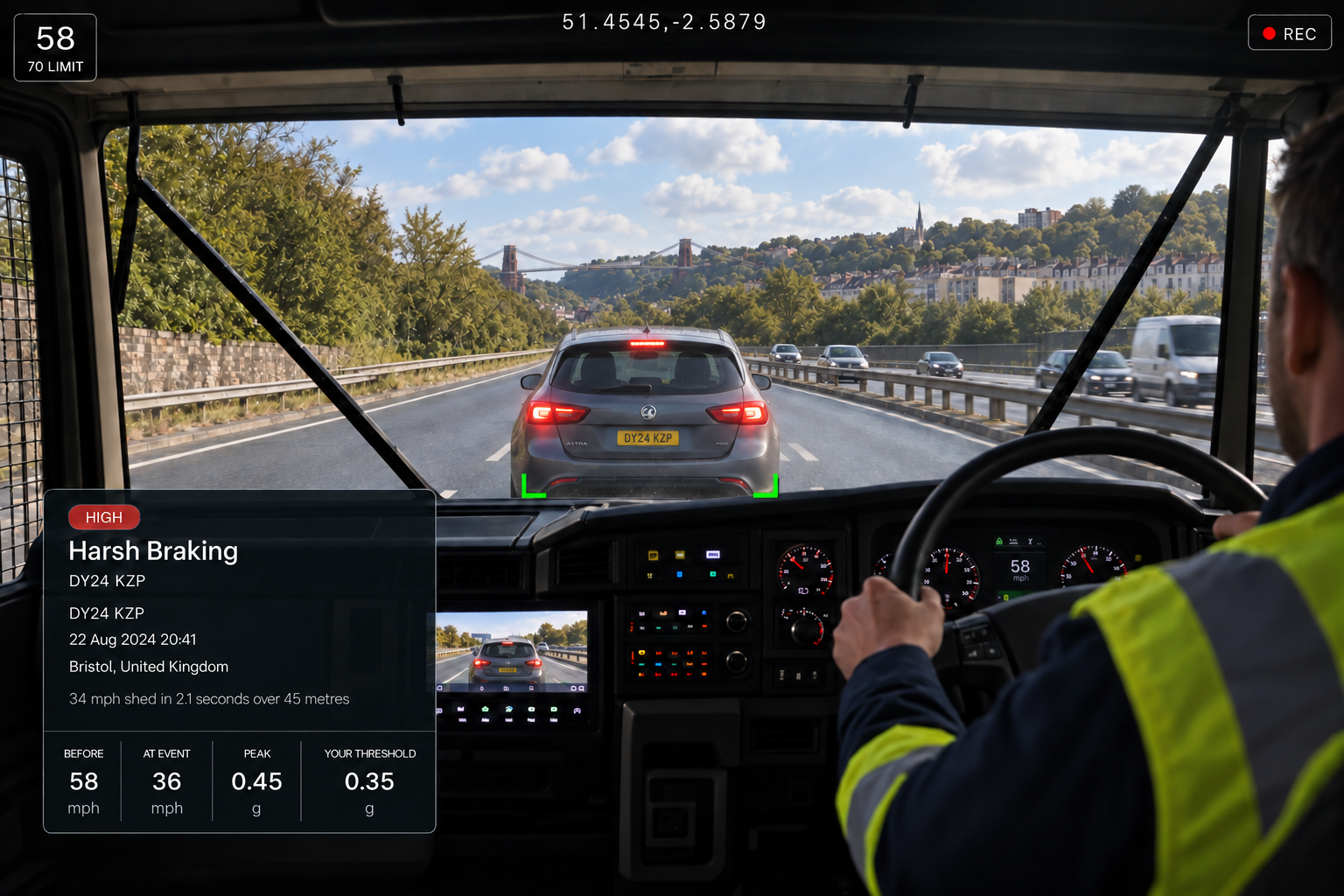
REVIEW, DECISION AND FOLLOW UP
Review Every Event in Context Before Deciding What Happens Next
01
Review
The reviewer checks the video, vehicle data and conditions at the time.
02
Decide
Confirm, dismiss or reclassify the event, then assess whether it indicates a risk or an appropriate defensive response.
03
Act
Assign coaching or a maintenance action where the event warrants it.
04
Record
Record the outcome against the event and close it.
WHAT WE DETECT
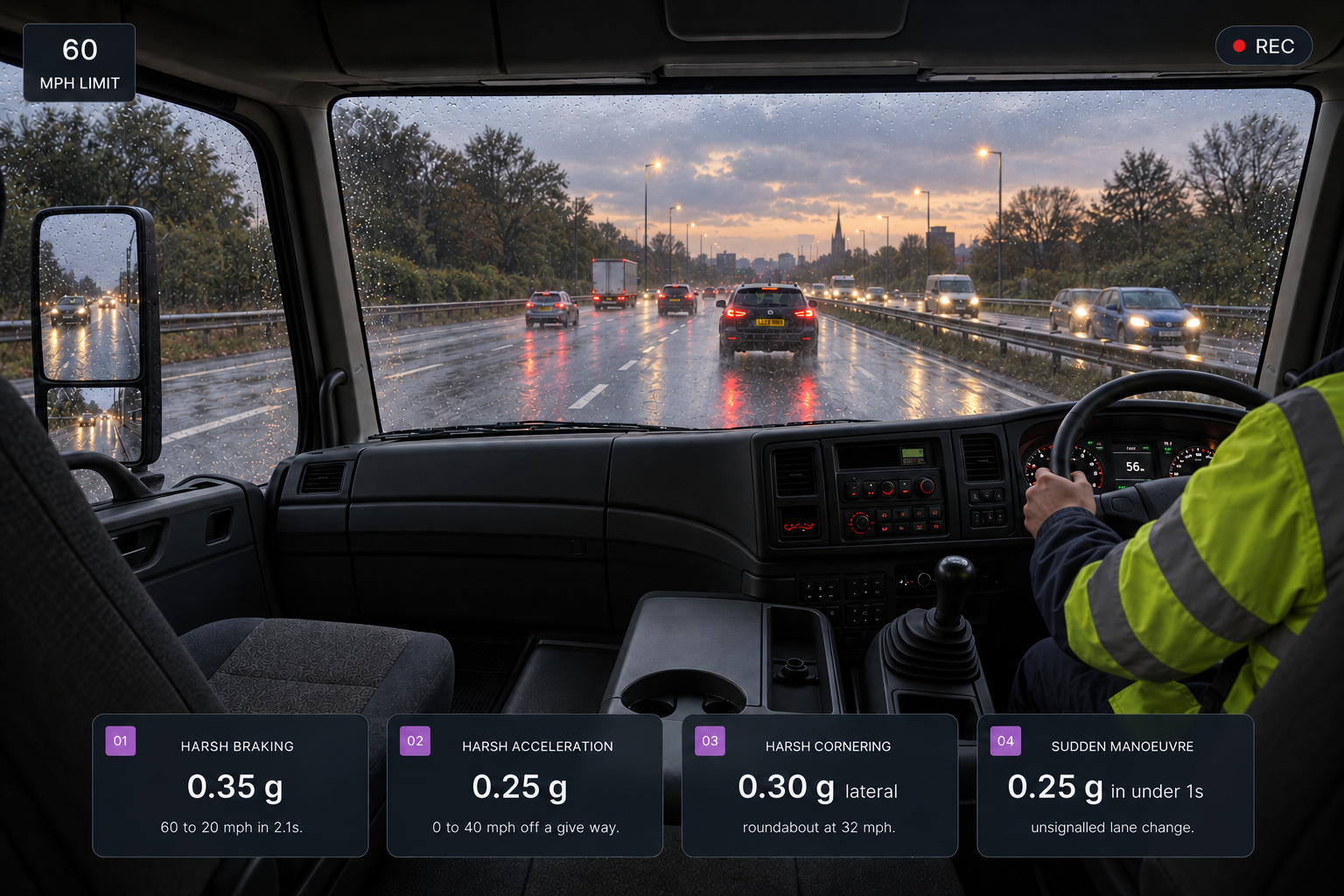
Harsh Braking, Acceleration & Cornering Events
Harsh braking
Sudden and strong braking above your configured threshold.
Harsh acceleration
Rapid acceleration above your configured threshold.
Harsh cornering
High lateral force while cornering above your configured threshold.
Sudden manoeuvres
Quick lane changes or abrupt steering inputs above your configured threshold.
Additional features
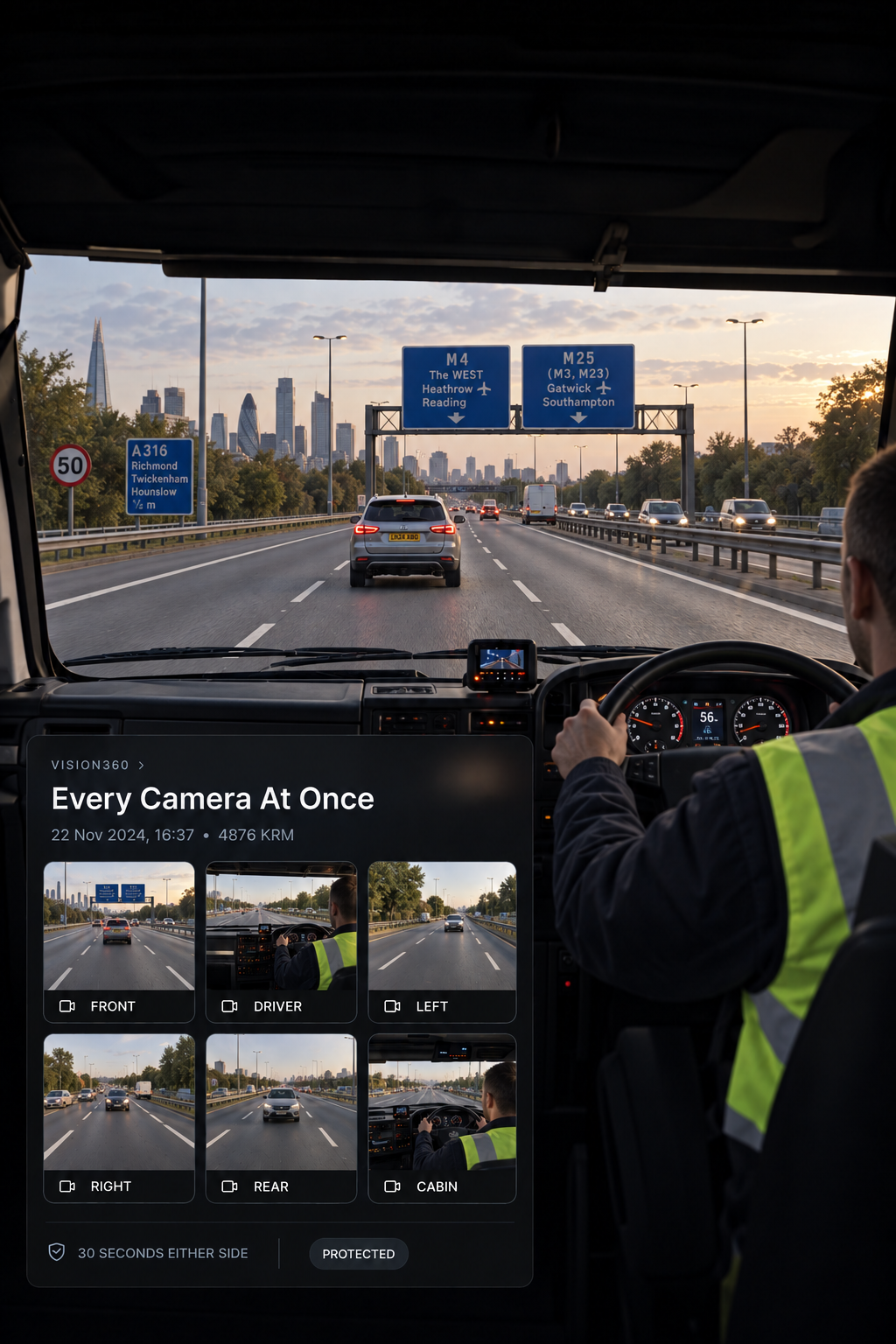
Synchronised Cameras
Front, driver, left, right, rear and cabin views together.
Before, During & After
Review footage around the event to see what happened before, during and immediately after.
Protected Footage
Event video is protected from being overwritten.
Speed at the Event
Speed before and during the event, with the change between them.
Peak Deceleration
Maximum deceleration recorded alongside duration and distance.
Road and Conditions
Road type, weather, visibility and conditions at the time.
Traffic and Visibility
Traffic density and lane markings captured with the event.
Vehicle Data
Odometer, load, RPM, transmission, ABS and stability control.
Event Location
Road, direction and nearest map marker.
Response After the Event
See how vehicle speed and movement changed after the event.
Event Reclassification
Confirm, dismiss or reclassify the event during review.
Coaching Progress
Assigned and completed coaching tracked per driver.
A Harsh Event Does Not Always Mean Harsh Driving

The event
Sudden braking on a wet curve
The context
See what was happening around the vehicle

The outcome
The response is reviewed in context
How are harsh braking, acceleration and cornering events detected?
Drive360 detects harsh events from telematics and accelerometer data. Vision360 adds video evidence and the review workflow, while Route360 provides road, route, job and stop context where available.
Can a harsh event be the right thing to do?
Often, yes. Hard braking because another vehicle cuts in can be a defensive response, not a fault. Every event is reviewed in context and can be confirmed, dismissed or reclassified before coaching is assigned.
What context is shown with an event?
Road type and condition, weather, visibility, lane markings, posted speed limit, traffic density, location and vehicle data such as load, RPM, ABS and stability control.
How much video is kept?
Ninety seconds in total, with thirty seconds before and after the event across the synchronised camera views fitted to the vehicle. Event footage is protected rather than overwritten.
Are the thresholds configurable?
Yes. Each event type has its own configurable threshold. The right settings can vary between operations, such as a tipper working on unsealed roads and a metro delivery van.
Which values are measured and which are estimated?
The event shows which values are sensor derived and which are calculated from supported telematics and sensors. Availability depends on the hardware fitted.
Look Beyond the Event
See the conditions, vehicle data and video that explain what happened across the roads and conditions your UK fleet operates in.