[ Fleet Seatbelt, Smoking & Speeding Detection ]
See the Behaviours That Need Attention
Detect supported seatbelt, smoking and speeding events, alert drivers and give your team the context to review and respond.
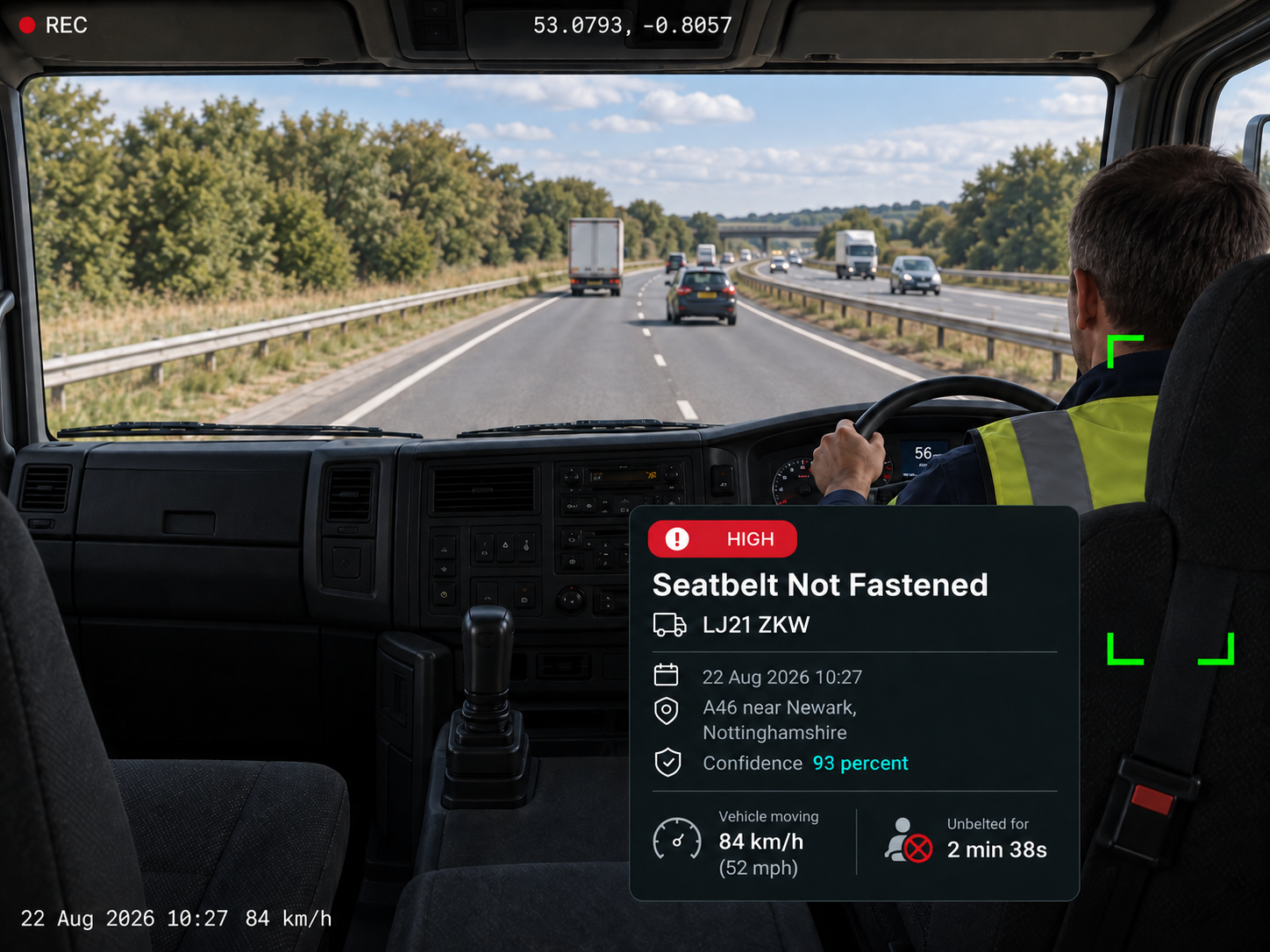
FROM RULE TO ESCALATION
Set the Rule. Define What Happens Next.
01
Configurable detection policies
Set rules for each event type, including when an event is triggered, whether the driver is alerted, who is notified and how severity is handled.
02
Driver alert in cab
Alert drivers through supported devices with a visual warning, audible prompt or haptic vibration where the hardware supports it.
03
Acknowledgement
Require an acknowledgement and record both the alert delivery and the driver's response.
04
Escalation
If the driver does not acknowledge within the configured window, notify the appropriate manager or supervisor rather than closing the event without action.
SAFETY EVENT TYPES
Clear detection. Clear response.
Seatbelt detection
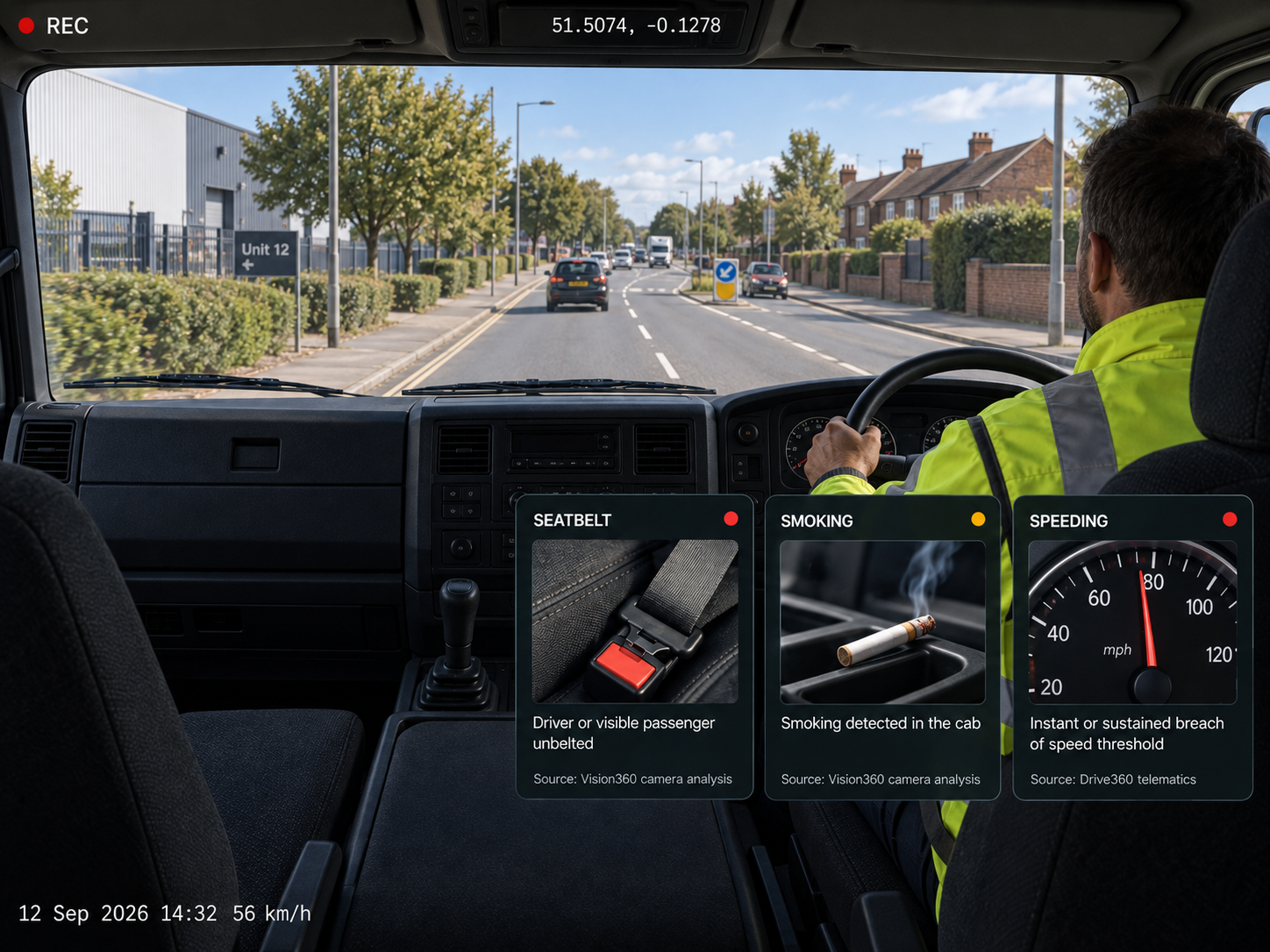
Detects when the driver or visible passengers are not wearing a seatbelt. Detection comes from Vision360 camera analysis, with passenger detection dependent on supported camera positioning and vehicle configuration.
Smoking detection
Detect smoking behaviour in the cabin by the driver or passengers. Vision360 camera analysis identifies the behaviour to support a safer cabin environment.
Speeding detection
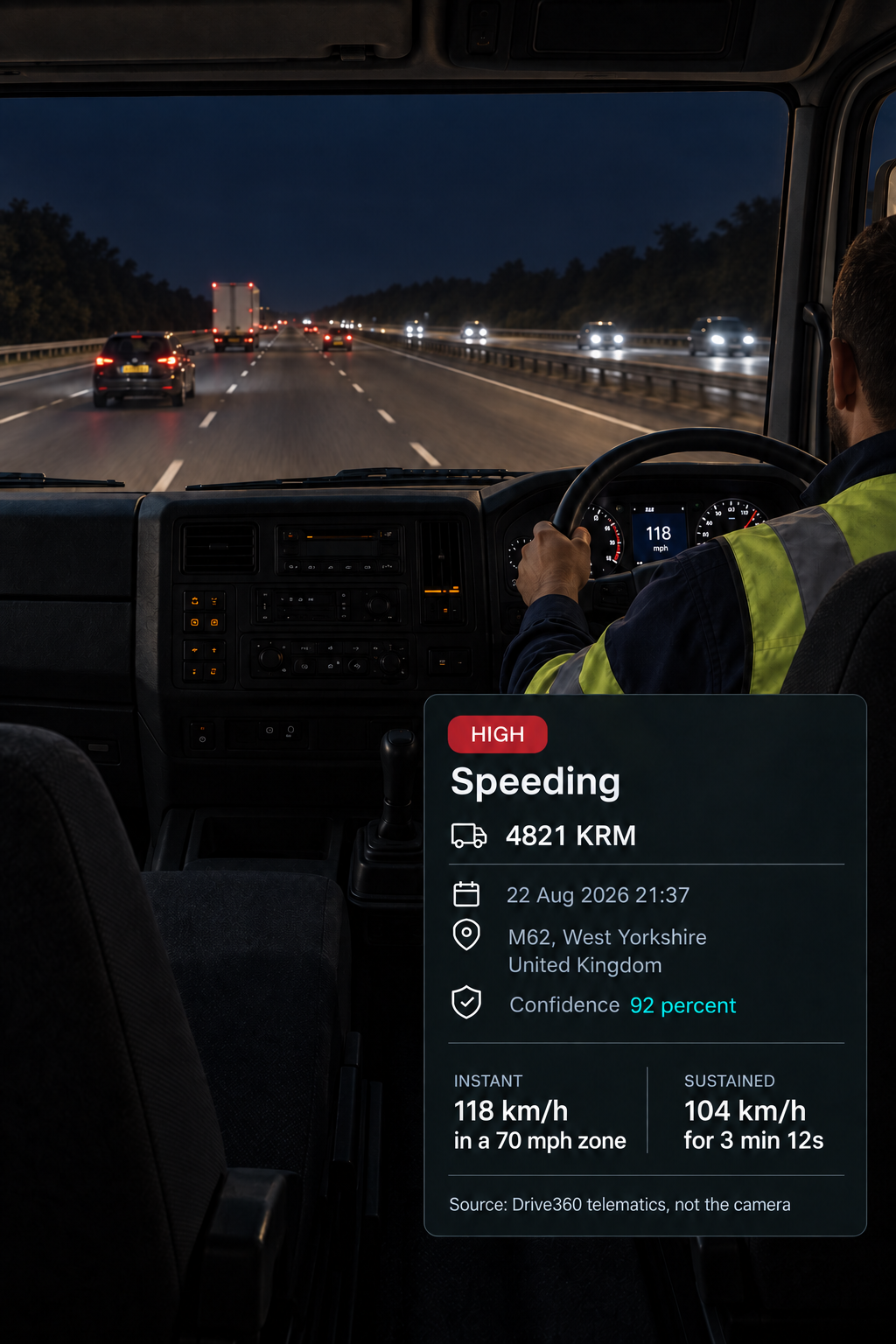
Detect when the vehicle exceeds its configured speed limit, either as an instant event or sustained breach. Drive360 telematics provides the vehicle data against your configured speed rule.
What the hardware decides
Camera coverage, recording and access depend on the hardware fitted and your organisation's configuration and policy.
Detection Policies & Driver Alerts
Driver Seatbelt
Detect non use whenever the vehicle is in motion.
Passenger Seatbelts
Detect non use where camera positioning supports it.
Driver Smoking
Detect smoking behaviour in cab from the camera.
Passenger Smoking
Detect smoking by visible passengers in the cabin.
Instant Speeding
Detect when the configured speed limit is exceeded.
Sustained speeding
Detect when the limit is exceeded for a defined duration.
Rule Per Event Type
Give each event its own conditions, alerts and severity.
Manager Notification
Notify the manager independently of the driver alert.
In Cab Prompts
Use visual, audible or haptic alerts where supported.
Acknowledgement Window
Set how long the driver has to acknowledge before escalation.
Ten Seconds Either Side
Preserve footage from before and after the detected event.
Manage Policies
Configure and update fleet wide detection rules in one place.
Three Habits, One Workflow
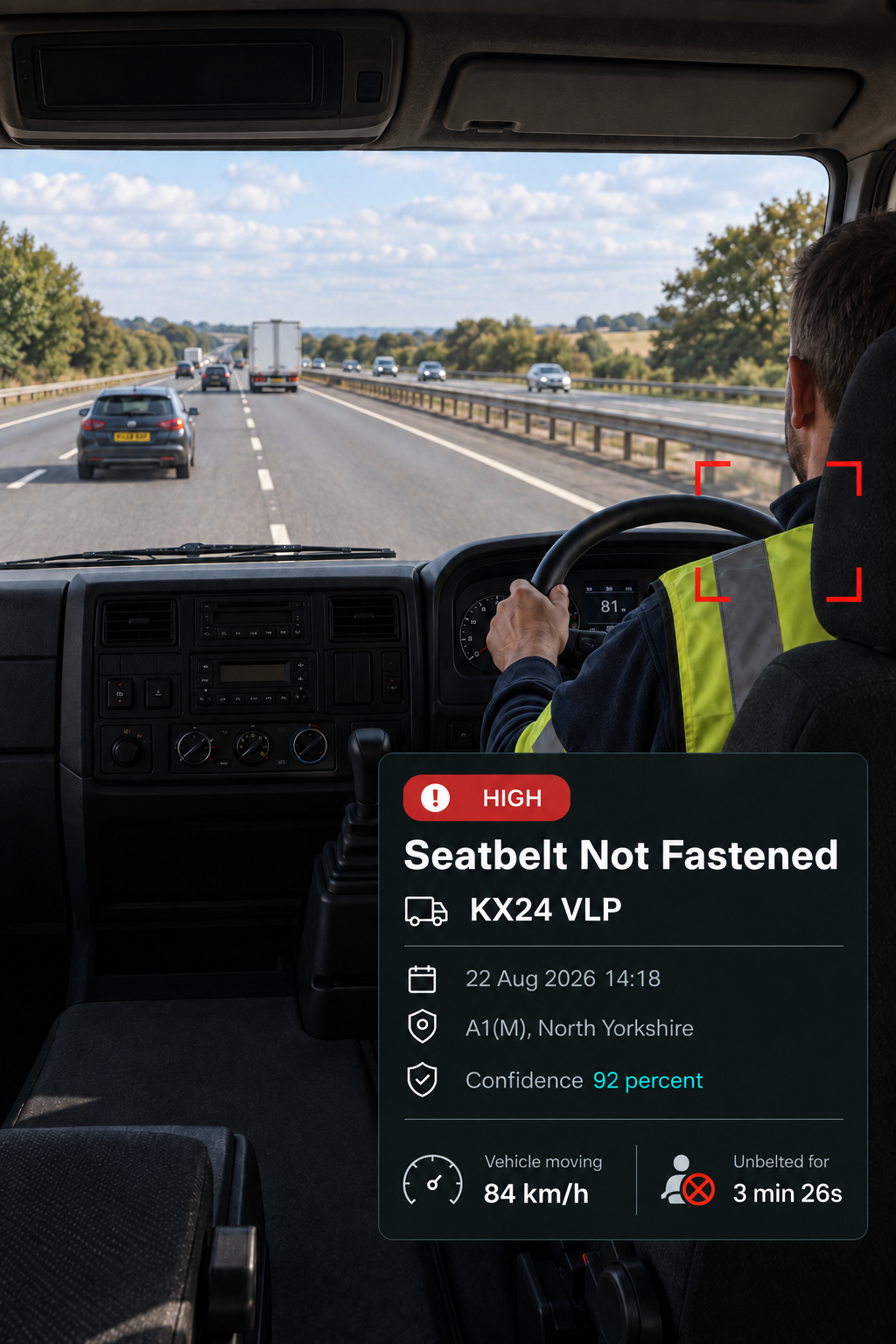
Seatbelt
Caught while the vehicle is still moving
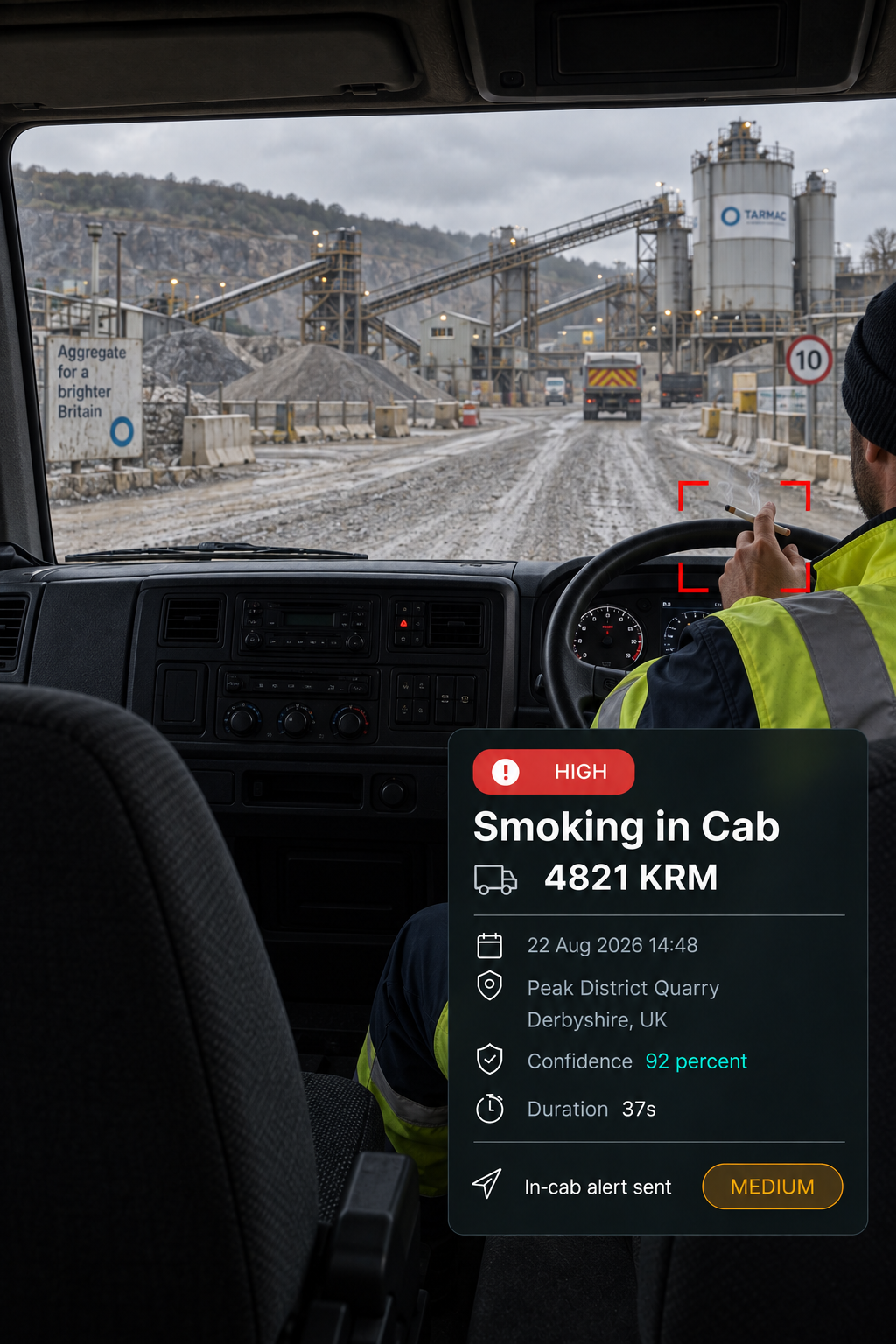
Smoking
A cleaner cab, on the record
Speeding
Instant and sustained, judged differently
Are passenger seatbelts detected too?
Speeding is detected using Drive360 telematics against your configured speed rule, rather than through the camera.
How is speeding detected?
Speeding is detected using Vision360 vehicle and telematics data against your configured speed rule, rather than through the camera.
What is the difference between instant and sustained speeding?
Instant speeding records a breach at a specific moment. Sustained speeding records when the vehicle remains above the configured limit for a defined duration, allowing the two behaviours to be treated differently.
Can each event type have its own severity?
Yes. Each rule has its own conditions, driver alert, manager notification and severity, so different behaviours can receive different responses.
What happens if the driver does not acknowledge?
Alert delivery and driver acknowledgement are both recorded. If there is no acknowledgement within the configured window, the event escalates to the appropriate manager or supervisor.
Does this depend on the hardware fitted?
Yes. Camera coverage, recording, access and alert capabilities depend on the hardware fitted and your organisation's policy. Haptic alerts also require supported hardware.
See the Risk. Take the Right Action.
Detect when a supported safety standard is missed, alert the driver and escalate events that need further attention.